4 Best Scales to Measure Body Fat for Every Budget

Heading 2
Heading 1
Heading 3
Heading 4
Heading 5
Heading 6
Lorem ipsum dolor sit amet, consectetur adipiscing elit, sed do eiusmod tempor incididunt ut labore et dolore magna aliqua. Ut enim ad minim veniam, quis nostrud exercitation ullamco laboris nisi ut aliquip ex ea commodo consequat. Duis aute irure dolor in reprehenderit in voluptate velit esse cillum dolore eu fugiat nulla pariatur.
Block quote
Ordered list
- Item 1
- Item 2
- Item 3
Unordered list
- zz
- Item B
- Item C
Bold text
Emphasis
Superscript
Subscript
As a wellness professional, you know that a client gaining muscle and losing fat might see their weight stay the same, or even increase. This can be incredibly discouraging without the right context. Body composition data provides that context, turning potential frustration into a non-scale victory. But providing inaccurate data is worse than providing none at all. Your clients trust you to guide them with reliable information. This guide is designed to help you navigate the options, understand the science behind the numbers, and identify the best scale to measure body fat for your business—one that empowers your clients and reinforces the value of your expertise.
Key Takeaways
- View Scale Readings as Estimates: At-home body fat scales use Bioelectrical Impedance Analysis (BIA), a method that's easily affected by your hydration, recent meals, and workouts. This means the number you see is a helpful estimate, not an exact fact.
- Track Trends, Not Daily Numbers: The most valuable information from a body fat scale comes from tracking your progress over weeks and months. Create a consistent routine—like weighing in first thing in the morning—to minimize daily fluctuations and reveal meaningful patterns.
- Select the Right Tool for the Job: A basic smart scale is fine for monitoring general trends at home. For wellness professionals who need to show clients clear, reliable results, investing in professional-grade technology like 3D body scanning provides the accuracy and visual proof that builds trust and retains clients.
How Do Body Fat Scales Work?
It might seem like magic, but body fat scales use a straightforward scientific method to estimate your body composition. The technology behind most of these devices is called Bioelectrical Impedance Analysis, or BIA.
Here’s how it works: When you step on the scale, it sends a tiny, harmless electrical current up one leg, across your pelvis, and down the other. Don't worry, you won't feel a thing. The scale then measures the resistance, or impedance, that the current encounters on its journey.
The principle is simple. Lean tissue, like muscle, is rich in water and conducts electricity easily, offering little resistance. Fat, on the other hand, contains very little water and acts as an insulator, creating more resistance. By measuring how much the current is slowed down, the scale uses an internal algorithm to estimate your body fat percentage. Many smart scales use this BIA process to differentiate between fat mass and lean mass.
While BIA is a convenient way to get a snapshot of your body composition, the readings can be influenced by several factors. Your hydration level is the biggest one—being dehydrated can make your body fat reading appear higher because there's less water to conduct the current. Other things like when you last ate, if you've recently exercised, your skin temperature, and even having lotion on your feet can affect the results. For this reason, consistency in your measurement routine is key to getting useful data. The real value comes from tracking trends over time, not from a single, isolated number.
Why Measure Body Fat Percentage?
The number on a traditional scale only tells you one thing: your total weight. It doesn’t distinguish between fat, muscle, bone, and water. This is a problem because two people with the same height and weight can have completely different body compositions and health profiles. Measuring body fat percentage gives you and your clients a much clearer picture of what’s really going on. It helps you move beyond the simple, and often misleading, metric of total pounds lost or gained.
Understanding body composition is key to tracking meaningful progress. When a client starts a new fitness plan, they might lose fat while gaining muscle. A regular scale might show their weight staying the same or even increasing, which can be incredibly discouraging. By tracking body fat percentage, you can show them tangible proof that their hard work is paying off. It allows you to monitor body composition changes and celebrate non-scale victories, keeping clients motivated and engaged with their program.
For wellness professionals, this data is invaluable for creating personalized plans. Knowing a client's body fat percentage helps you tailor their fitness and nutrition strategies more effectively. For instance, a client with a higher body fat percentage might need a different approach than someone looking to build lean muscle. This level of detail allows personal trainers and weight management coaches to provide more precise guidance, leading to better, faster, and more sustainable results for their clients. It shifts the focus from simply losing weight to building a healthier body composition.
What to Look for in a Body Fat Scale
When you're ready to move beyond a simple weight measurement, a body fat scale can offer deeper insights into your clients' progress. But not all scales are created equal. From the technology they use to the data they track, certain features can make a big difference in providing useful, consistent information. Understanding these key features will help you choose a device that supports your clients' goals and adds value to your wellness business.
Bioelectrical Impedance Analysis (BIA)
This sounds technical, but the concept is straightforward. Most body fat scales use a method called Bioelectrical Impedance Analysis (BIA) to estimate body composition. When a client steps on the scale, it sends a completely harmless, low-level electrical current up through one leg and down the other. Fat tissue contains very little water, so it resists the current more than muscle, which is well-hydrated. The scale measures this resistance, or "impedance," and uses it in an equation along with details like height, weight, and age to calculate an estimated body fat percentage. It’s a quick, non-invasive way to get a snapshot of body composition.
Multi-Frequency vs. Single-Frequency Measurements
The BIA technology in scales can vary in sophistication. Basic scales use a single, low-frequency electrical current. While this can give you a general estimate, more advanced scales use multiple frequencies. Using both high and low frequencies allows the current to penetrate different cell types more effectively, which can lead to a more accurate analysis of body water and, by extension, body fat. For even better results, look for scales that offer "segmental analysis." These devices often have hand electrodes and measure each arm, leg, and the torso separately, giving you a more detailed and precise breakdown of body composition across different parts of the body.
Smart Connectivity and App Integration
In a data-driven world, a scale that can't save and track measurements over time is a missed opportunity. Most modern body fat scales come with Bluetooth or Wi-Fi connectivity, allowing them to sync automatically with a smartphone app. This is a huge benefit for both you and your clients. It creates a seamless record of their progress, visualizing trends in body fat, muscle mass, and other metrics. This digital log makes it easy to review changes during check-ins and helps keep clients motivated by showing them how their hard work is paying off beyond just the number on the scale.
Key Body Composition Metrics
A good body fat scale offers more than just a body fat percentage. To get a complete picture of a client's health and fitness progress, you need a device that tracks a range of metrics. Look for scales that measure key data points like muscle mass, bone mass, and body water percentage. Seeing muscle mass increase while body fat decreases is a powerful motivator for clients in weight management programs. Some high-end scales even provide health indicators like visceral fat levels or heart rate, offering a more holistic view that can help you tailor your wellness plans more effectively.
User Profiles and Segmental Analysis
If you're using a scale in a professional setting, the ability to store multiple user profiles is non-negotiable. This feature allows you to track the progress of every client separately without their data getting mixed up. Each person can have their own profile with their specific age, height, and gender, which is essential for accurate BIA calculations. This is especially useful for personal trainers and gyms managing a roster of clients. When combined with segmental analysis—which breaks down fat and muscle for each limb—you can provide truly personalized feedback, highlighting specific areas of improvement and celebrating targeted gains.
How Accurate Are Body Fat Scales, Really?
Body fat scales offer a quick and convenient way to track body composition at home, but their accuracy is a frequent topic of debate. The truth is, most at-home scales provide an estimate rather than a precise measurement. They use a technology called Bioelectrical Impedance Analysis (BIA), which sends a harmless, low-level electrical current through your body. The scale measures the resistance, or impedance, to this current. Since fat contains less water than muscle, it conducts electricity more poorly. The scale uses this resistance measurement, along with inputs like your age, height, and gender, to calculate an estimated body fat percentage.
While this method is clever, it's also sensitive to many external factors, which means the number you see can fluctuate significantly. These scales are not as precise as clinical methods like DEXA scans or 3D body scanning. However, that doesn't mean they're useless. Understanding their limitations is the key to using them effectively as a tool for monitoring long-term progress for your clients. The goal is to use the data to inform, not to fixate on a number that can be easily skewed.
Common Misconceptions About Accuracy
The biggest misconception about body fat scales is that the number on the screen is a definitive measure of your body fat. In reality, at-home BIA scales can be off by a significant margin. It's not uncommon for a scale's reading to differ from a clinical-grade scan by several percentage points. This discrepancy can be frustrating for clients who are working hard but see a number that doesn't seem to reflect their efforts.
It's helpful to frame these scales as tools for providing directional feedback. They offer a data point, but it's just one piece of a much larger puzzle. Educating your clients to view the number as an estimate rather than an exact figure can prevent discouragement and help them focus on more holistic signs of progress, like how their clothes fit, their energy levels, and their performance improvements.
Factors That Influence Reliability
The reliability of a BIA scale reading is influenced by a surprising number of variables. Because the technology relies on measuring electrical resistance, which is heavily affected by water content, your body's hydration status is the single biggest factor. If a client is dehydrated, their body fat percentage may read artificially high. If they are well-hydrated, it may read lower.
Other factors that can alter the results include recent exercise, eating or drinking, skin temperature, and even having lotion on your feet. This is why a client might see their body fat percentage jump several points overnight. Understanding the science of body composition and the variables that affect BIA can help you guide clients to use their scales more effectively and interpret the data with a healthy dose of skepticism.
Why Trends Matter More Than a Single Number
Given the variability of single readings, the real value of an at-home body fat scale lies in its ability to show trends over time. A single measurement is a snapshot, but a collection of measurements taken over weeks and months can paint a much clearer picture of a client's progress. If a client's body fat percentage is consistently trending downward over a long period, it’s a strong indicator that they are losing fat, even if the specific number isn't perfectly accurate.
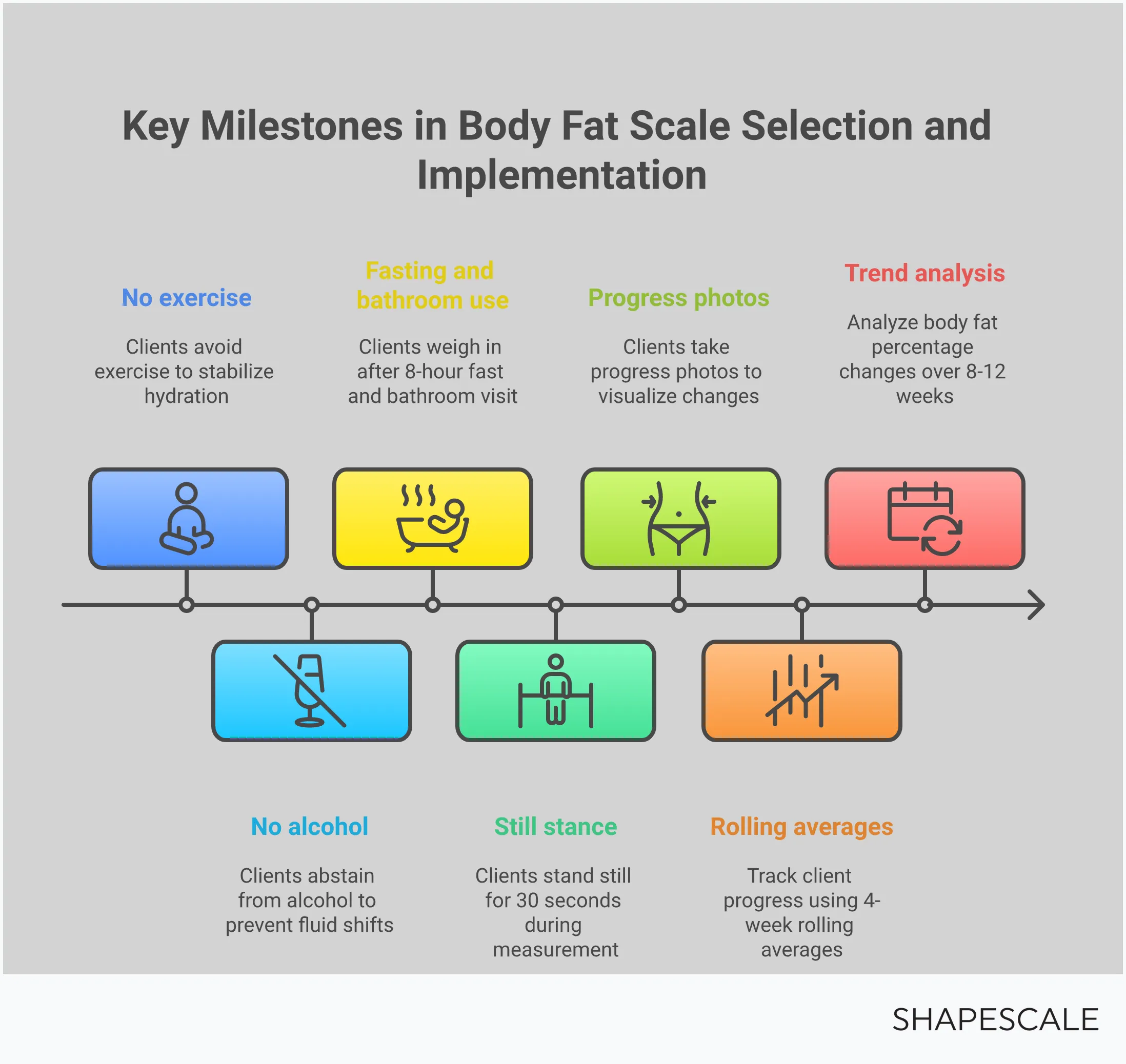
To track trends effectively, consistency is everything. Advise your clients to weigh themselves under the same conditions each time—for example, first thing in the morning after using the restroom and before eating or drinking. This practice helps minimize the daily fluctuations and makes the long-term trend data more reliable. For personal trainers and their clients, this approach turns the scale from a source of frustration into a useful tool for staying motivated and accountable.
The Best Body Fat Scales for Every Goal and Budget
Choosing the right body fat scale depends entirely on your goals. A wellness professional helping clients visualize their transformation needs a different tool than someone just starting to track their health metrics at home. Whether you run a high-end health club or are looking for a simple device for personal use, there’s an option that fits your needs and budget. The market is filled with choices, from basic scales that only measure weight to advanced devices that provide a full-body analysis. To help you decide, we've reviewed the top contenders across different categories. This guide will walk you through the best scales for professionals who need clinical-grade accuracy, premium options for home users who want deep health insights, reliable mid-range choices, and affordable scales for those just getting started. We'll look at what makes each scale stand out, from the technology it uses to the data it provides, so you can make an informed decision for your business or personal health journey. Understanding the key differences will help you select a tool that not only measures progress but also motivates and retains clients.
For Professionals: ShapeScale 3D Body Scanning
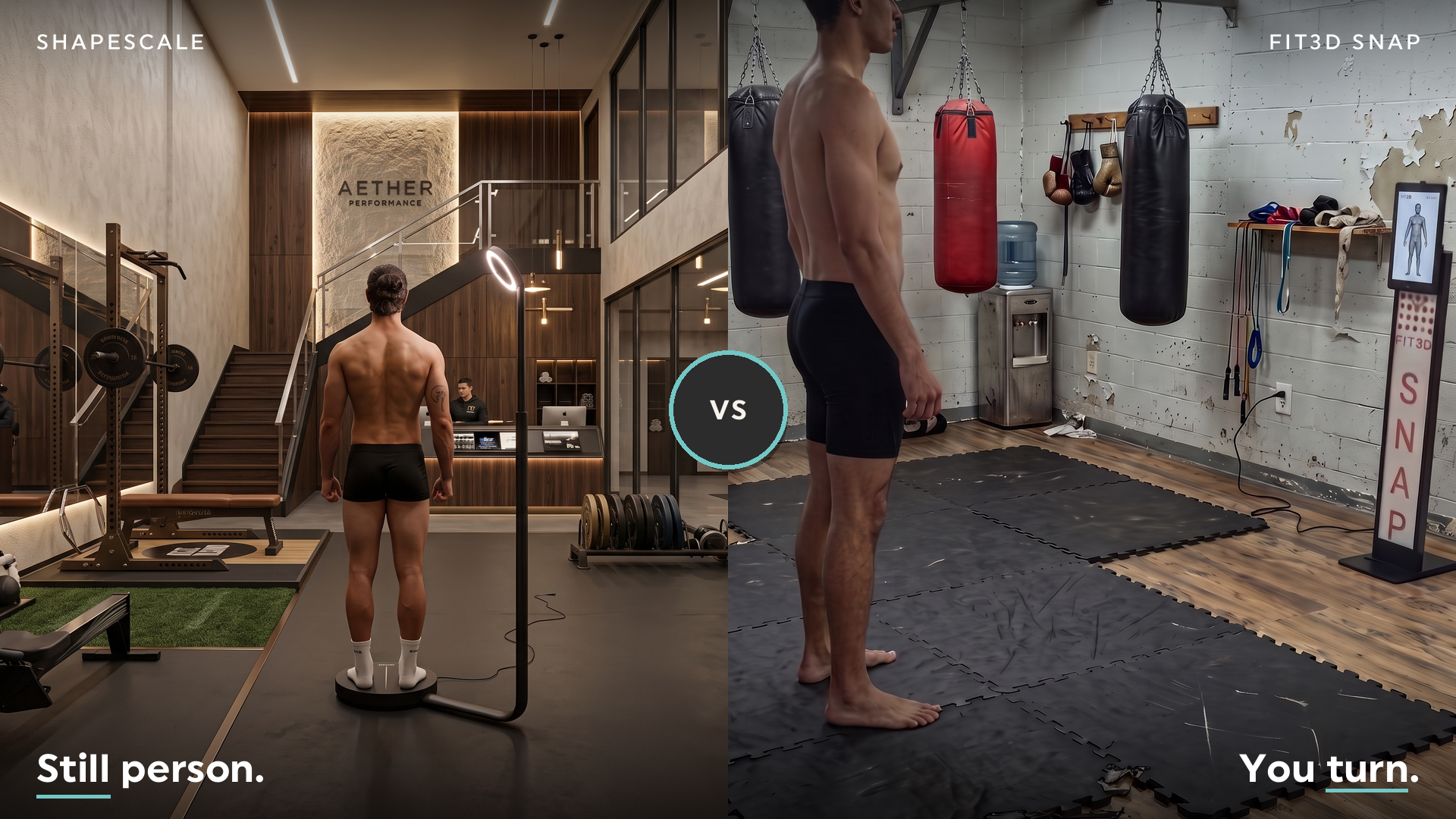
For wellness businesses, a body fat scale should be more than just a measurement device—it should be a powerful tool for client engagement and retention. The ShapeScale is in a class of its own, offering a unique 3D body scanning feature that provides detailed insights into body composition. It’s ideal for professionals who require maximum accuracy and comprehensive data. Instead of just showing numbers, ShapeScale creates a photorealistic 3D model of your client's body, allowing them to see their progress in a way that BIA scales can't match. This visual feedback is incredibly motivating for clients at medical spas and weight management centers, helping them stay committed to their goals.
Best Premium Option for Maximum Accuracy
If you’re looking for the most comprehensive health data you can get from a home scale, the Withings Body Scan is your answer. As one review puts it, this scale is like the "Rolls Royce" of smart scales. It goes far beyond standard body composition by offering advanced metrics like a 6-lead ECG for heart health checks, vascular age assessment, and nerve health scores. It also provides segmental body composition, measuring fat and muscle mass in your torso, arms, and legs individually. This level of detail comes at a premium price and may require a subscription for full access, but for data-driven users who want a complete health overview, the investment is well worth it.
Best Mid-Range Smart Scale
The Renpho Smart Scale hits the sweet spot between affordability and functionality, making it a fantastic value for most people. It’s very affordable but still tracks 13 essential health metrics, including body fat, muscle mass, BMI, and metabolic age. The scale syncs seamlessly with its companion app, which is easy to use and integrates with other popular fitness apps like Apple Health and Google Fit. For clients who need a reliable way to track their progress between professional check-ins or for anyone wanting detailed insights without a hefty price tag, the Renpho is a solid and popular choice that consistently delivers.
Best Budget-Friendly Option
Proof that you don’t need to spend a lot to get valuable health insights, the Wyze Scale X is an excellent budget-friendly option. It’s very affordable and offers a lot for its low price, tracking 12 body metrics, including body fat percentage, muscle mass, and even resting heart rate—a feature not always found on entry-level scales. The Wyze app is straightforward and allows you to track trends over time for up to eight different users. If you’re just starting your health journey or are simply curious about your body composition, the Wyze Scale X provides a wealth of information without requiring a significant investment.
Common Myths About Body Fat Scales, Busted
Body fat scales can be a source of both motivation and frustration. One day the number is down, and the next it’s inexplicably higher, leaving your clients confused and discouraged. The truth is, many common beliefs about these scales are based on misunderstandings of how the technology works. By understanding the limitations and variables, you can help your clients use these tools more effectively and focus on what truly matters: consistent, long-term trends. Let's clear up some of the biggest myths surrounding body fat scales.
The Accuracy Myth: Understanding Error Rates
The most common myth is that at-home body fat scales are perfectly accurate. They aren't. Most consumer-grade scales use bioelectrical impedance analysis (BIA), which can have a significant margin of error. Some studies show these scales can be off by as much as 8% to 20%. Even clinical-grade tools like DEXA scans can produce slightly different results on the same day. The number on the screen is an estimate, not an absolute fact. The key is to treat it as one data point among many and focus on the overall trend rather than getting fixated on a single, potentially misleading, number.
Why Different Scales Give Different Readings
If a client uses a scale at home and another at your facility, they’ll almost certainly get different readings. This happens for a few reasons. First, every manufacturer uses a slightly different algorithm to translate the raw electrical signal into a body fat percentage. Second, many external factors can influence the reading. The amount of water in the body, when a person last ate or exercised, their skin temperature, and even lotion on their feet can alter the electrical current’s path and skew the results. This is why one scale might seem more "accurate" than another, but in reality, they are all just sensitive to different conditions.
The Impact of Hydration and Timing
Hydration is the single biggest factor that can throw off a BIA reading. Since BIA measures the speed of an electrical current through your body, and water is an excellent conductor, your hydration level matters—a lot. If a client is dehydrated, the electrical resistance is higher, which the scale often misinterprets as a higher body fat percentage. Conversely, being super-hydrated can make the reading artificially low. This is why consistency is crucial. Advise your clients to weigh themselves at the same time, under the same conditions every day—ideally, first thing in the morning after using the restroom and before eating or drinking anything.
How to Get the Most Accurate Readings from Your Scale
Getting useful data from a body fat scale is all about consistency. You can improve a scale's reliability by creating a simple, repeatable measurement routine. Think of it less as a single source of truth and more as a tool for tracking trends. When you control the variables, the changes you see are more likely to reflect actual changes in your body. For your clients at your health club or wellness center, teaching them these best practices will empower them to gather more meaningful data between professional check-ins. A consistent protocol turns a simple scale into a powerful motivational tool.
Best Practices for Consistent Measurements
To get the most reliable trend data, weigh in under the same conditions every time. The best approach is to measure first thing in the morning, right after you wake up and use the restroom, before eating or drinking anything. This minimizes fluctuations from food and hydration. Stand on the scale with bare, dry feet and minimal clothing. Place your feet evenly on the electrodes and stand still until the measurement is complete. Making this a regular part of a morning routine helps create a stable baseline to spot meaningful changes over weeks and months.
The Right Time and Hydration Level to Measure
Bioelectrical Impedance Analysis (BIA) is highly sensitive to your hydration status. Water conducts electricity well, while fat does not. If you're dehydrated, your body fat percentage may read artificially high; if you're over-hydrated, it may read low. This is why it's best to avoid measuring after a workout, a large meal, or drinking a lot of water. Other factors like skin temperature or even lotion on your feet can also affect the electrical signal. Sticking to a consistent morning schedule helps control for these variables and gives you a clearer picture of your progress.
How to Set Up Your User Profile Correctly
Most smart scales use your personal stats—age, height, gender, and activity level—to inform the algorithms that calculate body composition. If this information is incorrect, your readings will be, too. When setting up the scale, enter your details accurately. If multiple people use the device, ensure each person has their own profile, as using someone else's will produce inaccurate results. For personal trainers and other professionals, ensuring every client has a distinct and accurate profile is the first step to gathering trustworthy data.
What Are the Limitations of At-Home Body Fat Scales?
While at-home body fat scales offer a convenient way for clients to track progress between professional check-ins, it's important to understand their limitations. The technology used in most consumer-grade scales, Bioelectrical Impedance Analysis (BIA), is sensitive and can be influenced by many factors. This means the numbers on the screen aren't always a true reflection of a person's body composition.
For wellness professionals, the key is to educate clients on how to use these scales as a motivational tool rather than a diagnostic one. Helping them understand why their readings might fluctuate and how to focus on long-term trends will prevent discouragement and keep them focused on their goals. At-home scales can supplement the precise, in-depth analysis you provide with professional equipment like a 3D body scanner, but they can't replace it.
When Your Readings Might Be Unreliable
Let's be direct: most body fat scales you use at home are not perfectly accurate. They can produce numbers that are significantly off from your true body fat percentage. The BIA technology sends a weak electrical current through your body and measures the resistance. Since fat, muscle, and water conduct electricity differently, the scale uses this information to estimate body composition. The problem is that this measurement is easily skewed. Your hydration level, when you last ate, if you've recently exercised, and even body temperature can alter the results, leading to unreliable single readings.
Understanding Normal Fluctuations
It’s completely normal for body composition readings to fluctuate daily. Many variables affect a scale's reading, including a person's gender, age, recent food and drink consumption, and even how they stand on the scale. For example, being dehydrated can make the electrical current travel slower, causing the scale to register a higher body fat percentage. Conversely, after a large meal or drinking a lot of water, the reading might be artificially low. These daily swings don't reflect actual changes in body fat and can be confusing if you don't know to expect them.
Why One Reading Isn't the Whole Story
Given their imprecision, the real value of at-home scales isn't in a single measurement—it's in the long-term trend. Even if the exact number is off, the scale can still show directional progress. If a client's readings, taken under consistent conditions, show a downward trend over several months, it’s a strong indicator they are losing body fat. BIA scales are not as precise as clinical methods, but they are useful for tracking these patterns over time. For weight management professionals, these trends can be powerful conversation starters during client check-ins, complementing the detailed data from in-office assessments.
Is a Body Fat Scale Right for You?
Deciding whether to use a body fat scale depends on your goals. For casual home use, a smart scale can be a useful tool for tracking general trends over time. It offers a convenient and affordable way to see if your body composition is moving in the right direction. For wellness professionals and their clients, however, the stakes are higher. When clients invest in services at medical spas or health clubs, they expect accurate, reliable data to measure their progress and validate their hard work.
The decision comes down to a trade-off between convenience, cost, and accuracy. While an at-home scale is easy to use daily, its readings can be inconsistent and influenced by many factors. For a business, relying on imprecise data can undermine client trust and motivation. Understanding the differences between consumer-grade scales and professional-grade analysis is the first step in choosing the right tool for yourself or your clients. The goal isn't just to collect data, but to gather meaningful insights that drive results.
Comparing Home Scales to Professional Scans
At-home body fat scales and professional body composition analyzers operate on different levels of precision. Most home scales use bioelectrical impedance analysis (BIA), which can be a good starting point but often lacks accuracy. In contrast, methods like DEXA (dual-energy X-ray absorptiometry) are considered the "gold standard" for measuring body fat, muscle, and bone density. The difference isn't minor; one 2021 study found that popular smart scales underestimated body fat by as much as 4 to 8 pounds compared to DEXA scans. For a client trying to lose 10 pounds of fat, that margin of error can be incredibly frustrating and misleading.
When to Consider Advanced Analysis
If you or your clients are serious about tracking body composition changes, advanced analysis is the way to go. This is especially true for businesses like weight management centers and personal training studios, where demonstrating tangible results is fundamental to the service. While a DEXA scan offers unmatched accuracy, it isn't practical for frequent check-ins. This is where technologies like 3D body scanning come in. They provide a highly accurate and visual way to track progress, showing clients not just what they've lost, but how their body shape is changing. This visual feedback is a powerful motivator that numbers on a scale simply can't match.
Weighing the Cost vs. the Benefit
The price difference between a home scale and professional equipment is significant, but so is the value they provide. An affordable smart scale, like the popular Renpho model, is a great value for an individual who wants to monitor basic health metrics at home. The benefit is having a consistent, low-cost tool to track long-term trends. For a wellness business, however, the benefit is measured in client retention and results. Investing in professional technology like a 3D body scanner offers a substantial return by enhancing the client experience, building trust with precise data, and providing clear proof that your programs work. It shifts the conversation from a simple number to a holistic view of progress.
Frequently Asked Questions
Why does my body fat percentage jump around so much from day to day? Those daily fluctuations are almost always caused by changes in your hydration levels, not actual changes in body fat. The technology in these scales, BIA, measures electrical resistance, which is highly sensitive to the amount of water in your body. Being dehydrated can make your reading appear higher, while being well-hydrated can make it seem lower. Things like a recent workout, a large meal, or even the temperature of your skin can also cause temporary shifts in the reading.
If the body fat reading is just an estimate, what about the other metrics like muscle mass and bone density? All the metrics provided by a BIA scale—including muscle mass, bone mass, and body water—are estimates derived from that same single electrical measurement. They are calculated using internal formulas based on the resistance reading. Because they all stem from the same technology, they are subject to the same fluctuations and potential inaccuracies as the body fat percentage. It's best to view all of these numbers as indicators for tracking long-term trends rather than as precise, standalone facts.
Is it worth paying more for a scale with hand electrodes? Scales with hand electrodes perform what's called a segmental analysis, meaning they measure your arms, legs, and torso separately. This can provide a more detailed and potentially more refined estimate of your body composition compared to a scale that only sends a current through your lower body. While this can be a step up in technology, it's still a BIA device. The readings are still sensitive to hydration and other factors, so the rule of consistency remains just as important.
How can I use these scales with my clients without them getting discouraged by the numbers? The key is to frame the scale as a tool for tracking long-term patterns, not for getting a daily score. Educate your clients from the start that the numbers will fluctuate and that a single reading doesn't mean much. Encourage them to focus on the trend line over weeks and months. Pair the scale data with other, more tangible signs of progress, like measurements, progress photos, or how their clothes fit. This helps shift their focus from a single, often unreliable number to the bigger picture of their success.
So, are at-home scales useful at all, or should I tell my clients not to bother? They are definitely useful, as long as you and your clients understand their purpose. An at-home scale is an excellent tool for monitoring long-term trends and staying motivated between professional check-ins. When used consistently under the same conditions, it can provide valuable directional feedback, showing if a client's body composition is moving in the right direction. It's a supplementary tool, not a replacement for the precise, in-depth analysis you can provide with professional equipment.