The Best Body Scan: A Guide for Professionals

Heading 2
Heading 1
Heading 3
Heading 4
Heading 5
Heading 6
Lorem ipsum dolor sit amet, consectetur adipiscing elit, sed do eiusmod tempor incididunt ut labore et dolore magna aliqua. Ut enim ad minim veniam, quis nostrud exercitation ullamco laboris nisi ut aliquip ex ea commodo consequat. Duis aute irure dolor in reprehenderit in voluptate velit esse cillum dolore eu fugiat nulla pariatur.
Block quote
Ordered list
- Item 1
- Item 2
- Item 3
Unordered list
- zz
- Item B
- Item C
Bold text
Emphasis
Superscript
Subscript
Keeping clients motivated is one of the biggest challenges in the wellness industry. After the initial excitement wears off, progress can feel slow, and a stagnant number on the scale can be enough to make someone quit. The key to long-term retention is showing them tangible proof that their efforts are working, even when it's not obvious in the mirror. This is where body scanning technology becomes your most valuable tool. It visualizes the subtle but significant changes in their body composition. This article will explore the different options available, helping you choose the best body scan to turn abstract goals into visible achievements that keep your clients inspired, engaged, and loyal to your business.
Key Takeaways
- Select the Right Scan for the Client's Goal: Guide clients to the best technology for their needs. DEXA is ideal for clinical data like bone density, while 3D scanning excels at showing visual changes in shape and muscle, which is perfect for fitness and body contouring goals.
- Use Visuals to Drive Client Engagement: Numbers and data reports can be abstract. Photorealistic 3D models provide clear, tangible proof of progress that resonates with clients, keeping them motivated and reinforcing the value of your services.
- Establish a Consistent Scanning Protocol: To get reliable data for tracking progress, instruct clients to scan under the same conditions each time—same time of day, before workouts, and with similar hydration. This minimizes fluctuations and shows true changes over time.
What Are the Different Types of Body Scans?
When your clients want to track their progress, a standard scale only tells part of the story. Body scans offer a much deeper look at what’s happening inside the body, measuring changes in muscle, fat, and bone. Understanding the different technologies available is the first step in choosing the right tool for your business and your clients. The options range from clinical-grade scans that provide medical-level detail to accessible 3D scanners that create powerful visual motivation.
Each type of scan uses a different method to analyze body composition, and they all come with their own set of strengths and weaknesses. Some are prized for their pinpoint accuracy, while others are celebrated for their ability to engage and motivate clients on their wellness journey. For weight management centers and personal trainers, knowing these differences helps you offer the best service and set realistic expectations for tracking results. Let's break down the most common types of body scans you'll encounter.
DEXA Scans for Body Composition
A DEXA scan, which stands for Dual-Energy X-ray Absorptiometry, is often called the gold standard for measuring body composition. It uses very low-dose X-rays to give a precise breakdown of bone density, fat mass, and lean muscle mass. Originally developed to diagnose osteoporosis, its accuracy has made it a favorite in clinical and research settings. For clients who need highly detailed and reliable data—like competitive athletes or individuals on a medically supervised plan—a DEXA scan provides a comprehensive and segmented look at their body composition, showing exactly where they are losing fat and gaining muscle.
3D Body Scanning Technology
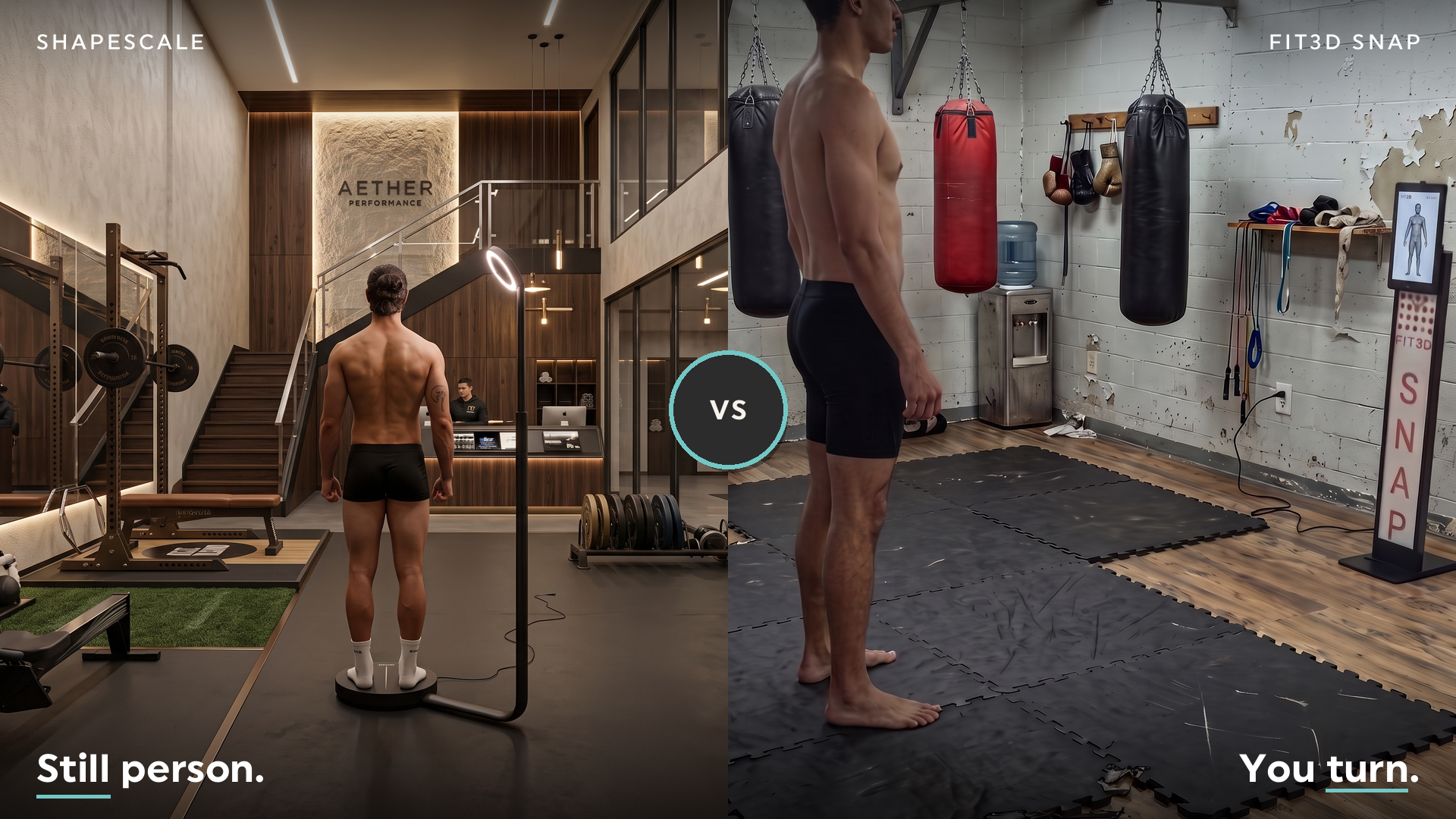
3D body scanning offers a completely different and highly engaging way to track progress. Instead of relying on X-rays or electrical currents, these scanners use cameras and sensors to create a photorealistic 3D model of the body. This visual feedback is incredibly powerful for clients, as they can see their body shape change over time. Technologies like ShapeScale capture subtle shifts in muscle definition and fat loss that numbers alone can't convey. This makes it an excellent tool for health clubs and personal trainers looking to keep clients motivated by showing them tangible, visual proof of their hard work.
Bioelectrical Impedance Analysis (BIA)
Bioelectrical Impedance Analysis, or BIA, is a common technology found in both professional devices and at-home smart scales. It works by sending a safe, low-level electrical current through the body. Since fat, muscle, and water conduct electricity differently, the device measures the resistance (impedance) to estimate body composition metrics. While BIA is quick and easy to use, its accuracy can be influenced by factors like hydration levels, recent meals, and exercise. It's a useful tool for tracking general trends, but results can fluctuate from day to day.
Smart Scales and At-Home Options
Smart scales have brought body composition analysis into the home. Most of these devices use BIA technology to provide estimates of body fat percentage, muscle mass, bone mass, and body water, in addition to weight. Their biggest advantage is convenience, allowing clients to track their metrics daily. However, the accuracy of consumer-grade smart scales can vary significantly. For a professional setting, they are best viewed as a supplementary tool that empowers clients to monitor trends between their more detailed check-ins at your facility.
Medical Imaging Scans (MRI, CT)
On the highest end of the spectrum are medical imaging scans like MRI (Magnetic Resonance Imaging) and CT (Computed Tomography) scans. These technologies create incredibly detailed cross-sectional images of the body. An MRI uses magnets and radio waves, while a CT scan uses a series of X-rays. While they can provide extremely accurate body composition data, their primary purpose is medical diagnosis. Due to their high cost and, in the case of CT scans, higher radiation exposure, they are not practical or recommended for routine fitness and wellness tracking.
Which Body Scan Is the Most Accurate?
When clients ask for the "most accurate" body scan, what they're often looking for is the most reliable and motivating way to see their progress. Accuracy isn't a one-size-fits-all concept; it depends entirely on the goal. A medical professional monitoring bone density needs a different type of precision than a personal trainer helping a client see their hard work pay off. The three main technologies you'll encounter—DEXA, 3D scanning, and BIA—each offer a unique form of accuracy.
DEXA scans are the clinical benchmark, providing precise internal measurements of bone, fat, and muscle. On the other hand, 3D body scanners provide unparalleled visual accuracy, creating photorealistic models that show clients exactly how their body shape is changing. This visual feedback can be a powerful motivator. Finally, Bioelectrical Impedance Analysis (BIA), found in many smart scales, offers a convenient but less precise estimate of body composition. Understanding the strengths of each will help you choose the right tool to support your clients' journeys and demonstrate the value of your services.
How Accurate Are DEXA Scans?
DEXA (Dual-Energy X-ray Absorptiometry) scans are widely considered the gold standard for measuring body composition. Using low-dose X-rays, a DEXA scan provides a detailed breakdown of bone density, fat mass, and lean muscle mass with clinical precision. This makes it an incredibly powerful tool for medical assessments, such as monitoring osteoporosis, or for athletes who need exact data on their muscle-to-fat ratio over long periods. While highly accurate, the output is a data-heavy report, which may not be as immediately intuitive or motivating for every client compared to more visual methods.
How Does 3D Body Scanning Compare?
While DEXA excels at internal metrics, 3D body scanning offers a different, equally important kind of accuracy: visual truth. For clients working on their fitness or body contouring goals, seeing is believing. A 3D body scanner creates a photorealistic avatar of your client, allowing them to see tangible changes in their shape and measurements over time. This immediate visual feedback often resonates more deeply than a spreadsheet of numbers. It helps clients connect their efforts in the gym or with a nutrition plan to real-world results, making it a fantastic tool for engagement and motivation in health clubs and wellness centers.
What Are the Limits of BIA and Smart Scales?
Many clients use smart scales at home, which rely on bioelectrical impedance analysis (BIA) to estimate body composition. BIA works by sending a weak electrical current through the body and measuring the resistance. However, its accuracy can be easily skewed by factors like hydration levels, when you last ate, or if you’ve recently exercised. Because of this sensitivity, BIA provides an estimate rather than a direct measurement, and results can fluctuate daily. While useful for tracking general trends at home, the limitations of BIA make it less reliable for professional settings where consistent, precise progress tracking is key.
What to Look for in a Body Scan Service
Choosing the right body scanning technology for your business isn't just about the hardware. It's about the entire client experience, from the scan itself to how you present the results. The best service will give your clients clear, motivating insights while fitting seamlessly into your workflow. As you evaluate your options, consider how each one balances precision with practicality and whether it provides the detailed data your clients need to see real progress.
Choose Between Accuracy and Convenience
When you're selecting a body scan service to offer, you'll often face a trade-off between pinpoint accuracy and everyday convenience. On one end, you have DEXA scans, which are widely considered the most accurate method for analyzing body composition. They provide a detailed breakdown of bone density, fat mass, and lean muscle, making them excellent for comprehensive assessments or tracking long-term changes.
On the other end are more convenient options like smart scales, which use BIA technology. While not as precise as DEXA, they allow for frequent, easy check-ins from home. For a professional setting, you need a solution that bridges this gap—something that is both highly accurate and convenient enough for regular use. This allows you to offer clients consistent, reliable tracking without the high cost or logistical challenges of clinical-grade scans.
Look for Segmental Analysis
A total body fat percentage is a good starting point, but it doesn't tell the whole story. Segmental analysis, which breaks down body composition by specific body parts (like arms, legs, and torso), offers much more valuable information. This level of detail helps you and your clients see exactly where they are losing fat or building muscle, which is incredibly motivating and helps validate your training or treatment plan.
For example, a client on a new strength program can see muscle growth in their arms and legs, even if their total scale weight hasn't changed much. Technologies like 3D body scanning excel at this by creating a photorealistic model of the body. This visual approach makes it easy to pinpoint changes over time, turning abstract numbers into tangible, visible results that keep clients engaged and committed to their goals.
Check for Data Tracking and Integration
A single body scan is a snapshot in time. The real value comes from tracking changes consistently. The service you choose should have a robust software platform that makes it easy to store, compare, and visualize data from multiple scans. Look for a system that presents progress in a clear, intuitive way for both you and your clients. Graphs, side-by-side comparisons, and visual models are far more impactful than a spreadsheet of numbers.
Ideally, the platform should also integrate with other tools you use in your business. The ability to export data or connect with client management software can streamline your operations. When you book a demo for a scanning service, pay close attention to the user interface and reporting features. A system that simplifies data tracking allows you to spend less time on administration and more time helping your clients.
Find a Service with Professional Guidance
Raw data can be overwhelming for clients. The best body scan services are designed to support professional guidance, helping you translate complex metrics into actionable advice. The technology should empower you as the expert, giving you the tools to explain results clearly and set realistic goals. Visual aids, like a 3D body model, can make these conversations much more effective.
Look for a service that complements your existing programs, whether you run a weight management center, a health club, or a personal training studio. The goal is to find a tool that enhances your expertise, not one that tries to replace it. By providing clear, data-driven insights, you can strengthen your client relationships and position your business as a leader in personalized wellness.
Comparing the Top Body Scan Providers
Once you know what you’re looking for, you can start evaluating specific services and devices. The right choice depends on your business model, client goals, and budget. Some providers offer in-depth medical-grade analysis, while others focus on visual progress and client motivation. Here’s a look at some of the top players in the body scanning space and what makes each one unique.
ShapeScale: 3D Body Scanning for Businesses
ShapeScale uses photorealistic 3D scanning technology to create a digital avatar of your client. This visual approach is incredibly powerful for engagement because clients can see their body transformation over time, rather than trying to interpret charts and numbers. It’s an excellent tool for personal trainers and weight management centers focused on showing tangible proof of progress. The platform tracks changes in muscle gain and fat loss with localized measurements, offering a clear picture of how a client’s body is responding to their fitness and nutrition plan. The visual data helps keep clients motivated and committed to their goals.
BodySpec: DEXA Scan Services
BodySpec operates on a service-based model, offering medical-grade DEXA scans at various locations. DEXA is often considered the gold standard for measuring body fat, muscle mass, and bone density with high precision. Because of its accuracy, it’s a fantastic tool for clients who need detailed, reliable data to make informed decisions about their health. BodySpec provides a comprehensive report that breaks down body composition by region. This is a great option for wellness professionals who want to offer top-tier analytics without purchasing expensive equipment themselves.
InBody: Professional BIA Technology
You’ve likely seen an InBody machine at a high-end gym or wellness clinic. These devices use bioelectrical impedance analysis (BIA) to deliver a fast and non-invasive body composition analysis. In just a few minutes, an InBody scan provides data on muscle mass, body fat percentage, and water levels. The technology is popular in professional settings because it’s quick, easy to use, and provides segmental analysis, showing muscle and fat distribution in each limb and the trunk. This makes it a practical tool for tracking client progress efficiently in a busy environment.
Withings: Consumer Smart Scales
Withings brings advanced body scanning into the home with its line of smart scales. The Body Scan scale uses BIA technology to provide a multi-faceted health analysis, including segmental body composition, vascular age, and nerve health assessment. While it’s one of the most sophisticated consumer devices available, it’s designed for personal use rather than a clinical or business setting. It’s a great tool for clients to monitor their progress between professional check-ins, but it may not offer the same level of precision or detailed reporting that a dedicated business solution provides.
Are There Risks or Limitations to Body Scans?
Body scans are powerful tools for tracking client progress, but it's helpful to understand their limitations to set the right expectations. Different technologies come with different considerations. Some methods, like DEXA and CT scans, involve radiation, while others can be influenced by factors like hydration. Knowing these details will help you choose the right technology for your business and guide your clients more effectively. By understanding the full picture, you can ensure you're providing the most accurate and helpful information, building trust and delivering better results.
Radiation Exposure from DEXA and CT Scans
When clients hear "scan," they often think of radiation. It's a valid concern, so it's good to know the facts. DEXA scans use a very low dose of X-ray radiation to measure bone density and body composition. The exposure is minimal—significantly less than a standard chest X-ray—and is widely considered safe for regular monitoring.
CT scans are a different story. They provide detailed images but use a much higher dose of radiation. While essential for medical diagnostics, they aren't meant for routine body composition tracking. Some studies suggest that repeated CT scans can slightly increase a person's lifetime cancer risk. This is why non-invasive methods like 3D scanning are a great alternative for wellness professionals.
The Accuracy of At-Home Devices
Many clients come in with data from their at-home smart scales. While these devices are convenient for daily weigh-ins, their body composition readings can be inconsistent. Most smart scales use bioelectrical impedance analysis (BIA), which can be easily skewed by a person's hydration level, recent meals, or exercise.
These scales are generally less accurate than professional-grade equipment. Research shows that some devices have systematic biases in their fat mass estimates, which can mislead users about their actual progress. For clients serious about transforming their bodies, a professional scan provides the reliable data they need to stay motivated. It’s a great opportunity to educate them on the value of the high-quality tools you offer.
How Hydration and Timing Affect Your Results
Consistency is key, especially with BIA technology. Because BIA measures resistance to a small electrical current, and water is an excellent conductor, a client's hydration status can dramatically alter their body fat percentage reading. If they are dehydrated, the resistance is higher, which can falsely inflate their body fat measurement.
To get the most reliable trend data, advise your clients to scan under the same conditions every time. This means scanning at the same time of day (mornings are often best), before a big meal or intense workout, and with similar hydration levels. This protocol minimizes variables and ensures the changes you see over time reflect genuine shifts in body composition, not just daily fluctuations.
Check for Medical Device Compatibility
Safety should always be the top priority in your practice. Before using any BIA-based device, it's critical to ask clients if they have any implanted electronic medical devices. The electrical current used in BIA, though very weak, can potentially interfere with devices like pacemakers or implantable cardioverter-defibrillators (ICDs).
Most manufacturers, like Withings, explicitly state that individuals with pacemakers should not use the body composition features. Always have a clear intake form that screens for these conditions. For these clients, non-invasive methods like 3D body scanning are a much safer and equally effective alternative for tracking progress.
Find the Right Body Scan for Your Health Goals
Choosing the right body scan depends entirely on what your client wants to achieve. A tool that’s perfect for an athlete building muscle might not be the best fit for someone focused on long-term bone health. By understanding the strengths of each technology, you can guide your clients toward the most effective method for tracking their progress and keeping them motivated. Let's look at the best options for common wellness goals, from fat loss and muscle gain to overall health monitoring.
For Weight Management and Fat Loss
When a client’s primary goal is fat loss, seeing the scale drop isn't enough—they need to know they’re losing fat, not precious muscle. This is where DEXA scans shine. Often called the gold standard for body composition, DEXA provides a precise breakdown of fat, muscle, and bone mass. This level of detail helps you validate your training and nutrition plans, showing clients tangible proof that their hard work is paying off in the right ways. For weight management centers, combining this data with visual tools like 3D scans can be incredibly powerful, as it shows clients not just what they’ve lost, but where they’ve lost it from.
For Muscle Building and Athletic Performance
For athletes and clients focused on building strength, progress is measured in inches and symmetry, not just pounds. 3D body scanning technology is ideal for this goal. A tool like ShapeScale creates a photorealistic 3D model of the body, allowing you to track localized changes in muscle volume and circumference with incredible precision. This visual feedback is a game-changer for personal trainers and their clients, as it highlights muscle gains that a scale or even a DEXA scan might not fully capture. It’s the perfect way to monitor progress during a body recomposition phase, keeping clients engaged as they see their physique transform over time.
For Monitoring Bone Health
For some clients, particularly older adults or those with specific medical concerns, bone health is a top priority. In these cases, a DEXA scan is the most appropriate tool. It is the clinical standard for measuring bone mineral density and can help identify risks like osteopenia or osteoporosis. While this application is more medical, it’s a valuable service for wellness businesses that cater to a diverse clientele, including medical spas or health clubs with programs for active seniors. Offering or recommending DEXA scans shows a commitment to your clients' comprehensive, long-term health, going beyond aesthetics and performance to focus on foundational wellness and longevity.
For Tracking General Wellness
Many clients are simply looking for a way to stay accountable and get a general sense of their health trends. For this group, smart scales are a fantastic and accessible option. Using bioelectrical impedance analysis (BIA), these scales provide daily estimates of body fat, muscle mass, bone mass, and water content. While they aren't as precise as clinical-grade scans, their strength lies in convenience and consistency. They empower clients to track their progress from home, helping them build healthy habits. For health clubs and gyms, encouraging members to use smart scales can supplement in-club check-ins and keep them engaged with their goals between visits.
Common Myths About Body Scans
Body scanning technology is a powerful tool for wellness professionals, but it's also surrounded by a lot of confusion. Clearing up these common misconceptions helps you educate your clients, set realistic expectations, and choose the right technology for your business. Let's break down some of the most persistent myths.
Myth: Body Scans Can Detect Disease
Many clients confuse wellness-focused body composition scans with medical imaging used for diagnostics. It's a critical distinction. Body composition analyzers like 3D scanners, DEXA, and BIA are designed to measure metrics like body fat percentage, muscle mass, and bone density—not to screen for cancer or other diseases.
While medical scans like CT or MRI can be used to find tumors, official guidance from medical bodies often recommends against using whole-body scans for early tumor detection in people without symptoms. For your clients, a body composition scan is a tool for tracking progress toward fitness and wellness goals, providing motivation and visual proof of their hard work.
Myth: Smart Scales Are Perfectly Accurate
Smart scales are popular for at-home use, offering a quick look at body composition beyond just weight. They use bioelectrical impedance analysis (BIA), which sends a small electrical current through the body to estimate fat and muscle mass. While convenient, their accuracy can be a mixed bag.
BIA measurements are easily influenced by factors like hydration levels, recent meals, and exercise. This means a client’s results can fluctuate significantly from day to day, making it hard to track true progress. While useful for spotting general trends at home, professional settings like weight management centers need more consistent and reliable data to build effective client programs.
Myth vs. Fact: Radiation Safety
The word "scan" can make people think of radiation, and it's a valid concern to address with clients. Medical scans like CT scans use higher doses of radiation, but the technology used for body composition is very different. DEXA scans use a very low dose of radiation—often less than what you'd get on a cross-country flight.
The dose is carefully controlled, and experts agree that the radiation from one scan does not significantly increase health risks. Better yet, 3D body scanners like ShapeScale use advanced camera technology and infrared light to create a photorealistic model of the body. This means they are completely radiation-free, offering a safe and effective way to track client progress repeatedly over time.
Myth: All Body Scans Are the Same
This is one of the biggest misconceptions. The technology, accuracy, and client experience can vary dramatically between different types of scans. A BIA scale provides a simple estimate, a DEXA scan gives you bone density and body fat data, and a 3D scanner creates a detailed visual model of the body.
Even within the same category, scanners are not created equal. For example, a comparison of ShapeScale vs. Styku shows major differences in image quality, measurement accuracy, and the software used to engage clients. The right choice depends on your business goals, whether you’re a personal trainer tracking muscle gain or a med spa visualizing body contouring results.
How Much Do Body Scans Cost?
The cost of a body scan can vary as much as the technologies themselves. A single session can range from under a hundred dollars to several hundred, depending on the type of scan, your location, and the level of detail in the report. For your clients, this could be a one-time expense to establish a baseline or a recurring cost to track their progress. For your business, the cost structure looks different—it’s an investment in equipment and services that can set you apart from the competition.
When considering adding body scanning to your services, think about the value it provides. A DEXA scan offers medical-grade precision but comes with a higher price tag per scan. At-home smart scales are affordable for clients but lack the accuracy and motivational visuals of professional systems. 3D body scanners like ShapeScale often operate on a subscription model for businesses, providing a powerful tool for client engagement and retention. The right choice depends on your business model, your clients' goals, and the experience you want to create. Understanding the pricing for each option will help you decide which technology is the best fit for your wellness center, gym, or personal training practice.
How Much Do DEXA Scans Cost?
DEXA scans are considered a gold standard for body composition analysis, and their price reflects that. A single scan typically costs between $100 and $200, though prices can be higher in major metropolitan areas. This cost covers the use of sophisticated X-ray equipment and often includes a consultation with a technician to review the detailed report. The scan provides precise data on bone density, lean mass, and fat mass, broken down by body region.
This level of detail is why many professionals use DEXA to help clients identify muscle imbalances or confirm that their diet is effectively targeting fat loss, not muscle. While it's one of the more expensive options for a single session, some providers like BodySpec offer packages or memberships that can lower the per-scan price for clients who want to track their progress regularly.
What Is the Cost of 3D Body Scanning?
For businesses, the cost of 3D body scanning is typically structured as a subscription or lease, rather than a per-scan fee. This makes it a predictable operational expense. ShapeScale’s business pricing, for example, is designed to provide your facility with the scanner, software, and ongoing support. This model allows you to offer unlimited scans to your clients as a premium service, a membership perk, or a standalone offering.
The real value comes from the client experience. ShapeScale creates a photorealistic 3D model of your client's body, offering a powerful visual way to track progress. Seeing their shape change over time is incredibly motivating and helps make fitness goals feel more tangible. This technology is an investment in client retention, helping you demonstrate the real-world results of your training or wellness programs.
The Cost of At-Home Devices
At-home body composition devices, like smart scales, are the most accessible option from a cost perspective. Clients can purchase one for a one-time fee, usually between $50 and $200. These scales use bioelectrical impedance analysis (BIA) to estimate metrics like body fat percentage, muscle mass, and water weight. High-end models like the Withings Body Scan offer even more advanced health metrics.
While convenient and affordable, these devices are less accurate than professional-grade equipment. Results can be easily skewed by hydration levels, meal timing, and other factors. For your clients, a smart scale can be a good tool for tracking general trends at home, but it’s best used as a supplement to the more precise and reliable data you can provide with a professional in-house scanner.
Find Memberships and Promotions
For both your business and your clients, looking for memberships and package deals is a smart way to manage the cost of body scanning. Many facilities that offer DEXA or 3D scans provide discounts for purchasing multiple scans at once or signing up for a recurring membership. This approach encourages consistency and makes regular tracking more affordable for the client.
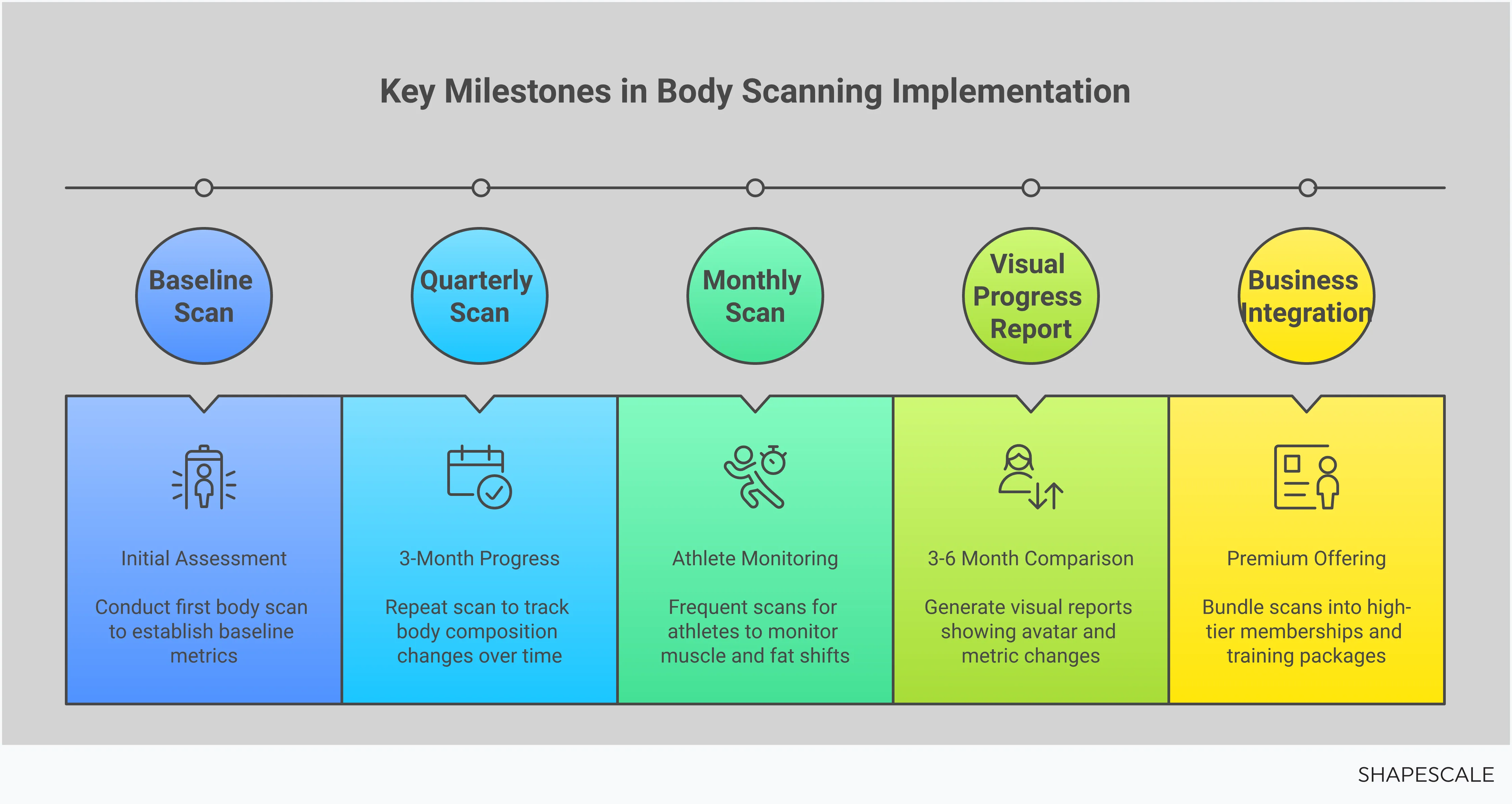
As a business owner, you can adopt this model yourself. Bundling body scans into premium personal training packages or high-tier gym memberships can create a compelling offer that drives client loyalty. It transforms the scan from a one-off service into an integral part of their wellness journey with your brand. This not only creates a steady revenue stream but also reinforces the value you provide by continuously tracking and celebrating their progress.
How Often Should You Get a Body Scan?
Deciding on the right scanning frequency for your clients is a balance between gathering useful data and avoiding information overload. The ideal schedule depends on their specific goals, the type of technology you’re using, and how quickly their bodies are expected to change. Establishing a consistent routine is the most important step, as it creates a reliable baseline for measuring progress and making informed adjustments to their wellness plans. A regular cadence helps clients stay motivated by showing them how their hard work is paying off over time.
How Often to Scan, Based on Type
For precise technologies like 3D body scanners or DEXA, a quarterly scan every three months is a great starting point for clients focused on long-term lifestyle changes. This gives enough time for meaningful shifts in body composition to occur. However, for clients with a specific event or a more aggressive goal, like a body recomposition program managed by a personal trainer, monthly scans can provide valuable, timely feedback. This more frequent data helps you see if their current plan is effective or if it needs tweaking, ensuring they stay on the right track without losing momentum.
How to Track Your Progress
Numbers on a spreadsheet are one thing, but seeing is believing. The most effective way to track progress is visually. Technologies like ShapeScale create a photorealistic 3D avatar of your client's body, offering a powerful way to see change. Instead of just focusing on weight, clients can see where they’re losing fat and gaining muscle. This visual evidence is incredibly motivating and helps connect their daily efforts to tangible results. For weight management clients, seeing the circumference of their waist shrink on a 3D model can be far more encouraging than a number on a scale.
When to Adjust Your Scanning Schedule
A client's scanning schedule shouldn't be rigid. It’s a tool that should adapt to their journey. If a client hits a plateau, starts a new fitness regimen, or makes a significant dietary change, it’s a good time to increase the scanning frequency. A scan can reveal if they’re experiencing muscle loss instead of fat loss, for example. More frequent check-ins can help you fine-tune their program for better results. This is especially true in a medical spa setting where clients may be undergoing treatments that rapidly change their body composition. Adjusting the schedule ensures you always have the most relevant data to guide them.
What to Expect During Your Body Scan
Walking a client through their first body scan is a great opportunity to build trust and set clear expectations. When clients know what’s coming, they feel more comfortable and confident in the process, which leads to a better experience and more reliable data. The scan itself is usually quick and straightforward, but the real value comes from understanding the preparation, the procedure, and most importantly, the results.
For professionals in the weight management and fitness fields, guiding a client through this process is key. It’s your chance to explain how this technology provides a detailed snapshot of their body that goes far beyond a traditional scale. You can talk about how the data will help you create a more effective, personalized plan tailored to their specific goals, whether that’s losing fat, building muscle, or improving overall body composition. By demystifying the experience, you empower your clients to take an active role in their health journey and see the tangible results of their hard work. This section will cover the simple steps to prepare for a scan, what happens during the appointment, and how to turn the resulting data into actionable insights.
How to Prepare for Your Scan
To get the most accurate and consistent results, a little preparation makes a big difference. Advise your clients to follow a few simple guidelines before their appointment. For best results, they should avoid heavy meals and intense workouts for at least a few hours beforehand. This helps ensure the scan reflects their true baseline body composition without temporary fluctuations from food or exercise.
Consistency is also key for tracking progress over time. Encourage clients to schedule their follow-up scans under similar conditions—for example, at the same time of day and with similar hydration levels. If they have a specific event or health goal, scanning once a month can be a great way to track their progress and make adjustments to their plan as needed.
What Happens During the Scan?
The scanning process is designed to be quick, non-invasive, and simple. Depending on the technology, the experience will vary slightly. With a 3D body scanner like ShapeScale, the client simply stands on a platform as it rotates, a process that takes only a minute or two. For other methods, like a DEXA scan, they will lie down on a table for about five minutes.
Regardless of the specific device, the procedure is straightforward and requires minimal effort from the client. There’s no discomfort involved, making it an easy addition to a regular check-in at your health club or training session. The goal is to capture a precise snapshot of the body efficiently, so you can spend less time on measurements and more time discussing the results and next steps.
How to Read and Use Your Results
This is where the magic happens. After the scan, you’ll receive a detailed report that breaks down body composition metrics. Instead of just a single number on a scale, you get valuable data on muscle mass, fat mass, and body measurements. For personal trainers, these reports are perfect for identifying muscle imbalances or confirming that a client’s diet is leading to fat loss instead of muscle loss.
The best part is using this information to show clients tangible proof of their progress. A 3D body scan can create a visual model of their body, allowing them to see changes over time that they might miss in the mirror. This visual feedback is incredibly motivating and helps you and your client celebrate wins and set new, informed goals together.
Frequently Asked Questions
How do I choose the right body scanner for my specific business, like a gym versus a med spa? The best scanner for your business depends on your clients' primary goals. For a health club or personal training studio where clients are focused on building muscle and changing their shape, a 3D body scanner is an excellent choice. It provides powerful visual feedback that keeps clients motivated. For a medical spa or a clinical weight management center, you might consider a service that offers DEXA scans for its precise bone density and internal fat measurements, which can complement your other services.
How can a body scanner help me keep clients motivated and improve retention? A body scanner transforms abstract goals into tangible results. When a client sees a photorealistic 3D model of their body changing over time, it provides undeniable proof that their hard work is paying off, even when the scale isn’t moving. This visual validation is incredibly powerful for motivation. It helps you celebrate small wins, adjust programs based on real data, and demonstrate the value of your services, which keeps clients engaged and committed for the long term.
Are body scans safe for all of my clients? This depends on the technology. 3D body scanners, like ShapeScale, are completely safe for everyone because they use advanced cameras and infrared light, not radiation. DEXA scans use a very low dose of radiation, which is considered safe for most people but may not be ideal for frequent use or for certain individuals. BIA technology, found in many scales, is not recommended for clients with implanted medical devices like pacemakers due to the electrical current it uses.
How often should I recommend my clients get a scan? A good rule of thumb for most clients is to scan every three months. This provides enough time for noticeable changes in body composition to occur, giving them a solid benchmark for progress. For clients on a more intensive program, such as training for an event or undergoing a body contouring treatment, monthly scans can offer more immediate feedback to help you fine-tune their plan and keep momentum high.
My clients already use smart scales at home. How do I explain the value of a professional scan? Acknowledge that smart scales are great for tracking daily trends, but explain that a professional scan provides a more reliable and insightful picture. You can mention that the BIA technology in home scales can be inconsistent due to factors like hydration. A professional tool like a 3D scanner offers a different kind of accuracy—visual proof. It shows them exactly where they are losing fat and gaining muscle, which is far more motivating than the fluctuating percentages on a home device.