Fitness vs. Medical: Which Body Scan Machine Is Right?

Heading 2
Heading 1
Heading 3
Heading 4
Heading 5
Heading 6
Lorem ipsum dolor sit amet, consectetur adipiscing elit, sed do eiusmod tempor incididunt ut labore et dolore magna aliqua. Ut enim ad minim veniam, quis nostrud exercitation ullamco laboris nisi ut aliquip ex ea commodo consequat. Duis aute irure dolor in reprehenderit in voluptate velit esse cillum dolore eu fugiat nulla pariatur.
Block quote
Ordered list
- Item 1
- Item 2
- Item 3
Unordered list
- zz
- Item B
- Item C
Bold text
Emphasis
Superscript
Subscript
As a wellness professional, you know the frustration clients feel when the number on the scale won’t budge. They put in the work, but traditional metrics fail to capture the full story of their progress. This is where you can offer a better way to track success, moving beyond weight to show meaningful changes in body composition. A professional body scan machine provides the tangible, visual proof that keeps clients motivated and confident in your guidance. It turns abstract goals into visible achievements, like lost inches and gained muscle. This guide will walk you through the different types of scanners, what they measure, and how to choose the right technology to demonstrate your value and improve client retention.
Key Takeaways
- Show clients what's really changing: A body scanner offers detailed composition data, like muscle gain and fat loss, providing tangible proof of progress that a traditional scale misses and keeping clients motivated.
- Match the technology to your service: Fitness-focused scanners like 3D or BIA are built for tracking progress and engaging clients, while medical scanners like DEXA or MRI are designed for clinical diagnosis.
- Prioritize clear, visual data: The most effective scanners translate complex metrics into an easy-to-understand client experience, using tools like 3D models to tell a compelling visual story of their success.
What Is a Body Scan Machine?
A body scan machine is a device that uses technology to create a detailed picture of the human body, offering valuable insights for health assessments and fitness tracking. Think of it as a supercharged scale and measuring tape combined. Instead of just giving you a single number—your weight—it provides a comprehensive look at body composition, health indicators, and physical changes over time. For wellness professionals, these machines are powerful tools for creating personalized plans and showing clients tangible proof of their progress.
The term "body scanner" covers a wide range of devices, from those used in hospitals for medical diagnostics to the ones you might find in a high-end gym or a weight management center. While they all measure the body, the technology they use and the data they provide can be very different. Understanding these differences is key to choosing the right tool for your business and your clients. Whether you’re a personal trainer tracking muscle gain or a med spa monitoring body contouring results, a body scanner provides the objective data you need to guide and motivate your clients effectively. It helps you move beyond guesswork and deliver a truly data-driven wellness experience.
How Do Body Scanners Work?
Body scanners operate on different principles depending on their purpose. Medical scanners, like an MRI, use powerful magnetic fields and radio waves to generate highly detailed images of the body’s internal organs and tissues. This diagnostic imaging is incredible for identifying health conditions but isn't designed for tracking fitness progress.
In the wellness world, scanners work differently. For instance, 3D body scanners use a series of cameras and sensors with safe, structured light to capture your body's exact shape and size in seconds. This process creates a photorealistic 3D model and extracts hundreds of precise body measurements. Other common fitness scanners use Bioelectrical Impedance Analysis (BIA), which sends a gentle, unnoticeable electrical current through the body to estimate metrics like body fat and muscle mass based on how the current travels through different tissues.
Common Types of Body Scanners
You'll encounter several types of body scanners in the health and wellness industry, each serving a distinct purpose. Understanding them helps you match the right technology to your clients' needs.
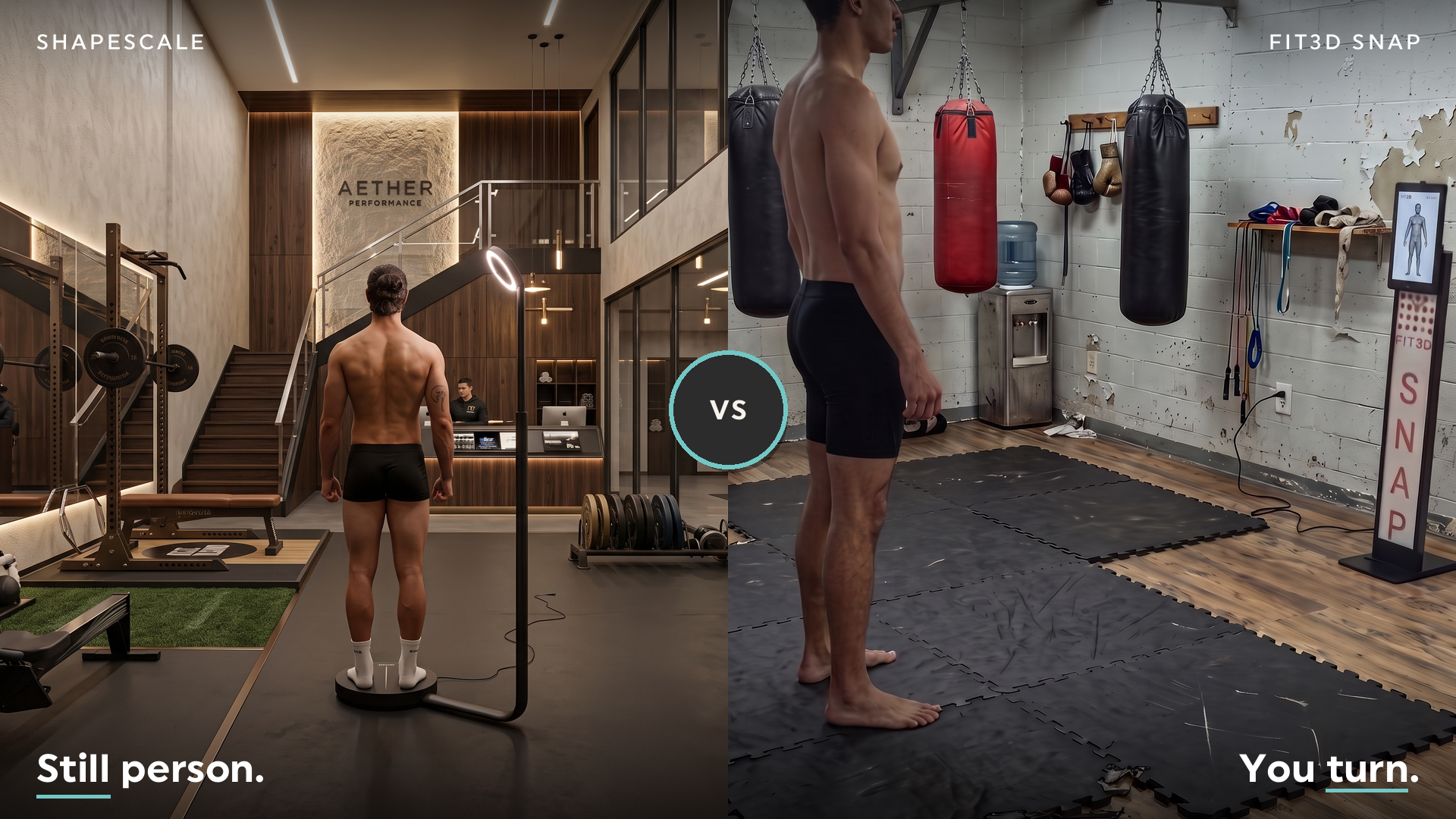
3D Body Scanners: These devices, like ShapeScale, create a digital avatar of a client’s body. They are excellent for visualizing progress, tracking changes in measurements, and monitoring shifts in body shape. This visual feedback is incredibly motivating for clients in health clubs and personal training programs.
BIA Scanners: Brands like InBody are common in gyms. These machines measure body composition by analyzing how a mild electrical current flows through the body. They provide quick estimates of body fat percentage, muscle mass, and body water, offering a more detailed breakdown than a standard scale.
Medical Scanners: This category includes DEXA and full-body MRI scans. DEXA is considered a gold standard for measuring bone density and body composition, while MRIs are used for preventative health screenings to detect issues like tumors or aneurysms. These are typically found in clinical settings.
What Can a Body Scan Machine Measure?
A body scan machine offers a detailed look inside the body that a simple scale can't provide. Instead of just a single number—total weight—these devices break down what that weight is made of. This gives you and your clients a much clearer picture of their health and progress. By moving beyond weight, you can focus on meaningful changes like fat loss and muscle gain, which are better indicators of health improvements. This detailed data helps you create more effective, personalized plans for your clients, whether they're in a weight management program or working with a personal trainer.
Key Body Composition Metrics
The core function of a body scanner is to measure body composition. This includes metrics like body fat percentage, skeletal muscle mass, and total body water. Unlike a scale that might show no change in weight, a body scan can reveal that a client has lost two pounds of fat and gained two pounds of muscle—a significant victory. Scanners like InBody are considered highly accurate, with a small margin of error, making them reliable for tracking these shifts. This level of detail helps clients understand their bodies better and stay motivated by seeing tangible proof of their hard work.
Health and Fitness Indicators
Beyond the basic composition numbers, body scanners provide valuable health and fitness indicators. They can measure visceral fat (the fat around your organs), track water distribution to monitor hydration, and calculate Basal Metabolic Rate (BMR). This information allows wellness professionals to create science-backed plans tailored to each client's unique physiology. When you can provide clear, personal health information, it builds trust and positions your business as a credible authority. This data empowers you to guide clients toward better health outcomes, strengthening your client relationships and your reputation.
How Scanners Track Client Progress
One of the most powerful features of modern body scanners is their ability to track progress over time. Many devices store data confidentially, allowing you and your clients to compare scans and chart changes. Some technologies, like Fit3D and ShapeScale, even create 3D avatars of the body. This visual representation is incredibly motivating for clients, as they can literally see their body transforming. Showing clients their progress in 3D helps them stay engaged and committed, which is key for retention. It turns abstract numbers into a clear, visual story of their success.
Fitness vs. Medical Scanners: What's the Difference?
Not all body scanners are created equal. The technology you’d find in a doctor’s office is very different from what you’d use in a gym or wellness center. Understanding these differences is key to choosing the right tool to help your clients achieve their goals, whether they're focused on fat loss, muscle gain, or medical diagnostics. The main distinction comes down to purpose: are you tracking wellness progress or diagnosing a health condition?
Scanners for Fitness and Wellness
Scanners designed for fitness and wellness are all about tracking changes in body composition. Think of tools like Bioelectrical Impedance Analysis (BIA) scales and 3D body scanners. Their goal is to give you and your clients consistent data on metrics like body fat percentage, muscle mass, and body measurements. For example, professional BIA scanners like InBody are highly reliable for tracking progress, with a small margin of error compared to clinical scans. These tools are perfect for personal trainers and gyms that need to show clients tangible results over time, keeping them motivated and engaged with their programs.
Scanners for Medical Diagnostics
Medical scanners, on the other hand, are built for diagnosing health issues. This category includes machines like MRI, CT, and DEXA scanners. An MRI, for instance, uses powerful magnetic fields—not radiation—to create detailed images of the body’s internal structures, allowing doctors to spot abnormalities. A DEXA scan is the clinical standard for measuring bone density. While highly accurate, these scans are typically used to identify specific medical conditions rather than for weekly fitness check-ins. They answer clinical questions and are operated by trained medical professionals in a healthcare setting.
Comparing Technology and Accuracy
The technology inside the scanner dictates its accuracy and best use case. Medical scanners are calibrated for diagnostic precision. Fitness scanners are designed for consistency and progress tracking. High-quality 3D scanners, for example, provide extremely accurate external body measurements and can show clients their progress with a visual 3D avatar. This technology offers a powerful way to track changes that a simple scale would miss. While a BIA device might be affected by a client's hydration levels, a 3D scan provides consistent geometric data, making it a reliable tool for weight management centers.
A Look at Safety and Radiation
A common question from clients is about safety and radiation. It’s a valid concern, and the answer depends entirely on the type of scanner. Medical imaging like X-rays and CT scans use ionizing radiation in controlled, safe doses. MRIs, however, are radiation-free. Most scanners used in fitness and wellness settings, including BIA devices and 3D body scanners, are completely non-invasive and do not use ionizing radiation. This makes them perfectly safe for regular check-ins, allowing you to track client progress weekly or monthly without any health risks. You can confidently book a demo knowing you're investing in a safe tool for your clients.
Choosing the Right Body Scanner for Your Business
Picking the right body scanner isn't about finding the "best" one—it's about finding the best one for your specific goals and the clients you serve. A personal trainer helping someone build muscle has different needs than a medical clinic screening for health issues. Your choice will shape the client experience, the data you can offer, and the value you provide. It's the difference between giving clients a vague sense of progress and showing them concrete, visual proof of their hard work. The right technology becomes a silent partner in your business, helping to retain clients, demonstrate your expertise, and create a premium service that stands out. Before you start comparing features and prices, it's helpful to first define what you need the scanner to do. Are you tracking fat loss for a weight management program? Visualizing muscle gain for gym members? Or providing a baseline for aesthetic treatments at a med spa? Understanding the landscape of scanners—from simple at-home devices to clinical-grade machines—helps you invest in technology that truly supports your business model and client journey. Let's break down the options based on three common business scenarios.
For At-Home Client Monitoring
Many clients come to you already using a smart scale or another at-home device. While these tools are great for building daily habits, they often fall short on precision. The unfortunate truth is that most consumer-grade body fat testing machines aren't very accurate. They can be influenced by hydration levels, meal timing, and other daily fluctuations, leading to confusing or frustrating results for your clients. As a professional, your role is to offer a level of insight they can't get from their bathroom scale. Providing access to a professional-grade scanner in your facility gives them reliable data, reinforcing your value and keeping them motivated by tracking real, meaningful change.
For Professional Wellness Services
If you run a health club, personal training studio, or weight management center, your clients are looking for clear, measurable results. This is where professional-grade scanners shine. You need a tool that can accurately track changes in body composition over time. For example, some BIA devices like InBody are considered highly accurate for this purpose, with a small margin of error. This level of precision is crucial for building client trust. When a client can see a 3D model of their body changing or review a detailed report showing muscle gain and fat loss, it validates their hard work and your guidance. This data-driven approach transforms your service from a simple workout plan into a personalized, high-value wellness journey.
For Medical and Diagnostic Needs
Scanners used in medical settings, like MRI or DEXA, serve a completely different purpose. These are diagnostic tools designed to identify health conditions, measure bone density, or provide incredibly detailed images of internal structures. For instance, an MRI uses powerful magnetic fields and radio waves to create these images without radiation. While a whole body MRI can be a powerful tool for early detection, it's not designed for tracking the aesthetic and performance-based changes your fitness clients want to see. It's important for wellness professionals to understand this distinction. The scanner you choose for your medical spa or gym should be focused on body composition and client motivation, not clinical diagnosis.
Key Features to Look for in a Body Scanner
When you're ready to invest in a body scanner for your business, the options can feel overwhelming. Different models offer a wide range of features, but a few key elements separate the good from the great. Focusing on the right technology, connectivity, and accuracy will ensure you choose a machine that delivers real value to your clients and a solid return on your investment. Here’s what to prioritize in your search.
BIA and 3D Scanning Technology
The most comprehensive body scanners often combine two powerful technologies: Bioelectrical Impedance Analysis (BIA) and 3D scanning. BIA sends a safe, low-level electrical current through your body to estimate metrics like body fat percentage and muscle mass. At the same time, 3D scanning uses cameras and infrared light to create a photorealistic model of the body, capturing precise circumference measurements. This dual approach gives you and your clients the full picture—the internal data from BIA and the external, visual progress from the 3D model. This combination is one of the key types of body scanner machines because it's efficient, non-invasive, and highly motivating for clients who can see their shape change over time.
Smart Connectivity and App Integration
A body scanner is more than just hardware; its software is what turns raw data into actionable insights. Look for a system with smart connectivity and a user-friendly app for both you and your clients. The ability to sync data automatically to a phone or cloud platform makes progress tracking seamless. For a business owner, this is a powerful tool for client engagement. An integrated app allows you to monitor client results, provide personalized feedback, and keep them motivated between sessions. This feature transforms a one-time scan into an ongoing conversation, strengthening your client relationships and improving retention for your health club or training service.
Professional-Grade Accuracy
Accuracy is essential, but it’s important to understand what that means in a wellness setting. While medical-grade machines like DEXA scans are often considered a benchmark, professional body scanners are designed for consistency. You need a device that can reliably detect small changes in body composition and measurements over time. This precision is what allows you to show clients tangible proof of their progress, whether they're losing inches or gaining muscle. For weight management programs, this level of reliable tracking is non-negotiable. When evaluating a scanner, ask about its test-retest reliability to ensure it can consistently measure progress and keep your clients on track.
Common Myths About Body Scanners, Debunked
Body scanning technology is a powerful tool, but it’s also surrounded by a lot of confusion. Misinformation can make it difficult to understand what these devices do and how they can benefit your clients. Let's clear up a few of the most common myths so you can feel confident about the technology you bring into your business.
Myth: Body Scanners Expose You to Harmful Radiation
This is a big one, and it often comes from confusing fitness scanners with certain types of medical imaging. Medical scans like X-rays and CT scans use ionizing radiation to see inside the body. However, most body scanners designed for the fitness and wellness industry use completely different, non-invasive technologies.
For example, 3D body scanners like ShapeScale use a camera and infrared light to create a photorealistic model of the body’s surface. Bioelectrical Impedance Analysis (BIA) devices send a harmless, low-level electrical current through the body. Neither of these methods involves radiation. They are safe for regular use, allowing your clients to track their progress frequently without any health concerns.
Myth: All Body Scanners Are Equally Accurate
It’s easy to assume that if a machine gives you a number, it must be correct. The truth is that body fat testing machines are not all created equal. Different technologies measure body composition in different ways, which can lead to varying results. BIA, for instance, can be affected by a person's hydration levels, while skinfold calipers depend heavily on the skill of the person taking the measurement.
Instead of chasing a single "perfect" number, the real value for your clients lies in consistency. A high-quality 3D body scanner provides precise and repeatable measurements of body shape and circumference. This consistency is what allows you and your clients to see real, tangible changes over time, which is far more motivating than a fluctuating body fat percentage from a less reliable device.
Myth: A Fitness Scan Is the Same as a Medical Scan
Using a fitness scanner at a health club is not the same as getting an MRI at a hospital. Their purposes are fundamentally different. A fitness scan is designed to track changes in body shape, size, and composition to monitor progress toward health and wellness goals. It provides motivational data and visual feedback on how a diet and exercise plan is working.
A medical imaging technique like an MRI, on the other hand, is a diagnostic tool. It uses powerful magnetic fields to create detailed images of internal organs and tissues to help doctors diagnose diseases or injuries. A fitness scan tells you how your body is changing on the outside, while a medical scan tells a doctor what’s happening on the inside.
A Breakdown of Top Body Scanning Technology
With so many body scanning options on the market, it can be tough to figure out which one is the right fit for your business. Each technology offers a different level of detail, accuracy, and client experience. Understanding the key players—from 3D scanners to clinical-grade machines—will help you make an informed decision that aligns with your services and goals. Let's look at four of the most common types of body scanning technology you'll encounter.
ShapeScale: The Power of 3D Scanning
ShapeScale uses 3D scanning technology to create a photorealistic model of a client's body. This provides highly accurate body measurements and visually compelling progress reports that clients can actually see. For businesses like health clubs and weight management centers, this visual proof is a powerful motivator. It helps clients stay engaged and committed to their programs, which translates into better retention and higher revenue. The 3D model makes progress tangible, turning abstract goals into visible achievements that keep clients coming back.
InBody: Professional BIA Analyzers
InBody is a well-known name in professional wellness, using Bioelectrical Impedance Analysis (BIA) to measure body composition. These devices send a small, safe electrical current through the body to determine the percentage of muscle mass, body fat, and water. When used correctly, InBody scanners are a reliable tool for tracking changes over time. They give clients detailed data points that are more insightful than a traditional scale, making them a popular choice for gyms looking to offer baseline and follow-up assessments.
Smart Scales: Consumer-Grade Options
You've likely seen smart scales available for home use. These consumer-grade devices also use BIA technology to estimate metrics like body fat and muscle mass. While convenient and affordable for at-home tracking, their accuracy can vary and is generally lower than professional equipment. For a wellness business, they can be a good supplementary tool to recommend for clients' daily check-ins, but they lack the precision needed for professional service offerings. They offer a basic overview, making them a starting point for many on their fitness journey.
DEXA: The Clinical Standard
Often called the gold standard in body composition, a DEXA scan uses low-dose X-rays for precise measurements of bone, fat, and muscle. Because of its high accuracy, it's used in clinical settings to assess bone density and diagnose conditions like osteoporosis. While some athletes use DEXA scans to fine-tune their training, the cost and need for a licensed technician make it impractical for most fitness centers. It offers unparalleled detail but is more of a medical diagnostic tool than a client engagement one.
How Much Do Body Scanners Cost?
The price of a body scanner can range from under a hundred dollars to tens of thousands. The final cost depends on who the device is for, the technology it uses, and the long-term value it provides for your business. Understanding these factors will help you find the right scanner for your budget and goals.
Consumer vs. Professional Pricing
At the lower end of the price spectrum, you’ll find consumer-grade body scanners. A quick search on Amazon shows a variety of smart scales that measure body composition. These devices are affordable and accessible for at-home use, and many are even eligible for FSA or HSA payments, making them an easy entry point for individuals curious about their metrics. While great for personal tracking, they lack the precision, reliability, and detailed data that professional wellness businesses require to serve their clients effectively.
How Technology Impacts Cost
The technology inside the scanner is the biggest driver of its price. Professional-grade machines use far more sophisticated components to ensure accuracy and consistency. For example, some high-end medical scans use research-grade MRI machines calibrated for detailed imaging. For 3D scanners, higher-quality optics and sensors mean the device stays calibrated longer and provides more reliable measurements over time. A cheaper scanner might drift quickly and require constant recalibration, leading to inconsistent client data and a frustrating user experience. Investing in quality technology means investing in accuracy.
Considering the Long-Term Value
While a professional body scanner is a significant investment, it’s important to consider its long-term value. This technology can become a cornerstone of your business, helping you attract and retain clients. For instance, businesses using Fit3D are 3.7 times more likely to sign up new members. A professional scanner helps you show clients real, measurable results, which builds trust and keeps them motivated. The right scanner isn't just an expense; it's a tool that can generate revenue and deliver a substantial return on investment.
Your Checklist for Choosing a Body Scanner
Picking the right body scanner for your business comes down to more than just features and price. It’s about finding a tool that aligns with your services, your clients' goals, and your physical space. This checklist will walk you through the three most important factors to consider so you can make a confident choice that adds real value to your business.
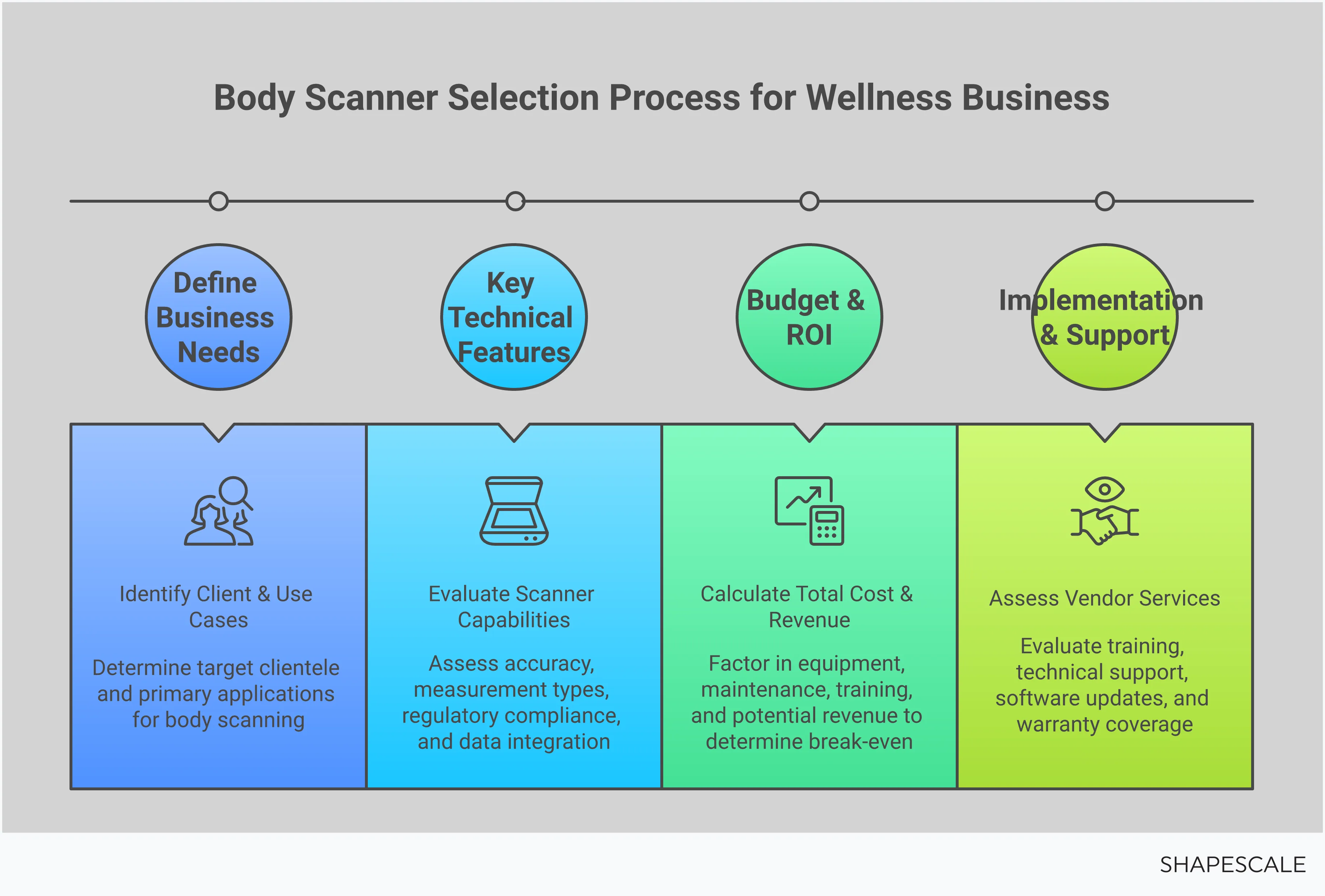
Define Your Accuracy Needs
First, think about what level of precision your clients require. Are you a weight management clinic that needs clinical-grade data, or a gym helping members track general fitness progress? While no scanner is 100% perfect, some offer higher accuracy than others. For example, professional BIA scanners like InBody have a small margin of error when compared to DEXA scans, the clinical gold standard. Defining your accuracy requirements from the start will help you narrow down the options and ensure the data you provide is reliable and useful for your clients' specific journeys.
Evaluate the User Experience and Data
A scanner is only as good as the data it provides and how easily your clients can understand it. Look for a machine that presents information in a clear, motivating, and visual way. A simple list of numbers can be confusing, but a 3D avatar showing progress over time is intuitive and powerful. The experience should be seamless for both your staff and your clients. Consider how factors like hydration status or body position might affect results and choose a system that helps you manage these variables. The goal is to find a scanner that turns complex data into an engaging client experience.
Consider Your Space and Setup
Finally, think about the practical side of things. How much floor space can you dedicate to a scanner? Some machines are bulky, while others have a minimal footprint. You should also ask about installation and calibration. High-quality 3D scanners generally stay calibrated for longer, saving you time and maintenance headaches. Your body scanner should fit into your facility’s workflow, not disrupt it. Before you commit, it’s a good idea to book a demo to see how the machine operates and visualize how it will fit into your business environment.
Where to Find a Body Scanner
Whether you want to experience a 3D body scan for yourself or are considering adding one to your business, finding the right technology is key. High-quality scanners provide the detailed data that helps clients see their progress and stay motivated on their wellness journey.
Find a ShapeScale Near You
ShapeScale is a 3D body scanning technology that gives clients accurate measurements and shows them their progress in a photorealistic 3D model. Built on over a decade of research and used for more than four million scans, it offers a powerful visual tool for tracking body composition changes. Businesses that use ShapeScale are 3.7 times more likely to sign up new members, and their clients are 1.8 times more likely to stick around for over six months. If you want to see the technology in action, you can find a ShapeScale location to experience a scan firsthand.
See How ShapeScale Can Help Your Business
Beyond tracking metrics, ShapeScale serves as a powerful sales tool to attract and retain clients. By showing progress in a tangible, visual way, you help build client confidence and loyalty that goes beyond the number on a scale. This technology is versatile enough for small fitness studios, large health clubs, and specialized weight management centers. The detailed data from each scan can also create opportunities to introduce clients to premium services like nutrition coaching or personal training, helping you grow your revenue. To see how it can fit into your operations, you can book a demo with our team.
Frequently Asked Questions
Why should I invest in a professional scanner when my clients can buy a smart scale for under $100? While smart scales are great for daily check-ins, they often lack the consistency needed for professional progress tracking. A professional-grade scanner offers a level of precision and insight that reinforces your expertise. It provides reliable data and visual proof of change, like a 3D model, which is far more motivating for clients than the fluctuating numbers on a home device. This elevates your service, justifies premium pricing, and gives clients a compelling reason to work with you.
How often should I have my clients use the body scanner? A good rhythm for most clients is to scan every 4 to 6 weeks. This frequency is ideal because it allows enough time for meaningful changes in body composition to occur, making progress visible and motivating. Scanning too often can sometimes cause frustration over minor daily fluctuations. A monthly or bi-monthly check-in provides a clear, data-driven snapshot that helps you adjust their program and celebrate their hard-earned results.
Is a 3D scanner or a BIA scanner better for my business? It depends on the story you want to tell your clients. BIA scanners are excellent for providing internal metrics like muscle mass and body fat percentage. 3D scanners, on the other hand, excel at showing external changes through precise measurements and a visual avatar. Many clients find seeing their body shape transform more powerful than tracking percentages alone. A 3D scanner offers undeniable visual proof that keeps clients engaged and excited about their progress.
Are these scanners safe for all my clients, including those who are pregnant? Yes, the scanners used in wellness settings are generally very safe. 3D body scanners are non-invasive and use harmless light and cameras, much like taking a photograph. BIA scanners use a very low-level electrical current that is unnoticeable and safe for most people. However, BIA is typically not recommended for clients who are pregnant or have a pacemaker. It's always best to check the manufacturer's guidelines and advise clients to consult their doctor if they have any concerns.
Besides tracking progress, how can a body scanner help my business grow? A body scanner is a powerful tool for both sales and retention. You can use an initial scan as part of a new member consultation to establish a baseline and demonstrate the value of your services. The detailed reports and visual models create natural opportunities to upsell clients into personal training, nutrition coaching, or other premium programs. By showing tangible results, you build incredible trust and loyalty, which keeps clients committed to your business for the long term.