How Does a Body Composition Scale Work, Exactly?


Heading 2
Heading 1
Heading 3
Heading 4
Heading 5
Heading 6
Lorem ipsum dolor sit amet, consectetur adipiscing elit, sed do eiusmod tempor incididunt ut labore et dolore magna aliqua. Ut enim ad minim veniam, quis nostrud exercitation ullamco laboris nisi ut aliquip ex ea commodo consequat. Duis aute irure dolor in reprehenderit in voluptate velit esse cillum dolore eu fugiat nulla pariatur.
Block quote
Ordered list
- Item 1
- Item 2
- Item 3
Unordered list
- zz
- Item B
- Item C
Bold text
Emphasis
Superscript
Subscript
A client works hard for weeks, eats right, and feels stronger, but steps on a traditional scale only to see the same number staring back. It’s a frustrating moment that can derail motivation. That single number fails to tell the whole story of their progress. This is because they might be losing body fat while gaining an equal amount of muscle, a significant victory that a standard scale completely misses. So, how does body composition scale work to solve this problem? It uses a safe, low-level electrical current to differentiate between fat, muscle, and water. This provides a much clearer picture of a client's health, allowing you to celebrate non-scale victories and keep them focused on meaningful, positive changes.
Key Takeaways
- Shift the focus from total weight to body composition: Use the scale's data on body fat, muscle, and water to show clients meaningful progress, like losing fat while gaining muscle, which a traditional scale would miss.
- Establish a consistent weigh-in routine for reliable data: Advise clients to use the scale at the same time each day, ideally in the morning before eating or drinking, to minimize daily fluctuations and accurately track long-term trends.
- Interpret trends, not just daily numbers: Understand that factors like hydration can cause daily readings to fluctuate. Focus on the overall direction of change over weeks and months to make informed adjustments to client programs.
What is a body composition scale?
A body composition scale is a device that goes far beyond measuring your total weight. Instead of giving you just one number, it provides a detailed breakdown of what your body is made of. Using a technology called Bioelectrical Impedance Analysis (BIA), the scale sends a safe, low-level electrical current through your body. You won't feel a thing. This current flows at different speeds through different types of tissue. Since fat, muscle, and water all conduct electricity differently, the scale can use these speed measurements to calculate an estimate of your body fat percentage, muscle mass, and water levels.
This detailed analysis offers a much clearer picture of your health and fitness progress. For professionals in the wellness industry, from personal trainers to clinicians at weight management centers, this data is invaluable. It helps you move the conversation with clients away from the simple, and often misleading, number on a traditional scale. Instead, you can focus on meaningful changes, like reducing body fat while preserving or building lean muscle, which is a far better indicator of improved health.
How it differs from a regular scale
Your standard bathroom scale can only tell you one thing: your total body weight. While that number has its place, it doesn't tell the whole story. As one source puts it, traditional scales "can't tell you if you're losing fat or gaining muscle, which is important for fitness goals." A client could be working hard, eating right, and building strength, but feel discouraged if the number on the scale doesn't budge. That's because they might be losing fat and gaining muscle at the same time, causing their overall weight to remain stable.
A body composition scale solves this problem by giving you a more complete view. It provides a rough breakdown of your body composition, separating your weight into key components like fat, muscle, bone, and water. This distinction is critical for accurately tracking progress and keeping clients motivated.
Why it's a powerful tool for tracking health
The real power of a body composition scale lies in the insights it provides. When you can see the specific changes happening in your body, you can make smarter decisions about your fitness and nutrition plans. Tracking these metrics helps you understand if your efforts are leading to positive changes, like losing body fat while maintaining lean muscle mass. This shift in focus from just "weight loss" to "fat loss" is a healthier, more sustainable approach to wellness.
For clients, seeing their body fat percentage drop is a clear sign of progress, even if their total weight hasn't changed much. This data validates their hard work and proves that their program is effective. For wellness professionals, this information allows you to demonstrate the value of your services and tailor your guidance to achieve specific, meaningful results for each individual.
How does bioelectrical impedance analysis (BIA) work?
Ever wonder how a simple-looking scale can tell you your body fat percentage? It’s not magic—it’s science. Most body composition scales use a method called bioelectrical impedance analysis, or BIA. This technology offers a quick and non-invasive way to look beyond your total weight and understand what your body is actually made of: fat, muscle, bone, and water. For wellness professionals, BIA provides a powerful way to show clients tangible changes that a standard scale would miss, keeping them motivated and engaged. It transforms the conversation from "How much do you weigh?" to "How is your body composition improving?" This deeper insight helps you tailor programs for personal training or weight management and track progress more effectively.
The science of measuring body composition
At its core, BIA works by sending a very low-level, safe electrical current through your body, usually from your feet up through your legs and pelvis. You won’t feel a thing. The scale then measures the resistance, or "impedance," that the current encounters as it travels. Different types of body tissue have different levels of water content, which affects how easily the current can pass through them. By measuring this impedance, the scale can begin to paint a picture of your body’s makeup. It’s a sophisticated process that happens in just a few seconds, providing valuable data for clients in any health club or wellness center.
Differentiating between fat, muscle, and bone
The key to BIA is how different tissues conduct electricity. Muscle, which contains a high percentage of water, is an excellent conductor and allows the electrical current to flow easily with low resistance. Body fat, on the other hand, contains very little water and acts as an insulator, creating more resistance to the current. The scale measures how much the current is impeded and plugs that data into an algorithm. This formula also considers personal information you input, like your age, height, gender, and activity level, to estimate your body fat percentage and other metrics like muscle mass and water content.
Are the electrical currents safe?
Yes, the electrical current used in BIA is completely safe for most people. The current is so small—typically around 50 kHz—that it’s imperceptible. You can’t feel it, and it poses no harm. However, it’s a standard recommendation that individuals with implanted electronic medical devices, such as a pacemaker, should not use BIA scales. The faint electrical signal could potentially interfere with the device's function. For everyone else, it’s a harmless and efficient way to get a snapshot of your body composition without any discomfort or risk.
What metrics do body composition scales measure?
Unlike a traditional scale that only tells you your total weight, a body composition scale offers a much richer story. It breaks down that single number into several key components, giving you and your clients a more complete picture of their health. Think of it as moving from a simple headline to the full article. Instead of just knowing the "what" (total weight), you get to understand the "why" and "how" behind that number.
These scales provide insights into the makeup of the body, distinguishing between different types of tissue. This is incredibly valuable because two people with the exact same weight can have vastly different body compositions and, therefore, different health profiles. For wellness professionals, this data is a powerful tool for creating personalized fitness and nutrition plans. It helps you track progress that isn't always visible on a regular scale, like a client gaining muscle while losing fat. This helps keep clients motivated and demonstrates the value of your program. Key metrics usually include body fat percentage, muscle mass, water weight, bone density, and even an estimate of your basal metabolic rate. By looking beyond total weight, you can set more meaningful goals and celebrate non-scale victories that truly reflect improved health.
Body fat and muscle mass
The two most popular metrics are body fat percentage and muscle mass. A body composition scale estimates how much of your total weight is made up of fat versus fat-free mass, which includes your muscles, bones, and organs. This distinction is fundamental for tracking fitness progress. For instance, a client might not see the number on a regular scale budge, but a body composition analysis could reveal they’ve successfully lost fat and gained an equal amount of muscle—a huge win. Understanding these numbers helps shift the focus from simple weight loss to meaningful changes in body composition.
Water weight and hydration
Your body’s hydration level is another critical piece of the puzzle. Since muscle tissue contains significantly more water than fat tissue, your hydration status can greatly influence the scale's readings. If you or a client are dehydrated, the electrical current used by the scale faces more resistance, which can lead to an artificially high body fat reading. Conversely, being over-hydrated can skew the results in the opposite direction. This is why consistency in hydration and weigh-in timing is so important for getting reliable data. Tracking body water percentage can also be a helpful indicator of overall health and hydration habits.
Basal metabolic rate and bone density
Many advanced scales also estimate your basal metabolic rate (BMR) and bone density. BMR is the number of calories your body needs to perform basic, life-sustaining functions at rest. Knowing this number is a great starting point for creating effective nutrition plans for clients, especially those in weight management programs. Bone density, or bone mass, measures the amount of mineral in your bone tissue. While it doesn’t change quickly, monitoring it over the long term is important for assessing skeletal health and the risk of conditions like osteoporosis.
How accurate are body composition scales?
If you or your clients are using a body composition scale, it’s helpful to have realistic expectations about what it can and can’t do. While these scales are fantastic tools for tracking progress, they aren’t the final word on body composition. Understanding their accuracy, limitations, and how they compare to professional methods will help you get the most value from them.
Accuracy vs. professional methods like DEXA
Let's be clear: an at-home body composition scale won't give you the same precision as a clinical-grade machine. The gold standard for measuring body composition is the DEXA scan, which uses X-ray technology to give a detailed breakdown of bone, fat, and lean mass. But DEXA scans are medical tests, not something you'd do every week to check in on your progress. That's where BIA scales come in. They offer a convenient, accessible way to get a general idea of your body composition from home or at your local gym. Think of it this way: a
Common myths about precision
One of the biggest misconceptions about body composition scales is that the number on the screen is an exact measurement of your body fat percentage. While these scales are very good at measuring your total body weight, their ability to pinpoint your exact body composition is less precise. The technology provides an estimate, not a definitive fact. So, if your scale reads 25% body fat one day and 25.5% the next, it doesn't necessarily mean you gained half a percent of fat overnight. The real power of these scales isn't in the single number they provide, but in their ability to show trends over weeks and months. Tracking these changes is what truly matters for long-term health and fitness goals.
Limitations and what to expect
It's important to know what can affect your scale's readings. Hydration level is the biggest variable. Since BIA technology measures the resistance to an electrical current, and water is a great conductor, your hydration status can significantly skew the results. If you're dehydrated, the scale might read your body fat as higher than it is. If you've just chugged a lot of water, it might read lower. Another key limitation is that these scales can't tell you where your body stores fat. This is a critical piece of information, as fat stored around your abdomen, known as visceral fat, is linked to a higher risk of health issues. Even with these limitations, BIA scales are still a useful tool for monitoring progress when used consistently.
What affects your body composition reading?
While body composition scales are useful for tracking trends, the number you see on any given day can be influenced by several factors. Bioelectrical impedance analysis (BIA) is sensitive to small changes in your body, meaning what you did this morning can shift your results. Understanding these variables is the key to getting more reliable data. It’s not about a "perfect" reading, but about creating a consistent routine to see your actual progress. Here are the main factors that cause these fluctuations.
Hydration and weigh-in timing
How much water is in your body is one of the biggest factors that can skew a BIA reading. Since BIA measures the speed of a gentle electrical current, your hydration level directly impacts the results. Water conducts electricity well, while fat does not. If you're dehydrated, there's more resistance, and the scale may report a higher body fat percentage. If you're overhydrated, the opposite happens. To get consistent results, weigh yourself at the same time each day, like in the morning after using the restroom but before eating or drinking. This helps keep your hydration levels stable.
Exercise and meals
What you do right before stepping on the scale matters. A tough workout can alter your results by shifting fluids and causing dehydration from sweat. It’s best to wait a few hours after exercising to weigh yourself. Similarly, a large meal adds weight and fluid, while substances like caffeine and alcohol can dehydrate you. For the most accurate trend data, avoid using the scale right after a meal or your morning coffee. Creating a consistent pre-weigh-in routine is a simple way for personal trainers to help clients gather more meaningful data between sessions.
Your body's natural fluctuations
Beyond diet and exercise, your body is always in flux. For women, the menstrual cycle can cause fluid retention, leading to temporary shifts in weight and body composition. Even small things, like where you place your feet on the scale, can change the outcome. Because of these variables, it's important not to focus on a single day's numbers. Body fat scales are most valuable for tracking the bigger picture over weeks and months. This long-term view is essential for any weight management program, as it separates real progress from daily fluctuations.
How to use a body composition scale effectively
A body composition scale is only as good as the data it collects. To provide your clients with reliable insights, you need a consistent process. Small variations in how and when you take measurements can skew the results, making it harder to track real progress. Establishing a clear protocol for weigh-ins ensures the data you gather is dependable, helping you build trust and demonstrate the value of your programs. By controlling the variables, you can focus on what truly matters: the long-term trends that reflect your clients' hard work and dedication.
Best practices for consistent readings
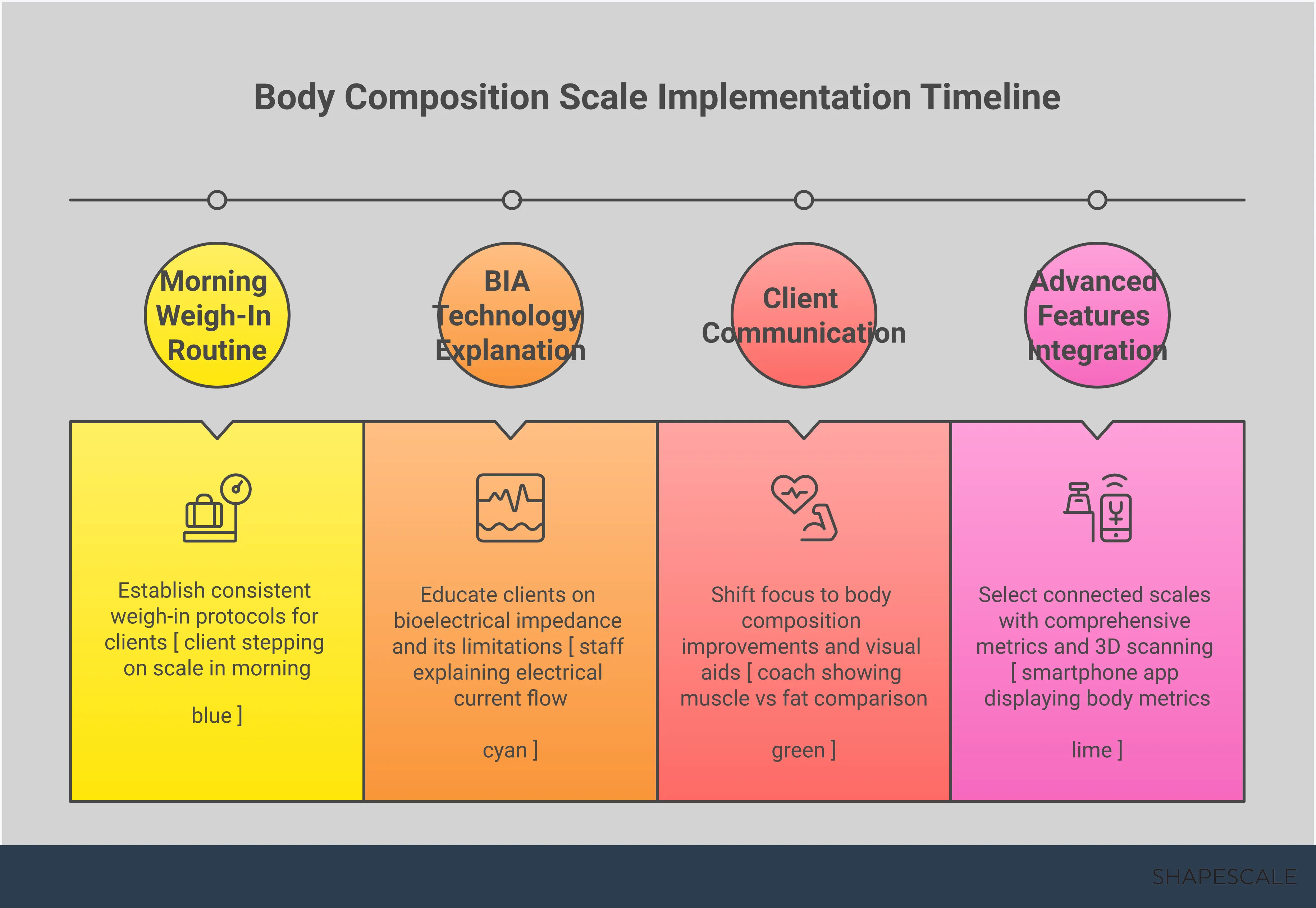
For the most reliable results, advise your clients to use the scale at the same time each day, under the same conditions. First thing in the morning, after using the restroom but before eating or drinking, is often the best time. This routine minimizes fluctuations from daily activities, meals, and hydration. Remind them not to get hung up on a single reading. Instead, the goal is to track body composition changes over weeks and months. This long-term view provides a much clearer picture of their progress and helps manage expectations, keeping them motivated on their wellness journey.
When and how to prepare for a weigh-in
Preparation is key for an accurate reading. Proper hydration is one of the most important factors, so make sure your client has had enough water throughout the previous day. Dehydration can cause the scale to overestimate body fat. It's also best to avoid certain activities right before a weigh-in. Advise clients to steer clear of caffeine, alcohol, and strenuous exercise for several hours beforehand, as these can temporarily alter body water levels and affect the electrical impedance measurement. Following these simple steps helps ensure each measurement is a true reflection of their current composition.
Setting up your scale correctly
Not all scales are created equal. Models that measure from both the hands and feet (four-point scales) tend to be more accurate than those that only measure from the feet (two-point scales). Regardless of the type, always place the scale on a hard, flat surface—not a rug or carpet—to ensure it's level. Before use, read the manufacturer's instructions carefully. Some people, including pregnant individuals or anyone with a pacemaker or other internal medical device, should not use BIA scales due to the electrical current. Prioritizing client safety and proper setup is fundamental to professional practice.
How to interpret your results
Once you have your body composition numbers, the next step is to make sense of them. A string of data is only useful if you know what it means for your health and fitness journey. Looking at these metrics in context is how you turn raw data into an actionable plan for yourself or your clients. It’s about understanding the story the numbers tell over time.
Understanding healthy ranges
It's helpful to have a baseline for what's considered healthy. While individual needs vary, general guidelines can offer a starting point. For body fat percentage, a healthy range is typically 25% to 31% for women and 18% to 24% for men. Remember that factors like age and athletic activity can shift these numbers. For your clients, these ranges are less about hitting a specific number and more about understanding where they currently stand. It’s a great way to begin a conversation about setting realistic and personalized goals for their wellness journey.
Tracking long-term trends vs. daily changes
The number on the scale can change from one day to the next, and that’s completely normal. Hydration levels, the meal you just ate, or a recent workout can all cause temporary shifts. That's why it's so important to focus on trends, not single numbers. Encourage your clients to look at their body composition changes over weeks and months. This long-term view is where you'll see true progress. It helps filter out the daily noise and reveals the real impact of their hard work and consistency, providing motivation to keep going.
When to consult a professional
As a wellness professional, you're a key part of your client's health team. While you can provide incredible guidance, it's also important to know when to refer out. If a client has concerns about their body fat percentage or other metrics, or if their results fall significantly outside healthy ranges, encourage them to discuss the results with a doctor. A physician or registered dietitian can provide a medical diagnosis and a more comprehensive health plan. This collaborative approach ensures your clients receive the best possible care and positions you as a trusted, responsible partner in their weight management journey.
For wellness professionals: A deeper look
As a professional, you know that a standard scale only tells part of the story. Body composition scales offer a more complete picture, giving you and your clients valuable data to track progress and stay motivated. This information helps you tailor programs and show clients tangible results beyond just their total weight. By focusing on metrics like fat loss and muscle gain, you can have more meaningful conversations about their health journey.
Using body composition data with clients
Body composition scales help you shift the conversation from weight loss to fat loss. When a client sees their body fat percentage decrease while their muscle mass holds steady or increases, it’s a powerful motivator—even if the number on the scale doesn’t move much. These scales work by sending a harmless electrical current through the body, a method called bioelectrical impedance analysis. Because fat, muscle, and water conduct electricity differently, the scale can estimate each component. This allows you to provide personalized feedback and help clients understand the quality of their results, which is essential for long-term success in any weight management program.
The next step: 3D body scanning for your business
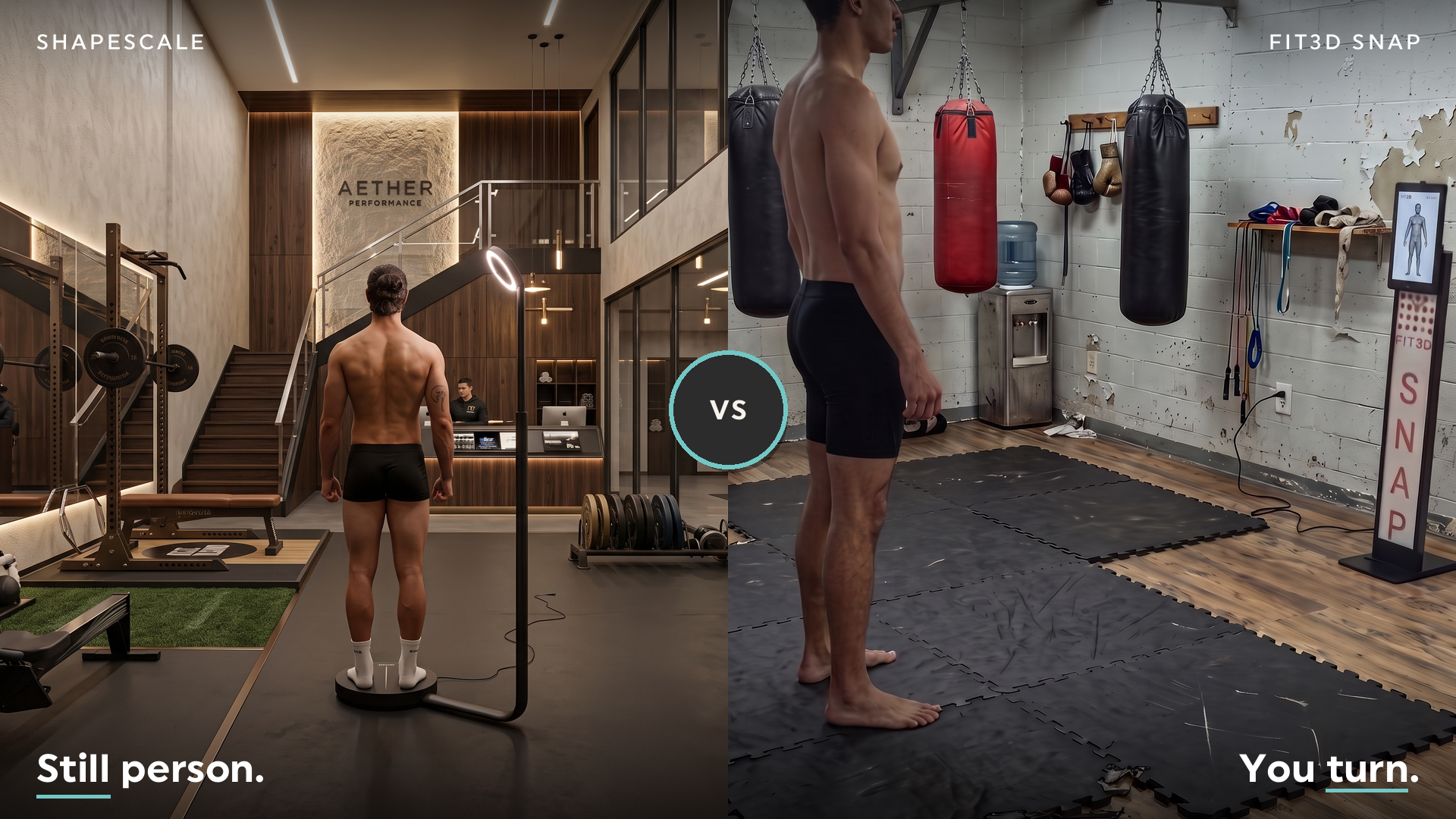
While BIA scales are a great tool, 3D body scanning represents the next evolution in client tracking. Instead of relying solely on electrical impedance, 3D scanners create a photorealistic model of your client, providing precise circumferential measurements and a visual representation of their progress. This technology allows you to show clients exactly where they’re losing inches and gaining muscle, making their hard work feel more real. For businesses like medical spas and high-end health clubs, offering this advanced service can be a key differentiator. It provides an unparalleled client experience and delivers the kind of precise, visual data that builds trust and drives retention. You can book a demo to see how it works.
Are body composition scales worth it?
So, what’s the final verdict? Are these scales a worthwhile investment for you or your clients? The short answer is yes, with a few caveats. A body composition scale goes beyond a simple number, offering estimates for body fat, muscle mass, and water. This is incredibly useful because it shifts the focus from weight loss to fat loss and muscle gain. Tracking these metrics provides a much clearer picture of how a person's body is changing in response to diet and exercise. Too much body fat, for instance, can lead to various health problems, so monitoring it is a proactive step.
That said, at-home scales have their limits. They aren't as precise as clinical methods like a DEXA scan. However, for tracking trends, they are quite reliable. Think of a body composition scale as a compass, not a GPS. It might not give you pinpoint-perfect coordinates, but it will consistently point you in the right direction. By showing whether body fat is trending down and muscle mass is trending up, it provides the motivational feedback needed to stick with a wellness plan. For personal trainers and their clients, this can be a powerful tool for demonstrating progress that a regular scale would miss.
Key features to look for
When you're shopping for a body composition scale, a few features can make a big difference in the user experience. First, check the display. You’ll want a screen that is large, bright, and easy to read from a standing position. The scale should also display a good range of health information and keep it on the screen long enough for you to register the numbers without rushing.
Another key feature is connectivity. Look for scales that can sync with a smartphone app via Bluetooth or Wi-Fi. This automatically logs each weigh-in, making it simple to track progress over weeks and months. Seeing trends visualized in a graph is far more insightful than trying to remember numbers from one day to the next.
How to choose the right scale for you
The best scale is one that gets used consistently. To get the most reliable trend data, it’s best to weigh in at the same time every day, preferably in the morning before eating or drinking. This routine minimizes the daily fluctuations that can skew your readings. If you or a client have specific concerns about body fat percentage, it’s always a good idea to discuss the results with a doctor or dietitian for a professional opinion.
Remember, while these scales are great for tracking your total body weight and overall trends, they are not perfectly accurate at measuring your exact body composition. For businesses like weight management centers that require higher precision, it may be time to consider more advanced technology.
Frequently Asked Questions
Why do my client's body composition numbers fluctuate so much from day to day? It's completely normal to see daily fluctuations, and it's usually not a sign of actual fat gain or muscle loss. The most common reason is a change in hydration levels. Since the scale's technology relies on how water conducts an electrical current, being even slightly dehydrated can make the body fat reading appear higher. Things like a tough workout, a salty meal, or not drinking enough water the day before can all shift the numbers. This is why it's so important to focus on the long-term trend over weeks and months, rather than getting caught up in any single day's reading.
Is the electrical current used in BIA scales safe for all of my clients? For most people, the low-level electrical current is perfectly safe and completely unnoticeable. However, there are important exceptions. It is standard practice to advise against using these scales for any client who has an implanted electronic medical device, such as a pacemaker. The current, while faint, could potentially interfere with the device. Pregnant individuals are also typically advised to avoid using them as a precaution. Always prioritize client safety and ask about these conditions beforehand.
How can I explain to a client that their weight hasn't changed but their body composition has improved? This is a fantastic opportunity to show the value of tracking more than just weight. You can explain that muscle is denser than fat, meaning it takes up less space for the same amount of weight. If a client has lost two pounds of fat and gained two pounds of muscle, a regular scale will show no change, which can be discouraging. A body composition scale reveals the truth: they've made significant progress by improving their body's ratio of muscle to fat. This is a huge win for their metabolic health and strength.
Are scales that only measure from the feet less accurate than ones that also have hand sensors? Scales that have both hand and foot sensors, known as four-point scales, send the current through your entire body, which can provide a more comprehensive estimate of your overall composition. Scales that only measure from the feet send the current up one leg and down the other, primarily measuring the lower body and using algorithms to estimate the rest. While a four-point system may offer a more complete picture, the most important factor for any device is consistency. Using the same scale under the same conditions over time will give you the most reliable trend data.
When should my business consider upgrading from a BIA scale to a 3D body scanner? A BIA scale is a great entry-level tool for tracking general trends. However, if your business aims to provide a premium client experience with more precise data, a 3D body scanner is the next logical step. 3D scanners provide exact circumferential measurements and create a visual, photorealistic model of a client's body. This allows you to show them precisely where they are losing inches and how their shape is changing, which is incredibly motivating and clearly demonstrates the value of your services.