13 Best Smart Fitness Scales for Accurate Results

Heading 2
Heading 1
Heading 3
Heading 4
Heading 5
Heading 6
Lorem ipsum dolor sit amet, consectetur adipiscing elit, sed do eiusmod tempor incididunt ut labore et dolore magna aliqua. Ut enim ad minim veniam, quis nostrud exercitation ullamco laboris nisi ut aliquip ex ea commodo consequat. Duis aute irure dolor in reprehenderit in voluptate velit esse cillum dolore eu fugiat nulla pariatur.
Block quote
Ordered list
- Item 1
- Item 2
- Item 3
Unordered list
- zz
- Item B
- Item C
Bold text
Emphasis
Superscript
Subscript
In the competitive wellness industry, client retention is everything. Keeping clients engaged requires showing them tangible proof that their hard work is paying off. While photos and measurements are great, a smart fitness scale provides immediate, data-driven feedback that can be a powerful motivator between sessions. By tracking metrics like muscle gain and fat loss, you can celebrate small victories and adjust programs with precision. This guide is designed for business owners like you, breaking down the features, costs, and accuracy of today's top scales to help you find the perfect device to support your clients' goals and strengthen your business.
Key Takeaways
- Track Long-Term Progress, Not Daily Fluctuations: Smart scale readings are influenced by factors like hydration, so their real value is in monitoring body composition trends over weeks and months. This gives you and your clients a more accurate picture of fat loss and muscle gain.
- Match the Scale's Features to Your Business Needs: Select a device that aligns with your services. Recommend affordable Bluetooth scales for at-home client use, choose Wi-Fi models for easy data syncing in your facility, or offer a 3D body scanner for a premium, visual-first experience.
- Establish a Routine for Consistent and Safe Measurements: Get the most reliable data by weighing in under the same conditions daily. For client safety, disable the BIA function for anyone with a pacemaker or who is pregnant, using a "weight-only" mode instead.
How Do Smart Fitness Scales Work?
Smart fitness scales offer a much more detailed look at health than a traditional scale. Instead of just showing total body weight, they provide a breakdown of body composition, giving you and your clients a clearer picture of what’s happening inside their bodies. This data is invaluable for tracking progress in a weight management program or personal training plan, as it shows changes in fat loss and muscle gain that a simple number can't capture.
These devices work by using a technology called bioelectrical impedance analysis (BIA) to estimate different components of your body. Once the measurements are taken, the scale syncs the data to a smartphone app, usually via Bluetooth or Wi-Fi. This allows users to see their metrics, track trends over time, and get a holistic view of their fitness journey. For wellness professionals, this data provides a powerful tool for creating personalized plans and keeping clients motivated.
What is bioelectrical impedance analysis (BIA)?
Most smart scales use bioelectrical impedance analysis (BIA) to estimate body composition. The scale has small electrodes on its surface where you place your feet. When you step on, it sends a tiny, safe electrical current up through one leg and down the other. Don't worry—you won't feel a thing.
Different types of body tissue have different levels of resistance to this current. Fat, for instance, contains very little water and resists the current more than muscle, which is well-hydrated. The scale measures this resistance (or impedance) and uses it in an equation with your height, weight, age, and gender to calculate metrics like body fat percentage and muscle mass.
What body composition metrics do they measure?
While a standard scale only gives you one number, a smart scale can track a wide range of metrics that are far more useful for assessing health and fitness progress. Most models will measure your body fat percentage, muscle mass, body water percentage, and bone mass. This helps you see if a client is losing fat, gaining muscle, or staying properly hydrated.
Some of the best smart weight scales offer even more detailed insights. Advanced models might track your visceral fat (the fat around your organs), basal metabolic rate (BMR), and even calculate a "body age." Some can also measure your standing heart rate, giving you another data point to monitor cardiovascular health.
Wi-Fi vs. Bluetooth: What's the difference?
Smart scales sync your data to an app, and they typically do this using either Bluetooth or Wi-Fi. Bluetooth-only scales are often more affordable but require your smartphone to be nearby with the app open to transfer the data. If you step on the scale without your phone, it will usually store the reading and sync it the next time you connect.
Wi-Fi scales are a bit more convenient. They connect directly to your home or facility's Wi-Fi network and automatically upload your measurements to the cloud, where they then sync to your app. This means you don't need your phone with you to record a weigh-in. While they tend to cost more, the seamless data syncing makes them a great option for busy environments like a gym or health club.
Key Features to Look For in a Smart Scale
Choosing the right smart scale for your business means looking beyond the price tag. The best device will offer a blend of accurate metrics, seamless software integration, and user-friendly features that keep your clients engaged and safe on their wellness journey.
Accuracy of body composition metrics
Smart scales offer more than just a weight reading; they use bioelectrical impedance analysis (BIA) to estimate metrics like body fat percentage, muscle mass, and water weight. While these numbers provide a convenient snapshot, their accuracy can vary. BIA is an indirect measurement method and can be influenced by hydration levels and meal timing. It’s a useful tool for tracking trends over time, but for a precise understanding of physical changes, you may need more advanced body composition analysis methods.
App connectivity and platform integration
A smart scale’s true power lies in its companion app. This is where raw data becomes meaningful progress tracking for your clients. A good app syncs automatically, displays trends in easy-to-read charts, and stores historical data. This allows you and your clients to visualize their journey over weeks and months. For personal trainers and wellness coaches, this digital record is invaluable for adjusting plans and celebrating milestones, turning a simple weigh-in into an engaging, data-driven experience.
Support for multiple users and family profiles
For any business serving multiple clients, from a busy gym to a weight management clinic, a scale must support numerous user profiles. This feature allows each person’s data to be stored separately and privately. Most modern scales can automatically recognize who is stepping on the device based on their previous weight, making the process seamless. This is essential for maintaining client confidentiality and ensuring that each individual’s progress is tracked accurately without getting mixed up with others.
Safety considerations for medical conditions
Client safety should always be a top priority. Because smart scales use BIA, which sends a small, imperceptible electrical current through the body, they are not recommended for everyone. Individuals with implanted medical devices, such as pacemakers, should not use the BIA function. It's also generally advised that pregnant women avoid it. Many scales now include a "weight-only" or "athlete" mode that disables the electrical current, making them safe for these users to track their weight without risk.
13 Best Smart Fitness Scales
Finding the right smart scale for your business means matching technology to your clients' needs. While most smart scales use bioelectrical impedance analysis (BIA) to estimate body composition, the accuracy, metrics, and user experience can vary widely. Some scales are perfect for at-home client monitoring, syncing easily with popular fitness apps. Others offer near-clinical precision, ideal for in-house assessments at a weight management center or health club. And for businesses aiming to provide a truly premium experience, 3D body scanners offer a visual and motivational tool that goes far beyond numbers on a screen.
This list covers the best options on the market, from budget-friendly models you can recommend to clients to advanced systems that can become a centerpiece of your facility. We'll look at what makes each one unique, so you can choose the perfect tool to help your clients track their progress, stay motivated, and achieve their wellness goals. Whether you're a personal trainer, a gym owner, or run a medical spa, there's a smart device here that fits your business model.
ShapeScale 3D Body Scanner
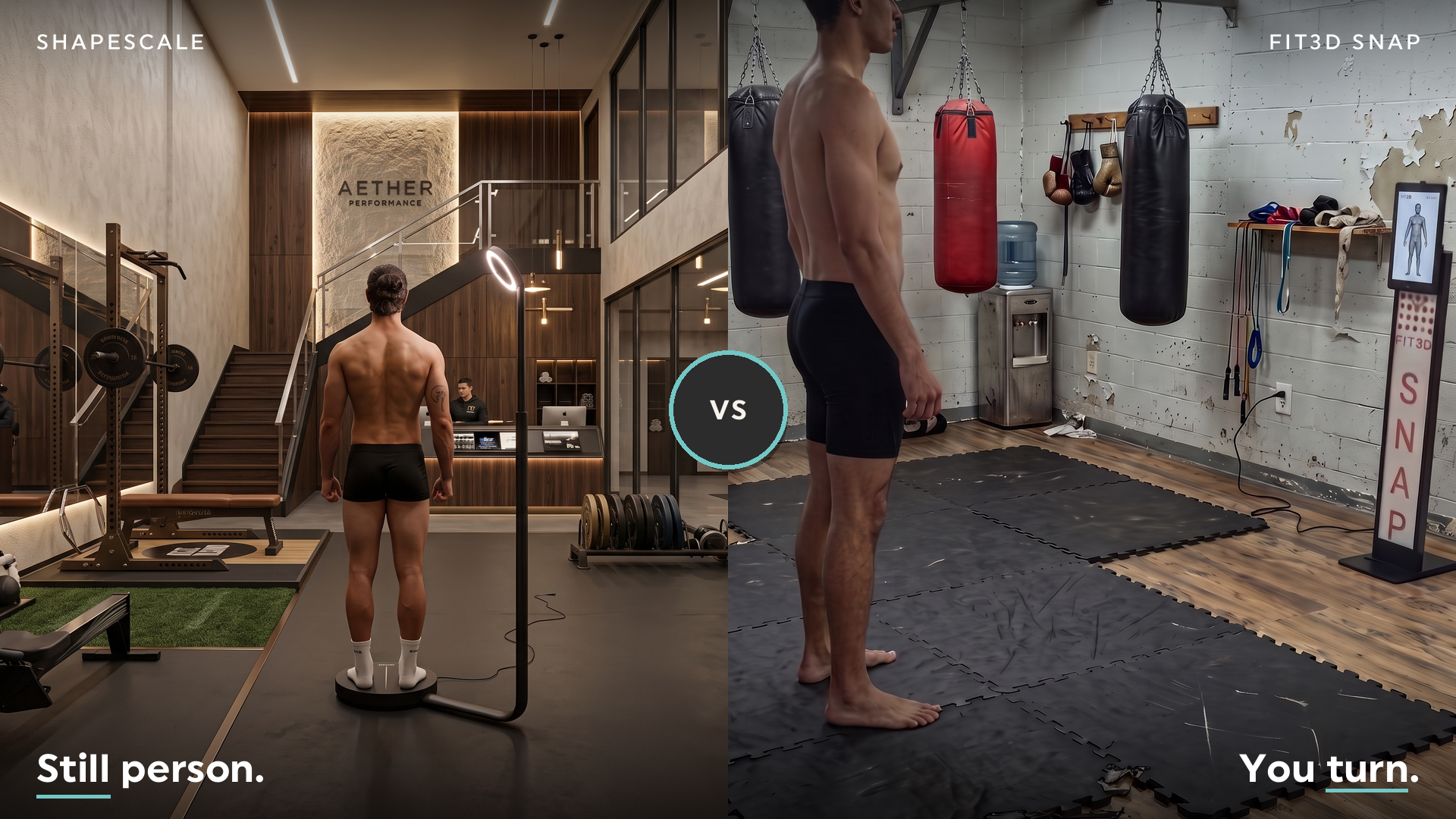
For businesses that want to offer a truly unparalleled client experience, the ShapeScale is in a class of its own. Instead of just providing numbers, it creates a photorealistic 3D model of your client's body. This visual approach makes it easy to see gradual changes in muscle definition and body shape that traditional scales miss. It’s an incredibly powerful motivational tool for clients in personal training or body contouring programs. The scanner provides precise body measurements and visualizes progress over time, helping you and your clients celebrate every small victory. It’s the ultimate upgrade for any wellness business looking to stand out. You can book a demo to see how it works.
Withings Body+
The Withings Body+ is a popular and reliable smart scale that offers a comprehensive look at body composition. It tracks weight, BMI, body fat, muscle mass, water percentage, and even bone mass. The scale syncs data automatically over Wi-Fi to the Health Mate app, which provides trend lines and nutritional tracking. It also integrates with over 100 other health and fitness apps, including Apple Health and Google Fit. With support for up to eight users, each with personalized tracking and recognition, it’s a great option for both individual clients and families. The scale even provides a daily local weather forecast, a thoughtful touch for planning outdoor activities.
Etekcity Smart Body Fat Scale
The Etekcity Smart Body Fat Scale is a fantastic budget-friendly option that doesn't skimp on features. It measures 13 essential body composition metrics, including weight, BMI, body fat, muscle mass, and visceral fat. The scale syncs via Bluetooth to the VeSync app, where users can view detailed charts and track their progress over time. It also connects with other popular fitness apps like Apple Health, Google Fit, and Fitbit. The Etekcity scale supports unlimited user profiles, making it a versatile choice for trainers to recommend to clients or for households with multiple users. Its sleek design and affordable price make it an accessible entry point into smart body monitoring.
FitTrack Dara
The FitTrack Dara is another excellent smart scale known for its detailed metrics and user-friendly app. It tracks 17 different health indicators, giving users a holistic view of their body composition. One of its standout features is an "Infant Mode," which allows parents to weigh their baby or even a pet while holding them. The FitTrack MyHealth app not only displays the data but also helps users understand what the numbers mean. It syncs seamlessly with Apple Health, Google Fit, and Fitbit, ensuring all health data is consolidated in one place. With support for up to eight users, the Dara is a solid choice for families or individuals serious about tracking their fitness journey.
Garmin Index S2
For clients already invested in the Garmin ecosystem, the Index S2 is the obvious choice. This sleek smart scale measures weight, BMI, body fat percentage, skeletal muscle mass, bone mass, and body water percentage. All the data syncs effortlessly over Wi--Fi to the Garmin Connect app, where it integrates with all other activity and health data from Garmin devices. The scale features a color display that shows your key metrics and trend graphs right on the screen. It can recognize up to 16 different users, making it suitable for sports teams or busy health clubs. The weather forecast feature is a nice bonus for planning your day's workout.
Eufy Smart Scale C1
The Eufy Smart Scale C1 by Anker is a highly-rated and affordable option that delivers reliable performance. It tracks 12 different body measurements, including weight, body fat, BMI, muscle mass, and bone mass. The scale uses Bluetooth to sync with the EufyLife app, which is compatible with third-party services like Apple Health, Google Fit, and Fitbit. The app is straightforward and makes it easy to visualize progress with clear graphs. The C1 can store data for up to 16 users, making it a great recommendation for clients with families. Its rounded corners and anti-slip top plate also make it a safe and stylish addition to any bathroom.
RENPHO Body Fat Scale
RENPHO has become one of the most popular brands in the smart scale market, largely due to its combination of affordability and functionality. This scale tracks 13 key body composition metrics and syncs the data via Bluetooth to the RENPHO Health app. The app is intuitive, allowing users to set goals and view historical data to monitor their progress. It also integrates with a wide range of fitness apps, including Samsung Health, Fitbit, Apple Health, and Google Fit. With the ability to create unlimited user profiles, it’s an incredibly versatile and cost-effective tool for anyone looking to gain deeper insights into their health and fitness.
Tanita RD-953
Tanita is a leader in BIA technology, and the RD-953 is a medical-grade scale designed for consumers who demand high accuracy. It uses dual-frequency BIA technology, which sends two different electrical frequencies through the body to provide more precise body composition measurements. The scale measures 10 different metrics, including a unique muscle quality score and physique rating. It connects via Bluetooth to the Tanita Health Planet app, where users can track their data and see detailed analysis. While it comes at a premium price, the Tanita RD-953 is an excellent choice for serious athletes or for use in a professional weight management setting.
InBody H20N
InBody is a name trusted in clinical and professional fitness settings, and the H20N brings that precision into the home. This scale uses InBody's advanced BIA technology, including its signature handlebar electrodes, to provide a more accurate and comprehensive analysis of the entire body. It measures weight, skeletal muscle mass, body fat percentage, BMI, and basal metabolic rate. The results are synced to the InBody App, which provides detailed explanations and tracks changes over time. The H20N is a significant step up from standard smart scales and is ideal for users who want data they can trust for making informed decisions about their health and training.
Wyze Scale
Known for its affordable smart home devices, Wyze brings the same value-focused approach to its smart scale. The Wyze Scale measures 12 essential body metrics, including weight, body fat percentage, heart rate, and muscle mass. It syncs with the Wyze app via Bluetooth and also connects to other popular health apps like Apple Health and Google Fit. The scale supports up to eight unique users and can also recognize guests. A standout feature at this price point is its ability to measure heart rate directly from the scale. For clients looking for a no-frills, reliable, and incredibly affordable smart scale, the Wyze Scale is hard to beat.
Arboleaf Smart Fitness Scale
The Arboleaf Smart Fitness Scale is a well-rounded device that offers both Wi-Fi and Bluetooth connectivity for added convenience. With Wi-Fi, your data syncs automatically to the cloud and your app without needing your phone nearby. The scale tracks 14 key body composition metrics, providing a complete picture of your health. The Arboleaf app presents the data in easy-to-read charts and graphs, helping you visualize your progress. It supports unlimited users and integrates with major fitness apps like Apple Health and Google Fit. It’s a solid, user-friendly option that simplifies the process of daily health tracking for your clients.
Withings Body Cardio
The Withings Body Cardio is one of the most advanced smart scales available, with a strong focus on cardiovascular health. In addition to tracking a full range of body composition metrics, it measures standing heart rate and provides an assessment of arterial health via Pulse Wave Velocity (PWV). This unique metric can help users understand their overall cardiovascular fitness. The data syncs over Wi-Fi to the comprehensive Health Mate app. The Body Cardio is an excellent tool for clients who are particularly focused on heart health or for businesses that offer wellness programs centered around cardiovascular fitness. It’s a premium device that provides insights few other scales can offer.
Sunny Health & Fitness Smart Scale
From a trusted name in home fitness equipment, the Sunny Health & Fitness Smart Scale offers an impressive array of measurements. It tracks 20 different body composition details, including metabolic age, subcutaneous fat, and protein mass, giving users a deeply detailed analysis. The scale connects to the SunnyFit app via Bluetooth, where users can track their metrics, set goals, and even access workout videos. The app integration creates a cohesive ecosystem for users who may own other Sunny Health & Fitness equipment. With its extensive data points, this scale is perfect for the data-driven client who wants to monitor every possible aspect of their physical health.
Just How Accurate Are Smart Scales?
Smart scales are a convenient way to track body composition at home, but their accuracy can be a mixed bag. While they are excellent for monitoring trends over time—like seeing body fat percentage slowly decrease—the specific numbers can fluctuate from day to day. This is because the technology they use is sensitive to many factors, from your hydration levels to when you last worked out. Understanding what influences these readings can help you interpret your results more effectively and decide if a smart scale is the right tool for your clients' goals.
The key is to view the data as a guide rather than an absolute measurement. For businesses in the wellness space, it's important to know these limitations. While a smart scale can empower a client to track their journey at home, professional-grade tools offer the precision needed to validate your services and showcase tangible results. For example, a personal trainer can use a client's home scale data to discuss trends but rely on more advanced in-house technology for milestone assessments.
What affects measurement accuracy?
Most smart scales use a method called bioelectrical impedance analysis (BIA) to estimate your body composition. The scale sends a very low, safe electrical current up one leg and down the other. Since fat, muscle, and water conduct electricity differently, the scale measures the resistance to estimate your body composition metrics. However, several factors can easily skew these results.
Hydration is the biggest one. Water is an excellent conductor of electricity, so if you're dehydrated, the electrical current faces more resistance. This can cause the scale to overestimate your body fat percentage. Other things that impact readings include exercising right before you weigh in, eating a large meal, or even having wet feet.
How do they compare to professional assessments?
While a smart scale is great for tracking trends at home, it doesn't match the precision of professional-grade equipment. Clinical tools like DEXA scans are considered a gold standard for body composition analysis. For wellness businesses that want to provide clients with compelling visual proof of their progress, a 3D body scanner is a far more powerful tool.
These professional systems go beyond simple BIA. They create a detailed 3D model of the body, providing precise circumference measurements and a visual representation of change that numbers on a scale can't capture. This level of detail is invaluable for weight management centers and health clubs looking to demonstrate the effectiveness of their programs.
Tips for getting the most consistent readings
To get the most reliable data from a smart scale, consistency is key. The goal is to minimize the variables that can affect BIA readings so you can trust the trends you're seeing over time. If you or your clients are using a smart scale at home, following a simple routine can make a big difference.
Here are a few best practices:
- Weigh yourself at the same time every day. First thing in the morning, after using the restroom but before eating or drinking, is usually best.
- Place the scale on a hard, flat surface. Carpet or uneven flooring can lead to inaccurate weight measurements.
- Stand still with bare, dry feet. Make sure your feet are positioned correctly on the electrodes.
- Stay consistently hydrated. Since hydration has such a big impact, try to maintain similar hydration levels from day to day.
How Much Do Smart Scales Cost?
Smart scale prices range from under $30 to several hundred dollars, with professional-grade body composition analyzers costing thousands. The price generally reflects the scale's accuracy, the number of metrics it tracks, its build quality, and the sophistication of its companion app. For a wellness business, investing a bit more can mean a better client experience, more reliable data, and seamless integration with other health platforms.
Deciding on a budget first can help you narrow down the options. Most scales fall into one of three categories, each offering a different level of detail and functionality. Understanding what you get at each price point will help you choose a scale that fits your business needs and provides real value to your clients.
Budget-friendly: Under $50
Scales in this price range are perfect for basic body composition tracking. They typically measure weight, BMI, body fat percentage, and a few other key metrics. Most connect to a smartphone app via Bluetooth, which requires your phone to be nearby to sync data. While they are affordable, their accuracy can sometimes be less consistent than more expensive models.
A great example is the RENPHO Body Fat Scale, which is often available for around $30. It tracks 13 essential body measurements and syncs with popular fitness apps. These scales are a solid entry point but may lack the robust features and multi-user management that a growing health club or wellness center needs.
Mid-range: $50-$150
This is the sweet spot for quality and features. Mid-range scales often provide more consistent and accurate readings. Many models in this category offer Wi-Fi connectivity, which automatically syncs data without needing your phone nearby—a huge convenience in a busy gym or studio. The apps are typically more polished, offering better data visualization and historical tracking.
The Withings Body+, priced around $99, is a popular choice that tracks full body composition and automatically recognizes up to eight different users. The Garmin Index S2 is another strong contender, offering a sleek design and seamless integration into the Garmin ecosystem. These scales provide a more professional and reliable experience for you and your clients.
Premium: $150+
For those who need the highest degree of accuracy and the most detailed insights, premium scales are the way to go. These devices often include advanced metrics like heart rate, vascular age, or even nerve health scores. They feature high-end materials, superior sensor technology, and apps that provide deep health analysis.
The Withings Body Cardio (around $180) measures cardiovascular health, giving users a more complete picture of their wellness. While these scales are excellent, businesses that rely on precise body composition data for their clients may want to consider a professional-grade solution. A 3D body scanner provides medical-grade precision, visual progress tracking, and a level of client engagement that a simple scale can't match.
Are Smart Scales Safe for Everyone?
Smart scales offer a convenient way to track body composition, but they aren't suitable for every client. The technology most of them use, bioelectrical impedance analysis (BIA), sends a very low-level electrical current through the body to estimate metrics like body fat and muscle mass. While this is perfectly safe for most people, it poses potential risks for certain individuals and can be influenced by various physiological factors. As a wellness professional, it's your responsibility to understand these limitations to ensure client safety and data accuracy.
Warnings for medical devices (like pacemakers)
The most critical safety warning for BIA scales concerns clients with implanted electronic medical devices. This includes pacemakers, implantable cardioverter-defibrillators (ICDs), and other internal electronics. The electrical current used by the scale, though weak, could theoretically interfere with the device's function, posing a serious health risk. It's a non-negotiable safety protocol to screen clients for these devices before using a smart scale for body composition analysis. For these individuals, you should only use a scale in a "weight-only" mode that disables the BIA feature. If that's not an option, a standard digital scale is the safest alternative.
Restrictions for pregnancy and other health conditions
You should also advise pregnant clients to avoid using the BIA function. While there's no definitive evidence of harm, most manufacturers and health experts recommend against it as a precaution. Beyond safety, BIA readings during pregnancy are notoriously unreliable. The significant and fluctuating changes in body water can dramatically skew body fat percentage and other composition metrics, making the data misleading. Many modern scales offer a "pregnancy mode" that turns off the BIA current and tracks weight alone, which is a much safer and more practical approach for expectant mothers.
How hydration and timing impact accuracy
Beyond specific medical conditions, the accuracy of any BIA scale is highly dependent on consistent habits. Hydration level is the biggest variable; since water conducts electricity well, being dehydrated can make the electrical current face more resistance, artificially inflating the body fat reading. To get the most reliable trend data for your clients, instruct them to weigh themselves under the same conditions every time. This means weighing in at the same time of day (like first thing in the morning), before eating or drinking, and not immediately after a workout. This consistency is key for any weight management program.
Who Makes the Best Smart Scales?
With so many smart scales on the market, figuring out which brands are truly worth it can be a challenge. The "best" scale often depends on your specific needs. A personal trainer might prioritize different features than a large health club or a specialized weight management center. The top brands distinguish themselves by delivering a powerful combination of accuracy, a comprehensive set of health metrics, and a seamless user experience from the moment a client steps on the scale to when they review their progress in the app.
While most consumer scales use the same underlying technology—bioelectrical impedance analysis (BIA)—the execution is what sets the leaders apart. The quality of the sensors, the sophistication of the algorithms interpreting the data, and the design of the companion app all play a huge role in the scale's overall value. Leading manufacturers have built a reputation for reliability and consistency, often creating an entire ecosystem of connected health devices. This allows users and their wellness providers to see a more complete picture of their health. Ultimately, the best brands provide a full package: a device that captures dependable data and software that makes that data easy to understand and act upon.
Top brands and their standout features
Several brands consistently stand out in the smart scale market. Withings is a well-established name, known for its sleek designs and advanced metrics like heart rate and arterial health estimates on its premium models. Etekcity is another popular choice, offering scales that track around 14 different metrics with user-friendly features like a customizable screen and dual Wi-Fi/Bluetooth connectivity. For those seeking extensive data, the FitTrack Dara measures 17 health indicators and syncs with major fitness platforms like Apple Health and Google Fit. Other strong contenders include Arboleaf, which focuses on convenience with Wi-Fi syncing, and Sunny Health & Fitness, which tracks up to 20 different body composition details through its dedicated app.
What separates a reliable model from the rest?
A reliable smart scale offers much more than a simple weight reading. The key differentiator is the ability to provide consistent and reasonably accurate body composition metrics. Most scales do this using bioelectrical impedance analysis (BIA), but the quality of the hardware and software varies greatly. Top-tier models use high-quality sensors and refined algorithms to deliver more dependable estimates of body fat, muscle mass, and bone density. Seamless connectivity is also crucial. Wi-Fi-enabled scales offer more convenience than Bluetooth-only options by automatically syncing data without needing a phone nearby. Finally, the user experience is paramount. A well-designed app that presents data clearly and tracks trends over time is what transforms raw numbers into actionable insights for your clients.
Where to Find the Best Deals on Smart Scales
Finding a great deal on a smart scale doesn't mean you have to settle for a subpar product. With a little strategic shopping, you can find a high-quality device that fits your budget and provides the features your clients need. Prices for smart scales can range from under $20 to well over $150, so it pays to know where to look and what to look for. Whether you're outfitting an entire health club or just need a reliable scale for your personal training studio, these tips will help you find the best value for your business.
Shop online retailers and watch for seasonal sales
Major online retailers are often the first stop for tech deals, and smart scales are no exception. You can find some of the best smart scales at surprisingly low prices, with budget-friendly models like the Renpho Bluetooth Digital Smart Scale and the Etekcity Digital Smart Scale sometimes available for under $20. To get the most for your money, time your purchase around major sales events like Black Friday, Cyber Monday, or Amazon Prime Day. During these periods, you’ll often find significant markdowns on top-rated models, making it the perfect time to invest in new equipment.
Check for discounts directly from the manufacturer
Don’t forget to check the manufacturer’s website directly. Brands often run exclusive promotions or offer bundles that you won’t find anywhere else. For example, the Sunny Health & Fitness Smart Body Composition Weight Scale is a great value at around $50, measuring 20 different health metrics to give your clients a comprehensive overview of their progress. Signing up for a brand’s newsletter is another smart move, as companies frequently send discount codes and early sale announcements directly to their subscribers. This can give you a head start on the best deals before they sell out.
How to compare prices like a pro
When comparing prices, look beyond the initial cost and consider the features that matter most to your business. Connectivity is a big factor; Wi-Fi scales are typically more expensive but automatically sync data, which is a huge convenience in a busy gym or clinic. Bluetooth scales are more affordable but require a phone to be nearby to transfer measurements. Also, think about the long-term value. Does the scale’s app offer the detailed tracking your clients need? Does it support multiple user profiles? A slightly more expensive scale with a robust app and excellent customer support might be a better investment for your business than the cheapest option available.
How to Choose the Right Smart Scale for You
With so many options on the market, picking the right smart scale comes down to what you or your clients need to achieve. The best scale isn't necessarily the one with the most features, but the one with the right features for your specific goals. Before you buy, think about three key areas: the data you want to track, who will be using the scale, and how well the device will hold up over time. Considering these points will help you find a scale that’s a valuable tool for your wellness journey or your business.
Align features with your fitness goals
Smart scales offer a wide range of data points beyond just your weight. Most track body fat percentage and muscle mass, while more advanced models can measure bone density, water percentage, and even heart health metrics. Before choosing a scale, identify which of these body composition metrics are most relevant. If your clients are focused on athletic performance, tracking muscle mass changes is key. For those in a weight management program, monitoring body fat percentage might be the top priority. Make a list of the "must-have" metrics to narrow down your options and ensure the scale you choose provides truly useful information.
Account for your household size and needs
If more than one person will be using the scale, look for a model that supports multiple user profiles. This feature allows each person to track their progress privately and accurately without their data getting mixed up. Most smart scales can recognize different users automatically, making the process seamless. Check the product specifications to see how many profiles a scale can store—some accommodate up to eight users or more. This is an essential feature for families, but it's also critical for personal trainers or wellness coaches who may use a single device to track data for multiple clients in their facility.
Evaluate long-term value and durability
A smart scale is an investment, so you want one that's built to last. Pay attention to the materials used in its construction. Many high-quality scales feature a sturdy, tempered glass platform that can withstand daily use, which is especially important in a busy gym or clinic. Beyond the physical build, consider the long-term value. Does the manufacturer offer good customer support? Is the companion app well-reviewed and regularly updated? A slightly more expensive scale from a reputable brand with a reliable app often provides better long-term value than a cheaper model that might become inaccurate or unsupported after a short time.
Get the Best Results From Your Smart Scale
A smart scale is more than just a number-cruncher; it’s a tool for tracking progress and understanding how your body responds to lifestyle changes. But to get meaningful data, you and your clients need to use it correctly. Inaccurate or inconsistent measurements can be misleading and frustrating. The key isn't to focus on a single day's reading but to establish a reliable baseline and monitor trends over time.
Think of it like taking a photo to track visual progress—you’d want the lighting, angle, and pose to be the same each time for a fair comparison. The same principle applies here. Small variations in your routine can create noise in the data, making it difficult to see the real picture. By following a few simple guidelines, you can ensure your scale provides the most dependable feedback possible, helping you and your clients make informed decisions on their wellness journey.
Nail the initial setup and calibration
Your scale’s accuracy starts with a solid foundation—literally. Always place your smart scale on a hard, flat surface like tile or hardwood. Carpets, rugs, or uneven floors can interfere with the sensors and give you incorrect readings. Most smart scales use bioelectrical impedance analysis (BIA), where tiny electrodes in the scale’s surface send a harmless electrical current through your body to estimate body composition. For this to work, the scale must be perfectly stable.
Once it’s in place, follow the manufacturer’s instructions for initial calibration. This usually involves stepping on and off the scale a couple of times or pressing a button until the display shows zero. Taking a few minutes to get this right from the start ensures every measurement that follows is as accurate as possible.
Create accurate user profiles
One of the best features of a smart scale is its ability to track data for multiple people. If you’re using the scale in a professional setting like a health club or for different family members at home, creating separate user profiles is essential. The scale uses personal information like age, height, gender, and sometimes activity level to calculate metrics beyond just weight, such as body fat percentage and muscle mass.
When the scale recognizes a user, it applies their specific data to its algorithms. If everyone uses a generic "guest" profile or someone else's, the body composition estimates will be off. Make sure each user’s profile is set up with their correct information to ensure the insights are personalized and accurate for everyone.
Follow best practices for consistent measurements
Consistency is the golden rule for tracking body composition. To get the most reliable trend data, measure under the same conditions every time. The best approach is to weigh in first thing in the morning, after using the restroom but before eating, drinking, or exercising. Your body’s hydration level can significantly impact BIA readings, so measuring at a consistent time helps minimize those fluctuations.
Always step on the scale with bare, dry feet to ensure good contact with the electrodes. Stand still with your weight distributed evenly until the measurement is complete. Finally, try to keep the scale in the same spot. Moving it around can require recalibration and introduce small variables. And a critical safety note: individuals with implanted medical devices like a pacemaker or who are pregnant should not use scales that use BIA.
Frequently Asked Questions
How can a smart scale benefit my wellness business? A smart scale helps you and your clients track progress beyond a single weight number. By measuring body composition metrics like muscle gain and fat loss, you can provide a more complete picture of their health journey. This data allows you to personalize training or wellness plans more effectively and helps keep clients motivated by showing them tangible results that a traditional scale would miss.
My client's numbers fluctuate daily. How should I advise them? It's completely normal for body composition numbers to vary from day to day. The most significant factor is hydration. Advise your clients to focus on the long-term trends rather than daily readings. To get the most consistent data, they should weigh themselves at the same time each day, preferably in the morning after using the restroom and before eating or drinking.
Are there any clients who should not use a smart scale? Yes, safety is a priority. The bioelectrical impedance analysis (BIA) function is not recommended for individuals with implanted electronic medical devices, such as pacemakers, as the electrical current could interfere with the device. It's also advised that pregnant women avoid using the BIA feature. Many scales have a "weight-only" mode that disables the current, making it safe for these clients to use for tracking weight.
Is it worth investing in a more expensive Wi-Fi scale for my gym or clinic? For a business setting, a Wi-Fi scale is often a smart investment. Unlike Bluetooth models that require a phone to be nearby to sync, Wi-Fi scales automatically upload data to the cloud. This creates a seamless experience for both you and your clients, ensuring measurements are recorded consistently without any extra steps. It's a convenience that adds a professional touch and simplifies data collection in a busy environment.
When should I consider a 3D body scanner instead of a smart scale? A 3D body scanner is the ideal choice when you want to offer a premium service that provides visual proof of progress. While a high-end scale gives you data points, a scanner like ShapeScale creates a photorealistic 3D model of your client's body. This allows them to see changes in their shape and muscle definition over time, which is incredibly motivating. It's the best tool for businesses that want to clearly demonstrate the value of their body contouring, personal training, or weight management programs.