Fit3D SNAP vs ShapeScale

Heading 2
Heading 1
Heading 3
Heading 4
Heading 5
Heading 6
Lorem ipsum dolor sit amet, consectetur adipiscing elit, sed do eiusmod tempor incididunt ut labore et dolore magna aliqua. Ut enim ad minim veniam, quis nostrud exercitation ullamco laboris nisi ut aliquip ex ea commodo consequat. Duis aute irure dolor in reprehenderit in voluptate velit esse cillum dolore eu fugiat nulla pariatur.
Block quote
Ordered list
- Item 1
- Item 2
- Item 3
Unordered list
- zz
- Item B
- Item C
Bold text
Emphasis
Superscript
Subscript
If you run a gym, studio, med spa, plastics practice, wellness clinic, or GLP-1 program and you are looking at SNAP by Fit3D, you are looking at a cheap Android tablet and a subscription. The person turns in front of the tablet. That is a budget, novelty Fit3D option. It is not a scanner we can recommend for serious body composition work. Not for a trainer who needs a number they can trust. Not for a clinic that bills on fat, lean, or a treated area.
ShapeScale is the consult tool. The person stands still on the base. The sensor head orbits. You get a photoreal body, girths, volumes, a heatmap, and composition from the March 2026 white paper trained vs GE Lunar iDXA. Both products are optical 3D. They do not capture the same way. They do not estimate composition the same way.
Updated 22 Aug 2026 (PT).
How the two products differ
- SNAP is Fit3D's cheap Android-tablet SKU. The person turns in front of a tablet. Play lists a compatible tablet, not phones. It is a novelty budget option. It is not a serious composition system for fitness, health, or aesthetics.
- A Fit3D ProScanner is the older tower. The person stands still. The platform turns. Keep it if you already run one and you sell posture. Treat the fat number as a trend under a locked stance, not as a consult grade.
- ShapeScale is the consult tool: still person, photoreal body, girths, volumes, a heatmap, and composition vs iDXA, on iPhone or iPad, plus a PDF they can take.
The ShapeScale white-paper MAE is ShapeScale only. We did not run ProScanner or SNAP on that iDXA protocol. There is no SNAP-branded clinic MAE on this page.
What SNAP actually is
Official name: SNAP, sold as SNAP by Fit3D. It is software on an approved Android tablet. Fit3D's SNAP page says plans start at $100 per month, no long-term contract. They recommend a Samsung Galaxy Tab S10 FE. They also list a Galaxy A9+ or A11+ from a local store at about $179. A tablet stand is optional. Play (updated 6 May 2026) says SNAP needs a paid Fit3D subscription and a compatible Android tablet, is not for phones, and is built for med spas, weight-loss clinics, gyms, and wellness businesses, not personal consumer use.
Capture, from Fit3D's own SNAP FAQ: the member stands shoulder-width and rotates through a 360 degree turn. The front-facing camera records. Results go to the Fit3D dashboard. That is tablet photogrammetry. It is not a depth tower. It is not a moving sensor head.
Fit3D's evolution of 3D body scanners post sells SNAP as the next step after towers. A tablet camera is still a tablet camera. RGB megapixels on a phone or tablet are not a depth-sensor upgrade.
Fit3D vs ShapeScale
| Question | Fit3D SNAP | ShapeScale |
|---|---|---|
| Is it a 3D scanner? | Yes. Optical 3D. Android tablet. User rotation (SNAP page). ProScanner, if you still run one: fixed tower, person on a rotating platform. | Yes. Optical 3D. Sensor head moves around a still person. |
| Person stands still? | SNAP: no. The user rotates 360 degrees (SNAP FAQ). ProScanner: still on a moving plate. | Yes, on the base. The sensor moves. 5 ft clearance diameter; about 2 ft sensor standoff; 24 in base; 6 by 6 ft recommended; 8 ft ceiling. |
| What hardware sits in the room? | Approved Android tablet. Stand optional. Play: not phones. SNAP page also says phone or tablet; we follow Play for device class. | Base plus orbiting sensor head. One standard outlet. |
| Electrodes / current? | No current. | No current. White-paper limitations are clothing, hair, and stance. |
| Composition method | Anthropometric / volumetric correlation to DXA readings (Fit3D FAQ). Not DXA. | Deep-learning composition from the full 3D mesh, trained vs GE Lunar iDXA (current model; March 2026 white paper). |
| Body fat vs DXA (named) | Not in our white paper. No ShapeScale-run SNAP MAE. Their evolution post says accuracy improved by 1% (vendor note, not a paper). | MAE 1.89 pp, R2 0.91 (March 2026 white paper, current composition model). |
| Lean / appendicular lean mass (ALM) | Vendor estimate from surface measurements. No ShapeScale-run MAE. | Lean MAE 3.3 lb / 1.49 kg (abstract), R2 0.98; ALM MAE 2.1 lb / 0.97 kg, R2 0.96 |
| Photoreal 3D + heatmaps? | Mannequin / avatar, girths, volumes, Body Shape score. No ShapeScale-style volume heatmap. | Yes. Photoreal 3D, girths, volumes, heatmaps on iPhone or iPad. PDF of one scan or a two-scan compare. |
| iOS consult vs printout | SNAP is an operator Android-tablet app. Results on the web dashboard. We are not quoting a Play star rating. | 4.0 / 5 App Store (43), iOS. 3D on iPhone or iPad. Android is not available. |
| Posture score? | Yes. Play lists a posture assessment. Tilt, shift, and ProScanner balance sit on Fit3D help. | No. Keep Fit3D if posture is the product you sell. See Fit3D. |
| Return-scan staff work? | Staff (or a trained member) run the tablet, then the dashboard. First-scan assist is what Fit3D recommends. | First scan: QR from the app. After that, face and body recognition. Rainbow lights. No app. No buttons. Works across even hundreds of users. |
| AI guidance on goals? | Not claimed on the SNAP product page we checked. | Shipped in the app. Saves consult time. |
Girths ShapeScale lists today: neck, shoulders, chest, biceps, waist, hips, thighs, calves. Volumes: arms (one combined arm volume in Compare / Body / Heatmaps / PDF), torso, legs. Composition extras that ship: fat mass in lb or kg, lean mass index (LMI), ALM, visceral fat as a mass, Health Score, Shape Score. Height is typed in, not scanned. Fit3D also reports circumferences and volumes. We are not inventing a SNAP measurement count from their marketing. Posture is theirs.
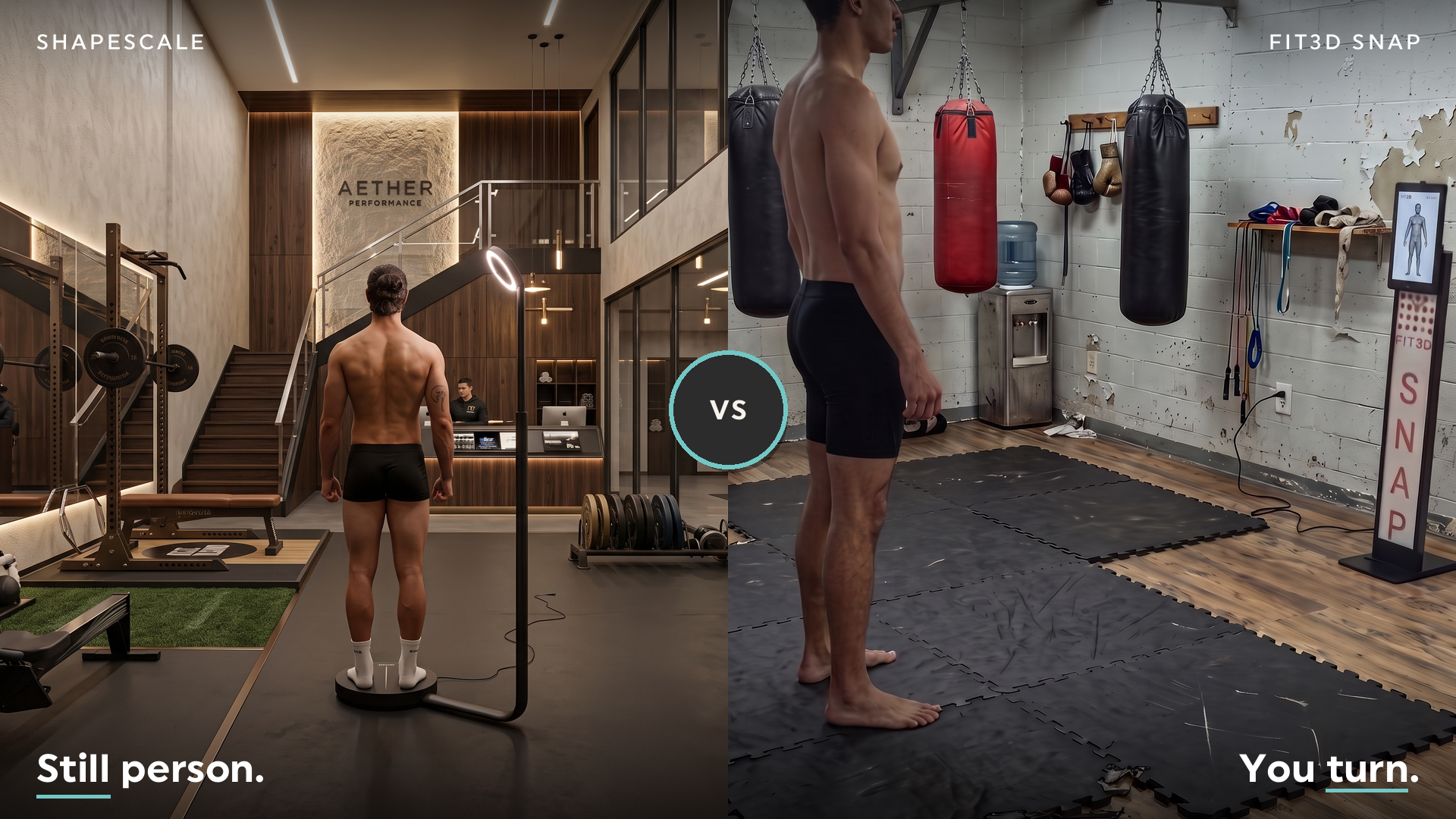
Does the person stand still, or do they turn?
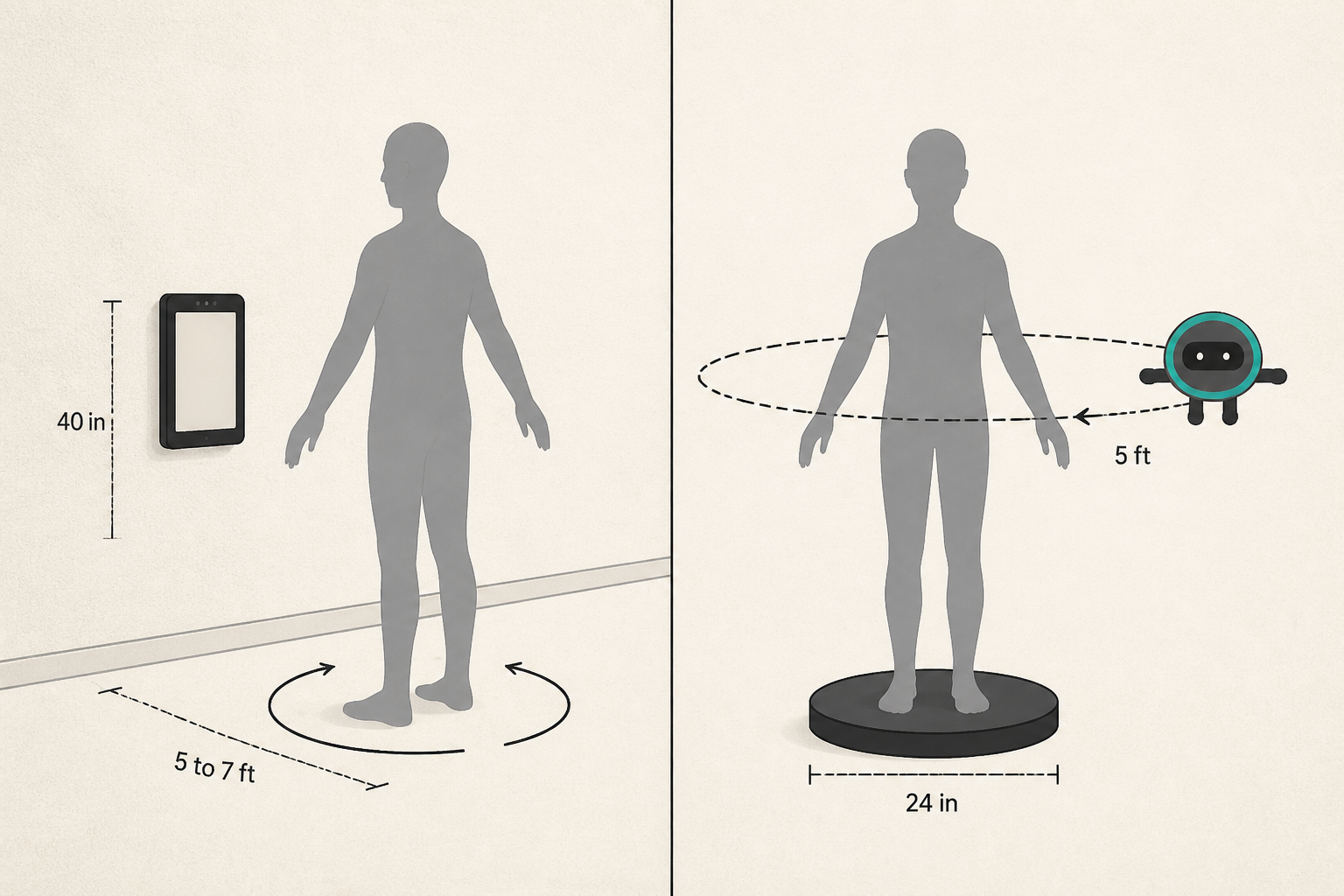
On SNAP the person turns. Fit3D's SNAP FAQ tells staff to keep camera height and distance the same, use even lighting, and have the member stand shoulder-width and rotate smoothly through the 360 degree turn. Play says the client stands in front of a compatible Android tablet, SNAP guides a short scan, and results land on the Fit3D dashboard.
On a ProScanner the person steps onto a rotating platform in front of a fixed camera tower. The person holds still on a moving plate. That is a different Fit3D product. SNAP is not that tower.
On ShapeScale the person stands still on the base. The sensor head moves around them. The App Store listing says the same thing: hold still while the sensor head rotates around you.
On ShapeScale, use a well-lit room with no mirrors nearby and no direct sun on the device. The person wears tight-fitting, non-reflective clothing and stands still on the base. SNAP staff lock camera height, distance, even lighting, and a smooth 360 degree turn. Same idea: lock the protocol.
How much space does the room need?
A tablet on a stand will usually win if floor space is the only buy question. That is not the same as winning the consult.
The SNAP product page does not publish a numbered floor plan. Fit3D help for SNAP setup says about 40 in tablet height (waist-high) and about 5 to 7 ft stand distance. Those are Fit3D SNAP setup numbers, not ShapeScale specs.
ShapeScale space, from product knowledge: 5 ft of rotation clearance (that is the diameter the arm needs, not the distance from person to sensor). Sensor standoff is about 2 ft (50 to 60 cm). The base is 24 in. Recommended floor is 6 by 6 ft. Ceiling 8 ft. One standard outlet. The person stands still.
A ShapeScale scan is about 1 min. Results are typically ready in 10 to 15 min (upload plus cloud). Capacity is 400 lb. We are not restating a single height inch figure here. Product data, public help, and an internal FAQ disagree. Plan on 10+ Mbit/s upload; a scan file is about 200 to 250 MB.
What stack is SNAP built on?
SNAP is licensed technology. Fit3D's 7 Apr 2025 Prism post and the 6 May 2025 Fitt Insider release say SNAP is powered by Prism Labs. The same Prism stack already ships in Noom and Tempo (the smart home gym). Fitify is on that press list too. Prism is not a Fit3D depth tower.
Capture on this stack is the person turning, not a moving sensor head. Fit3D SNAP help has the member stand shoulder-width and rotate 360 degrees in front of the tablet. That is not the same as Noom's body-scan FAQ, which is an A-pose turn of about 10 seconds. Noom's hassle list still applies to this class of scan: dim or cluttered room, loose clothes, hair on the shoulders, spin too fast or too slow, pets, kids, posters, mirrors, weak internet, and the wrong pose.
The closest vs-DXA paper on this licensed stack is Tinsley et al., Frontiers in Medicine 2024. Prism funded it. The lab used an iPhone on a tripod, form-fitting clothes, and an overnight fast, then GE iDXA. Reliability on duplicate scans (TEM) was 0.50 to 0.66 pp body fat. That is test-retest consistency, not accuracy. Validity vs iDXA: MAE about 3.4 to 3.5 pp, Bland-Altman limits of agreement about ±8.6 to 8.8%. That paper is the licensor stack. It is not a SNAP-branded clinic MAE. The March 2026 white paper is ShapeScale vs GE Lunar iDXA. We did not run that protocol on ProScanner or SNAP. Do not treat Prism TEM as SNAP hallway accuracy.
How is composition estimated?
Neither Fit3D nor ShapeScale is a DXA scan. Say the method.
Fit3D's body-fat FAQ says the company "algorithmically correlate[s] anthropometric measurements" from the scan to DXA readings, and that the algorithm is "primarily volumetric/anthropometric based." Girths and surface volume in. A fat number out. Implants move the result. Very lean athletes are over-read, in their words.
ShapeScale predicts composition from the full 3D mesh with a deep-learning model trained on paired scans vs GE Lunar iDXA. That is the current model in the March 2026 white paper. That paper is first-party and is not peer-reviewed. Held-out body fat: MAE 1.89 percentage points, R2 0.91. Lean mass (abstract): MAE 3.3 lb (1.49 kg), R2 0.98. Appendicular lean mass (ALM, lean tissue in the arms and legs): MAE 2.1 lb (0.97 kg), R2 0.96. n=1,000+ adults. No participant overlap across train, validation, and test. Limitations in that paper are clothing, hair, and stance.
We did not put a Fit3D unit on that iDXA protocol. There is no ShapeScale-run ProScanner MAE and no SNAP-branded vs-iDXA MAE on this page. Independent ProScanner papers sit on the Fit3D keeper. This page does not invent a SNAP MAE from a vendor FAQ or from a four-scanner abstract.
Bioelectrical impedance (BIA) is a different class. InBody and Evolt 360 estimate composition from resistance. Do not treat a Fit3D avatar as an InBody column.
Do both scanners report girths and volumes?
The consult still needs a waist, a hip, and a local volume, not only a whole-body %. Yes. Fit3D is not the only scanner with inches.
Fit3D reports circumferences, volumes, surface measurements, a Body Shape score, and posture. Their processing write-up lists length, contour, circumference, surface area, and volumetric measurements. Play lists circumference measurements, composition estimates, Body Shape score, and a posture assessment for SNAP. Posture is tilt, shift, and (on ProScanner) balance. Posture is often a separate report, ready a day after the scan. ShapeScale has no posture score. Keep Fit3D if posture is the product you sell.
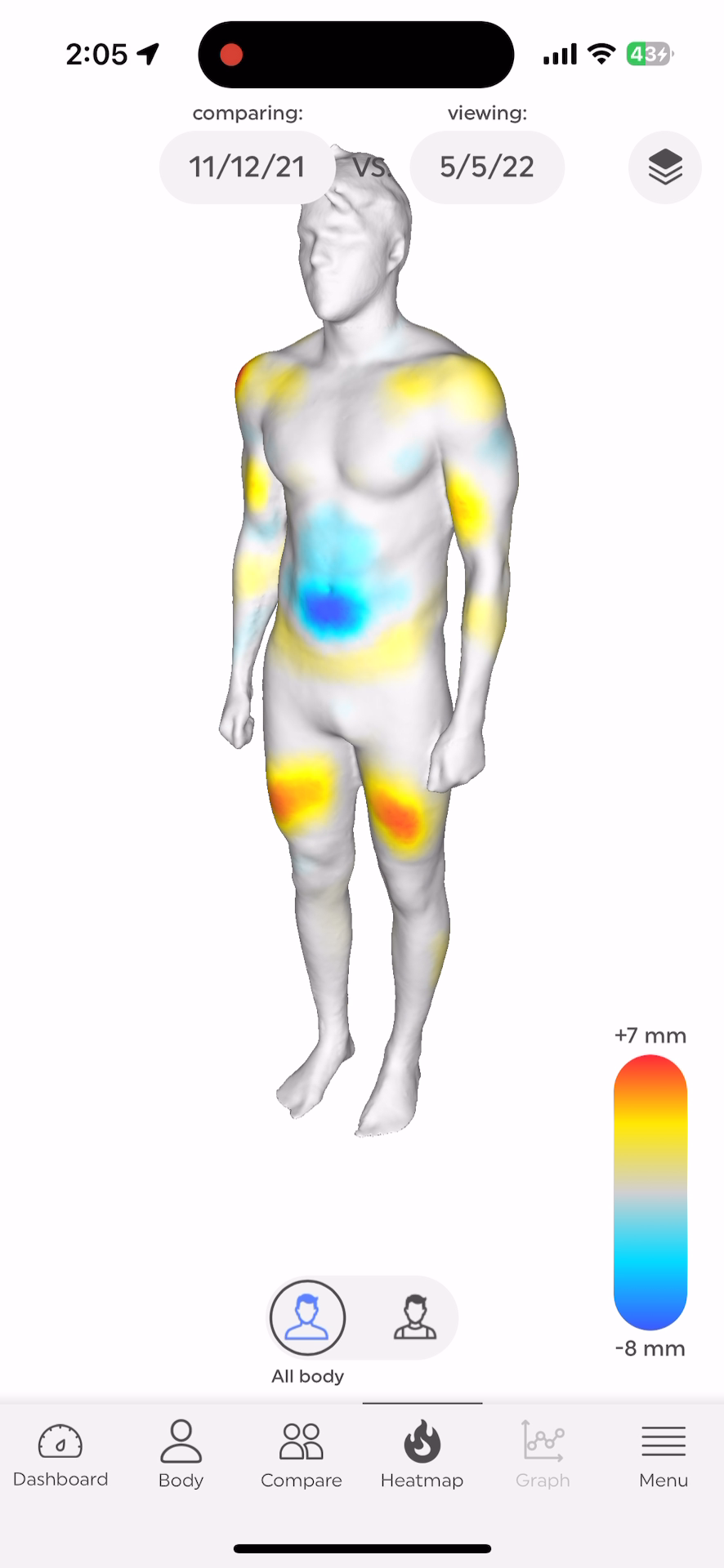
ShapeScale circumferences from the mesh: neck, shoulders, chest, biceps, waist, hips, thighs, calves. Volumes: arms (one combined arm volume in Compare / Body / Heatmaps / PDF), torso, legs. Heatmaps overlay two scans. Blue is volume down. Yellow to red is volume up. Grey is little change. Height is typed in.
The gap in the room is mannequin plus dashboard versus a photoreal body and a heatmap on a phone.
Official SNAP tablet and dashboard
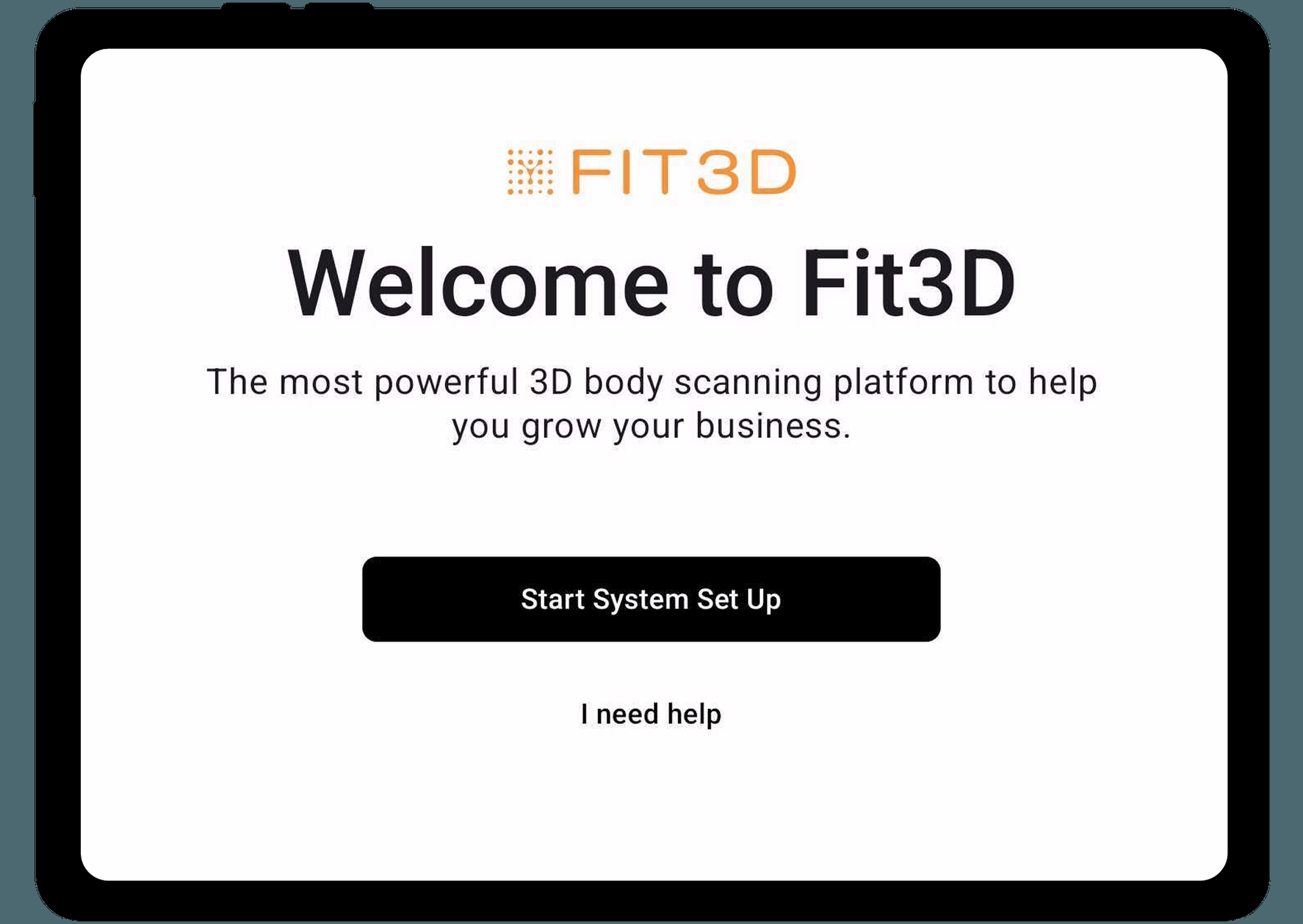
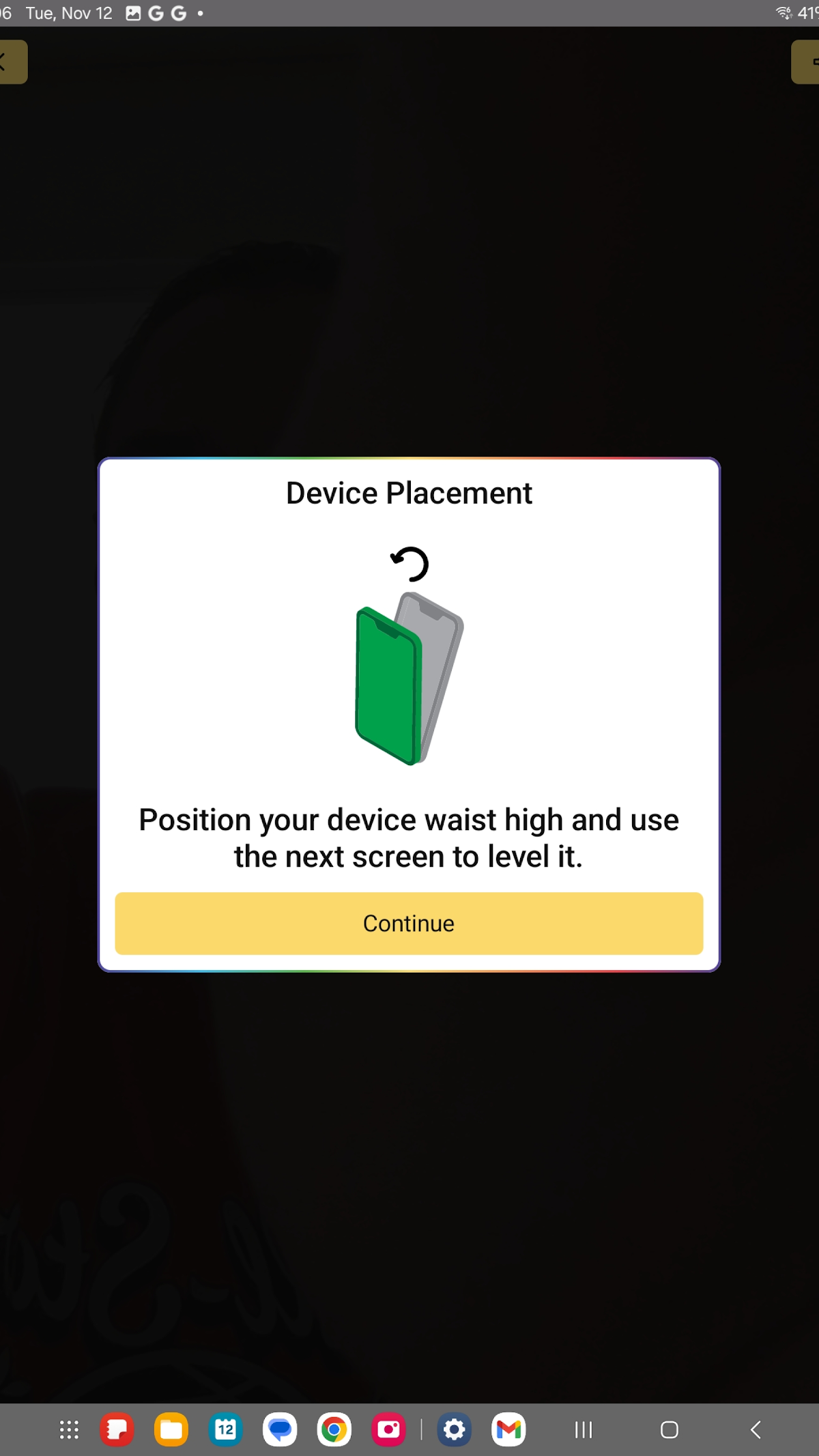
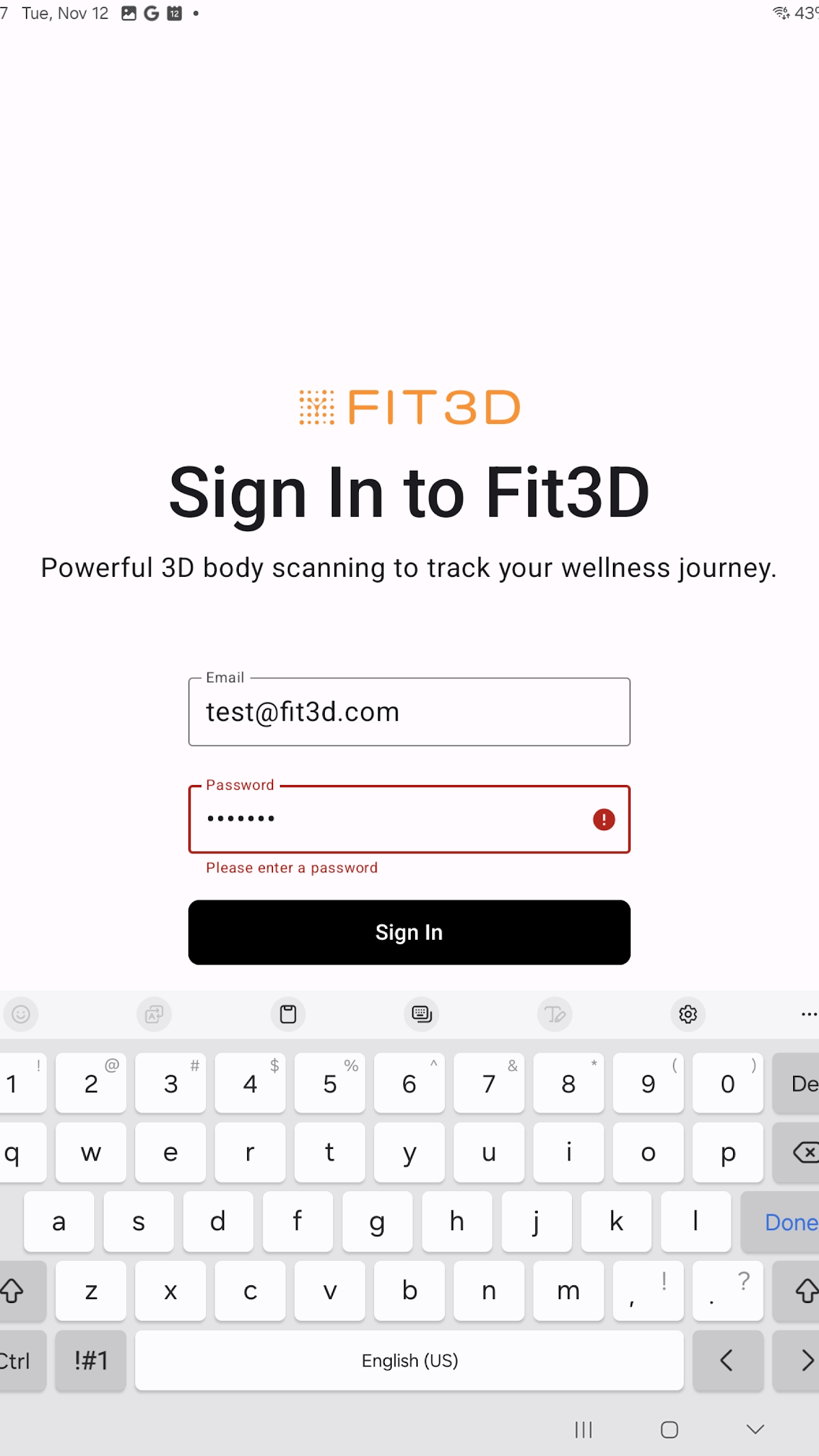
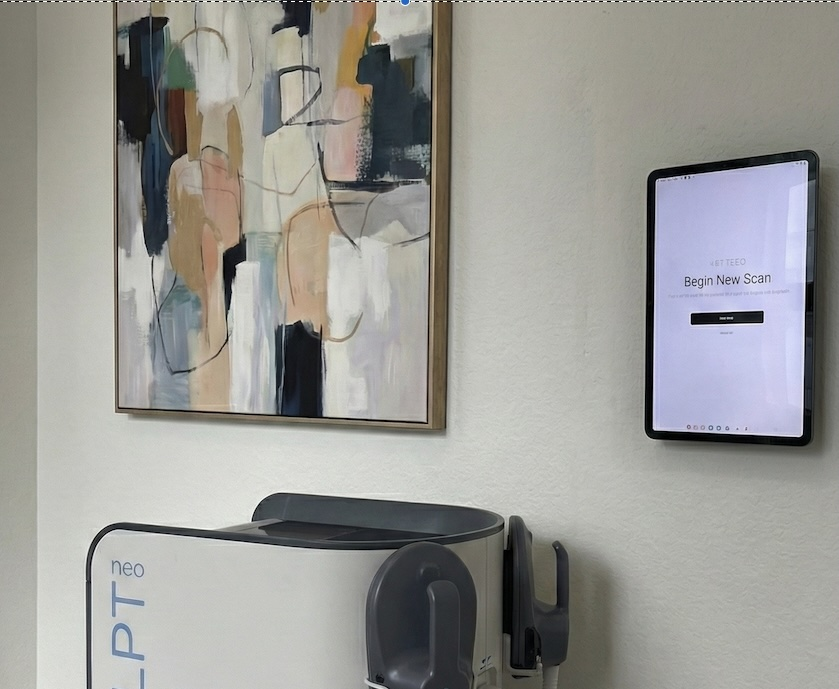
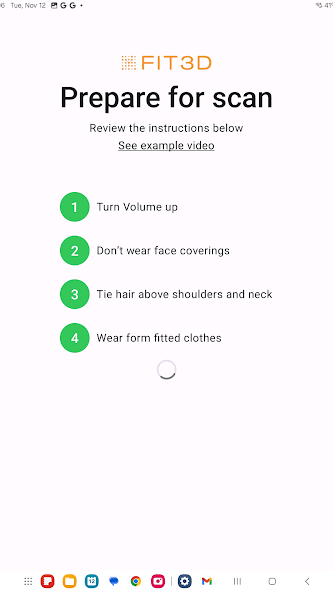
SNAP tablet screens and a wall-mount install. Welcome, sign-in, Device Placement, and Prepare for scan are SNAP app / Play stills. The wall-mount still is from the SNAP service page. We did not use the 2018 Fit3D wellness-report screenshot from Play as a SNAP capture. We skipped in-progress stills that show an identifiable person. We did not generate SNAP hardware.
ShapeScale in the room
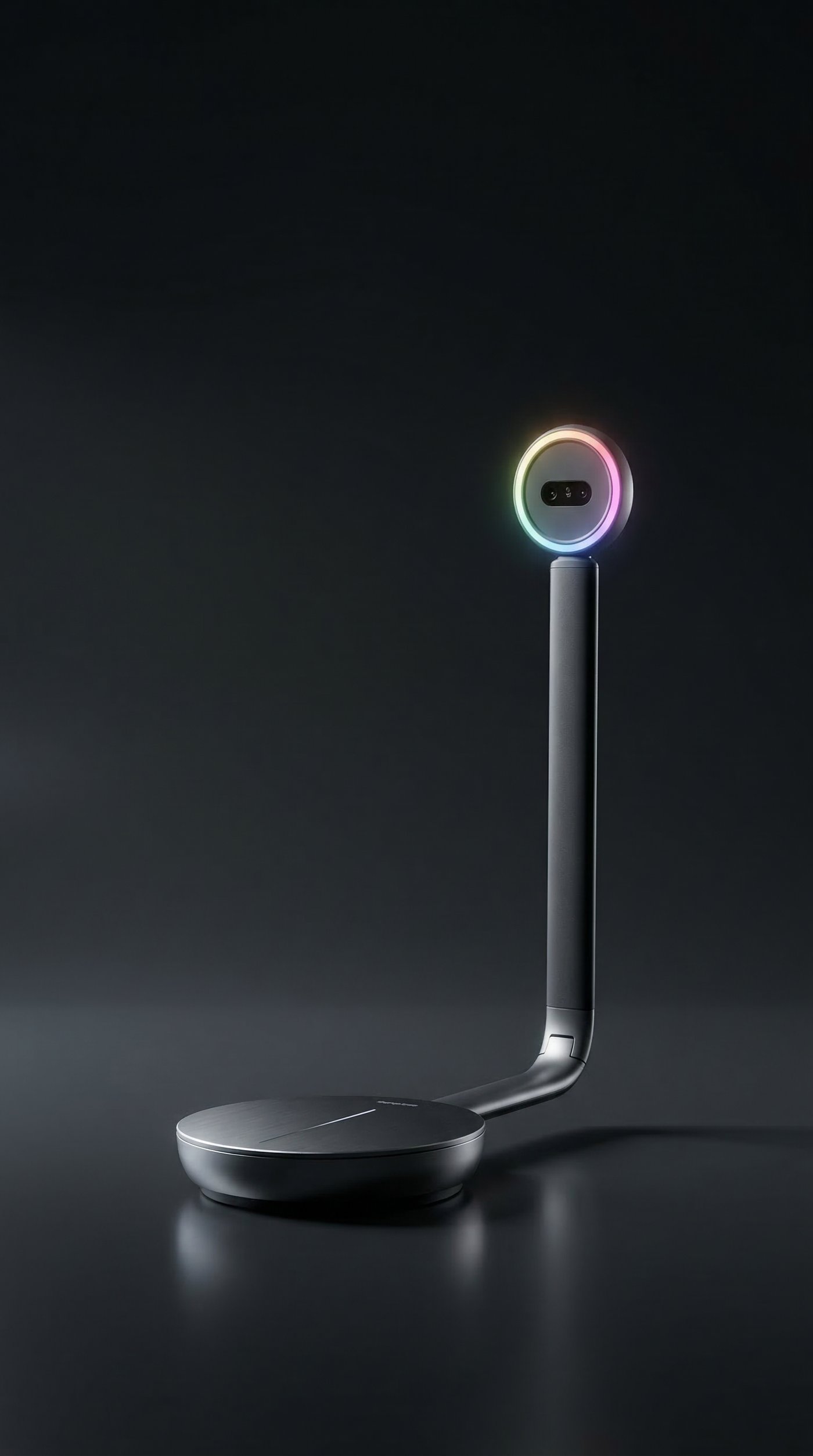
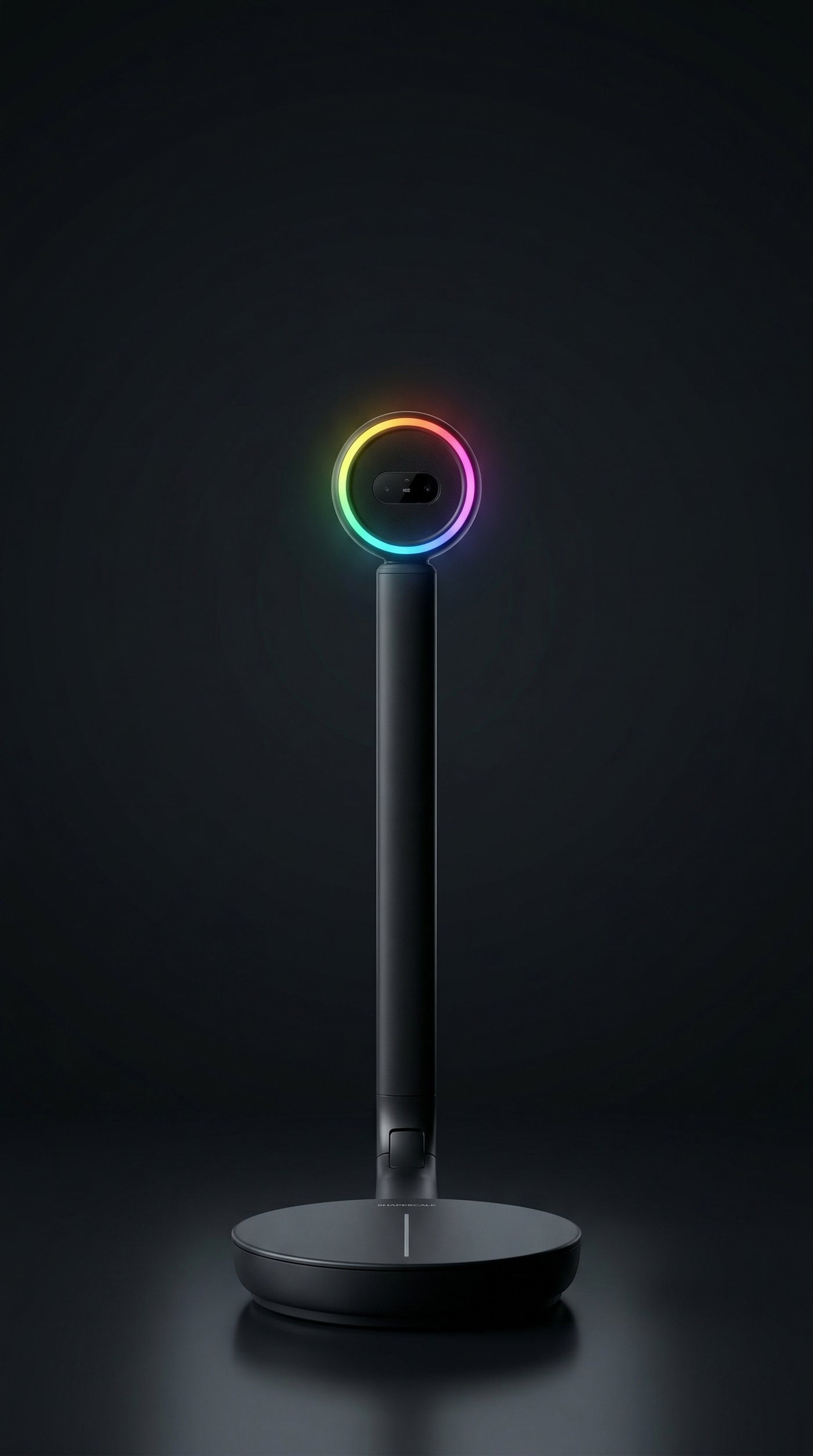
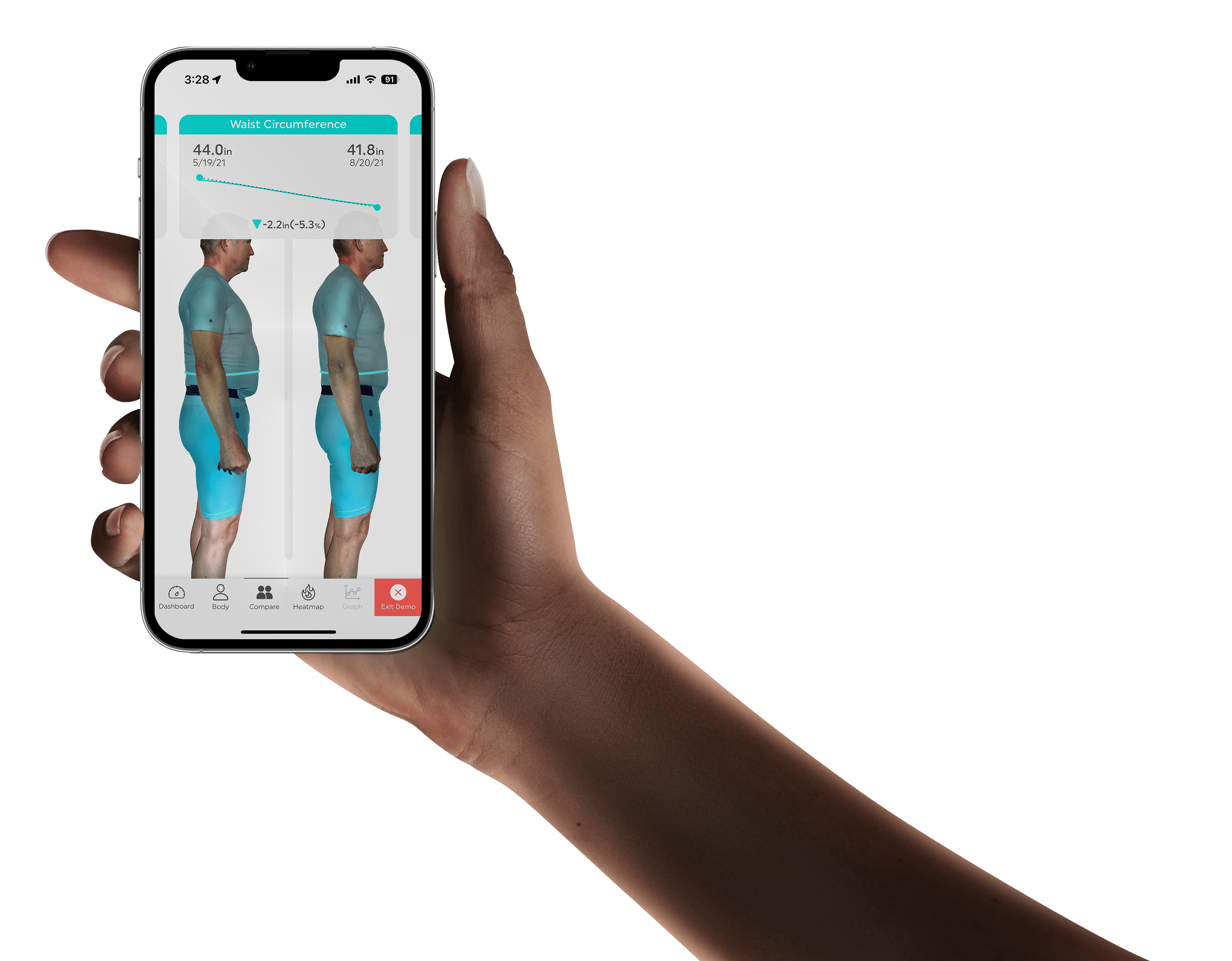
Product photos first. Then the consult on iPhone: girth overlay, heatmap, hand-held compare. The consult is iPhone or iPad, not iPad-only.
Can staff walk the result on iPhone during the consult?
On Fit3D, SNAP is an operator Android-tablet app. Results live on the web dashboard. We are not quoting a star rating for that listing.
On ShapeScale the consult is iOS. App Store, checked 22 Aug 2026: 4.0 / 5 from 43 ratings. Photoreal 3D, girths, volumes, and heatmaps on iPhone or iPad. Staff can export a PDF of one scan or a two-scan compare. Android is not available.
A still of an iPhone on this page does not mean the consult is iPad-only.
Where SNAP falls short for contouring, tightening, red light, and plastics
SNAP is the cheap Fit3D tablet login. The person turns. It is the wrong tool when the patient paid for a local change and you need a still surface you can point at.
CoolSculpting, RF tightening, red light, Emsculpt-class muscle work, and lipo or fat grafting live on a body region. A whole-body % can hold still while the treated waist, hip, thigh, or abdomen changes. Do not assign cm or % treatment results to ShapeScale. ShapeScale does not grade skin, collagen, redness, or joules. Keep photos for texture. Add girth, regional volume, and a heatmap so the conversation is the treated area.
Fit3D also does girths and volumes. Keep Fit3D if posture is the product. See the Fit3D page.
What SNAP is actually for
Keep a ProScanner if you already run it (common on gym floors), you sell posture, and composition is only a locked-stance trend.
SNAP is a cheap Fit3D tablet login. The person turns. That is a novelty budget SKU, not a serious composition tool. Fit3D's blog can call towers old and SNAP new. That is their sales story. It is not a reason to use a tablet spin for a consult that needs a photoreal body, girths, volumes, and a heatmap.
How to try it
ShapeScale publishes current lease and purchase terms, and a 45-day trial, on business.shapescale.com/pricing. Use that page for the numbers. This article does not restate a ShapeScale dollar figure. Book a demo if you want a walkthrough first.
FAQ
What is SNAP by Fit3D?
SNAP is Fit3D's official name for their Android-tablet 3D body scan app. Subscription from $100 per month on their SNAP page. Play: tablet required, not phones, business use. The member turns 360 degrees. Results go to dashboard.fit3d.com. It is a budget Fit3D option, not a serious composition scanner.
Is a tablet the next generation of 3D body scanning?
It is one capture: RGB frames on a mobile camera, then software reconstruction. A ProScanner keeps the person still and spins the platform under a fixed tower. SNAP has the person turn in front of a tablet. ShapeScale keeps the person still and moves the sensor head. Those are three methods. Fit3D's evolution post frames towers as Generation 1 and SNAP as Generation 2, and it compares about 2 MP depth sensors to about 15 MP mobile cameras. Fit3D's evolution post says tablet cameras are roughly 5x more powerful than about 2 MP depth sensors. That is megapixels, not 5 times the accuracy. A tablet camera is still a tablet camera.
Does the person stand still on ShapeScale?
Yes. They stand on the base. The sensor head rotates. SNAP, on Fit3D's SNAP FAQ, uses a 360 degree rotation by the user. ProScanner uses a rotating platform.
How much space does ShapeScale need?
5 ft of rotation clearance, 6 by 6 ft recommended, 8 ft of ceiling. Fit3D help for SNAP setup says about 40 in tablet height and 5 to 7 ft stand distance. Those are Fit3D SNAP setup numbers, not ShapeScale specs. The SNAP product page does not give a numbered floor plan.
How long is a ShapeScale scan, and who fits?
About 1 min to scan. Typically 10 to 15 min to results (upload plus cloud). Capacity is 400 lb. We are not restating a single height inch figure. Product data, public help, and an internal FAQ disagree. Upload needs 10+ Mbit/s. A scan file is about 200 to 250 MB.
What should the person wear on ShapeScale?
Tight-fitting, non-reflective clothing. No mirrors nearby. No direct sun on the device. Staff lock that the same way SNAP staff lock even lighting and a smooth 360 degree turn.
Is Fit3D a DXA scan?
No, and neither is ShapeScale. Fit3D estimates fat from anthropometrics correlated to DXA readings (their FAQ). ShapeScale predicts composition from the full mesh with a model trained vs GE Lunar iDXA (March 2026 white paper).
Did you validate Fit3D or SNAP in the white paper?
No. The March 2026 paper is first-party and is not peer-reviewed. Body fat MAE 1.89 pp, R2 0.91; lean MAE 3.3 lb / 1.49 kg, R2 0.98; ALM MAE 2.1 lb / 0.97 kg, R2 0.96 are ShapeScale vs GE Lunar iDXA. Do not paste them onto ProScanner or SNAP. This page does not invent a SNAP MAE.
Do Fit3D and ShapeScale both report inches and volumes?
Yes. Both report regional circumferences and regional volumes. Fit3D also sells posture. ShapeScale does not. ShapeScale adds photoreal mesh and volume heatmaps on iPhone or iPad. We do not invent a SNAP measurement count.
Does ShapeScale do posture analysis?
No. Keep Fit3D if posture is the product. See the Fit3D page.
What do MAE, R2, ALM, and LMI mean?
MAE is the average size of a miss versus the reference. Lower is better. R2 says how tightly the estimate tracks the reference. Higher is better. ALM is lean tissue in the arms and legs. LMI is lean mass relative to height.
Can staff walk results in the room on iPhone?
On ShapeScale, yes: iPhone or iPad. App Store 4.0 / 5 (43), checked 22 Aug 2026. Android is not available. Fit3D SNAP is an Android-tablet operator app. Results go to their web dashboard.
Can SNAP or Fit3D show CoolSculpting, RF, red light, or surgical change in a treated area?
Fit3D reports girths and volumes. A whole-body % can still miss a local change. ShapeScale reports those girths and regional volumes plus a volume heatmap on a still body. It does not measure skin quality.
Sources
- SNAP by Fit3D product page (official SNAP spelling; $100/month; tablet; 360 degree turn; ~$179 Galaxy A9+ / A11+)
- SNAP by Fit3D, Google Play (Android tablet; not phones; dashboard; posture listed)
- Fit3D SNAP subscription page (plans; wall mount / stand)
- Fit3D SNAP tablet height (about 40 in / waist-high)
- Fit3D SNAP stand distance (about 5 to 7 ft)
- Fit3D, The Evolution of 3D Body Scanning (one cite; Gen1 tower vs Gen2 SNAP; ~$9,000 ProScanner)
- Fit3D Body Fat FAQ (anthropometric / volumetric composition)
- Fit3D posture reports (tilt, shift, ProScanner balance)
- Fit3D processing pipeline (circumferences, volumes, posture)
- ShapeScale pricing (45-day trial published on that page; no dollar figures restated here)
- ShapeScale composition white paper, March 2026 (first-party; not peer-reviewed)
- ShapeScale App Store (4.0 / 5, 43, iOS, 22 Aug 2026)
- Fit3D for clinics (keeper; papers live there)
- InBody scan accuracy for a practice
- Evolt 360 for clinics
- Best body scanner for a clinic
- Prism Labs, Fit3D SNAP announcement (7 Apr 2025; powered by Prism)
- Fitt Insider, Fit3D and Prism SNAP release (6 May 2025; Noom, Tempo, Fitify named)
- Noom, Track Your Progress with Body Scan (FAQ; A-pose 10s spin; hassle list)
- Tinsley et al., Front Med 2024 (Prism-funded licensed stack vs GE iDXA; TEM 0.50-0.66 pp; MAE about 3.4-3.5 pp)