Does BMI Account for Muscle? See What to Track Instead


Heading 2
Heading 1
Heading 3
Heading 4
Heading 5
Heading 6
Lorem ipsum dolor sit amet, consectetur adipiscing elit, sed do eiusmod tempor incididunt ut labore et dolore magna aliqua. Ut enim ad minim veniam, quis nostrud exercitation ullamco laboris nisi ut aliquip ex ea commodo consequat. Duis aute irure dolor in reprehenderit in voluptate velit esse cillum dolore eu fugiat nulla pariatur.
Block quote
Ordered list
- Item 1
- Item 2
- Item 3
Unordered list
- zz
- Item B
- Item C
Bold text
Emphasis
Superscript
Subscript
Your client is putting in the work. They’re lifting heavier, feeling stronger, and their clothes are fitting better. Yet, when you calculate their Body Mass Index, the number has barely moved—or worse, it’s gone up, pushing them into the "overweight" category. This frustrating scenario is common in fitness and wellness settings, and it all comes down to a fundamental flaw in the metric itself. The confusion often leads clients to ask, “does BMI account for muscle?” The simple answer is no. This article will break down why this popular calculation is a poor tool for tracking individual progress, how it misrepresents the health of active people, and what better alternatives you can use to show clients the true results of their hard work.
Key Takeaways
- Treat BMI as a limited screening tool, not a final score: Its formula can't distinguish muscle from fat, which means it often misrepresents the health of active clients and can cause unnecessary confusion or discouragement.
- Focus on body composition for a true measure of progress: Tracking changes in fat mass versus lean muscle provides a more accurate assessment of health improvements and helps you tailor client programs more effectively.
- Use visual data to show clients their progress: Tools like 3D body scanning make physical changes tangible. This helps clients see their hard work pay off, which improves retention and validates the value of your services.
What Is BMI and How Is It Calculated?
Body Mass Index (BMI) is a metric you and your clients have likely encountered many times. It’s a widely used screening tool that estimates body fat using a simple calculation based on a person's weight and height. While it’s been a staple in health assessments for decades, it’s important to remember that it doesn't directly measure body fat. Instead, it serves as a quick, accessible guideline for placing individuals into broad weight categories. This simplicity is both its biggest advantage and its most significant drawback, as it provides a starting point for conversation but misses crucial details about a person's actual body composition.
How the BMI Formula Works
The math behind BMI is straightforward. The formula is calculated by taking a person's weight in kilograms and dividing it by the square of their height in meters. For example, a person who weighs 70 kilograms and is 1.75 meters tall would have a BMI of 22.9. This simplicity makes it easy for anyone to calculate without special equipment, which is why it became so popular in large-scale population studies and general practice. However, this basic formula is also the source of its main limitation: it can't distinguish what that weight is actually made of, treating a pound of muscle the same as a pound of fat.
What the BMI Categories Mean
Once the BMI score is calculated, it's used to place an individual into one of four main weight classifications. According to the standard BMI categories, a score below 18.5 is considered underweight. A BMI between 18.5 and 24.9 falls into the normal or healthy weight range. A score from 25 to 29.9 is classified as overweight, and a BMI of 30 or higher is categorized as having obesity. These labels are intended to provide a quick assessment of potential health risks associated with weight. For many people, they can be a useful indicator, but for others—especially athletes and those with higher muscle mass—these categories can be misleading and fail to reflect their true health and fitness levels.
Does BMI Differentiate Between Muscle and Fat?
The short answer is no. BMI is a simple calculation that can't tell the difference between a pound of muscle and a pound of fat. This is one of its most significant failings as a standalone health metric, especially in a fitness or wellness setting where clients are actively working to change their body composition. For your clients who are building strength and gaining muscle, relying on BMI can be misleading and discouraging. It treats all weight equally, ignoring the context of what that weight is actually made of.
Why BMI Treats All Weight the Same
The main issue with BMI is its simplicity. The formula only uses height and weight, which means it has no way of knowing what makes up that weight. It completely overlooks critical factors like muscle mass, bone density, and overall body composition. Because of this, BMI is a blunt instrument that can’t provide a nuanced picture of a person's health. It doesn't account for the physiological differences between individuals, such as how much muscle someone carries versus fat. This is a critical distinction to make when assessing a client's health progress, as a rising number on the scale could signify muscle gain—a positive outcome that BMI might incorrectly flag as negative.
The Muscle vs. Fat Density Problem
A common point of confusion is the idea that muscle weighs more than fat. While a pound of muscle and a pound of fat both weigh one pound, muscle is much denser and takes up less space. Think of it like a small, heavy dumbbell versus a fluffy pillow of the same weight. This density difference is why very muscular people, like athletes or dedicated gym-goers, can have a high BMI that classifies them as "overweight" or even "obese" despite having very low body fat. Their lean, dense muscle tissue pushes their total weight up, skewing the BMI calculation and providing an inaccurate label that doesn't reflect their actual level of fitness.
How Muscle Mass Skews BMI Results
One of the biggest flaws of the BMI calculation is that it doesn't distinguish between muscle, fat, bone, and water. It treats all weight the same. This is a huge problem because muscle is significantly denser than fat. A pound of muscle takes up less space than a pound of fat, but on the scale—and in the BMI formula—a pound is a pound.
For your clients who are actively working to build strength and improve their physique, this can be incredibly misleading. As they replace fat with lean muscle, their weight might stay the same or even increase. According to their BMI score, their health is either stagnating or getting worse, even when they're getting stronger, leaner, and healthier. This can be discouraging and completely misrepresents their hard-earned progress.
The Athlete's Dilemma: High BMI and Low Body Fat
Athletes and dedicated fitness enthusiasts often face the "athlete's dilemma," where their commitment to health results in a BMI that labels them as "overweight" or "obese." Because muscle is heavy, individuals with a high muscle-to-fat ratio can easily tip the scales into a BMI category that suggests they are at a higher health risk.
A classic example is a professional athlete in their prime who has very low body fat but a significant amount of muscle mass. Their high weight relative to their height pushes their BMI up, creating a misleading health profile. This shows exactly why BMI is inaccurate for people who are physically fit. This doesn't just apply to elite athletes; it affects any client who regularly engages in strength training.
Why Muscular People Get Mislabeled as Overweight
The reason muscular people get mislabeled is simple: BMI is a measure of weight, not health or body composition. The formula cannot see the difference between a pound of lean, metabolically active muscle and a pound of excess adipose tissue. People with a lot of muscle are often wrongly categorized because muscle weighs more than fat by volume.
For your clients, this means their success in the gym could lead to a number that incorrectly flags them as unhealthy. Relying on BMI alone means you miss the real story of their progress. It ignores the positive changes in their body composition, which is a far better indicator of health and fitness than a simple weight-to-height ratio.
What Are the Main Limitations of BMI?
While BMI is a quick and easy calculation, its simplicity is also its greatest weakness. The formula was created nearly 200 years ago to measure populations, not individuals, and it fails to provide the detailed insights needed for a modern health assessment. For wellness professionals, relying on BMI can lead to inaccurate conclusions and frustrated clients. It gives you a single number without any context, ignoring the critical factors that truly define a person's physical health. Understanding these limitations is the first step toward adopting more meaningful metrics that reflect your clients' hard work and actual progress. By moving beyond this outdated tool, you can offer a more precise and personalized service.
It Misses Body Composition Data
The most significant flaw of BMI is that it doesn't distinguish between fat and muscle. The formula treats all weight as equal, which means a lean, muscular athlete could have the same BMI as a sedentary person with high body fat. Since muscle is denser and weighs more than fat, clients who are actively building strength can see their BMI increase, incorrectly placing them in the "overweight" or "obese" categories. This can be incredibly discouraging for someone working hard with a personal trainer to improve their fitness. It creates a disconnect between how they look and feel and what the numbers say, undermining their progress and your guidance.
It Ignores Fat Distribution
Another major blind spot for BMI is its inability to show where fat is stored on the body. This is a critical piece of the health puzzle because not all fat is created equal. Visceral fat, which is stored around the abdomen and vital organs, poses a much greater health risk than subcutaneous fat stored under the skin on the hips or thighs. A person can have a "normal" BMI but still carry a dangerous amount of abdominal fat. For businesses focused on weight management, tracking changes in waist circumference and fat distribution provides a far more accurate picture of health improvements than a simple BMI calculation ever could.
It Overlooks Age, Gender, and Ethnicity
BMI uses a one-size-fits-all approach that fails to account for key demographic differences. The standard formula doesn't adjust for age, gender, or ethnicity, all of which have a significant impact on body composition. For example, women naturally have a higher body fat percentage than men, and older adults tend to lose muscle mass as they age—factors BMI completely ignores. Furthermore, the original data used to create the BMI scale was based on white European men, so its thresholds may not be accurate for people from different ethnic backgrounds. This lack of nuance can lead to misclassifying the health status of a diverse client base, making it an unreliable tool for personalized wellness plans.
What Are Better Alternatives to BMI?
Since BMI can’t distinguish between fat and muscle, relying on it alone gives you an incomplete and often misleading picture of a person's health. A far better approach is to use methods that measure body composition—what the body is actually made of. These tools help you understand the proportions of fat, muscle, and bone, which are much stronger indicators of metabolic health and fitness progress.
Fortunately, there are several excellent alternatives to BMI, ranging from simple tape measurements to advanced imaging technologies. Each offers a more nuanced view, helping you provide clients with more accurate assessments and personalized plans. Moving beyond BMI allows you to track changes that matter, like fat loss and muscle gain, which are the true markers of success in any wellness journey. By adopting these superior methods, you can offer a higher standard of care and deliver results that clients can see and feel.
Body Fat Percentage and Waist-to-Hip Ratio
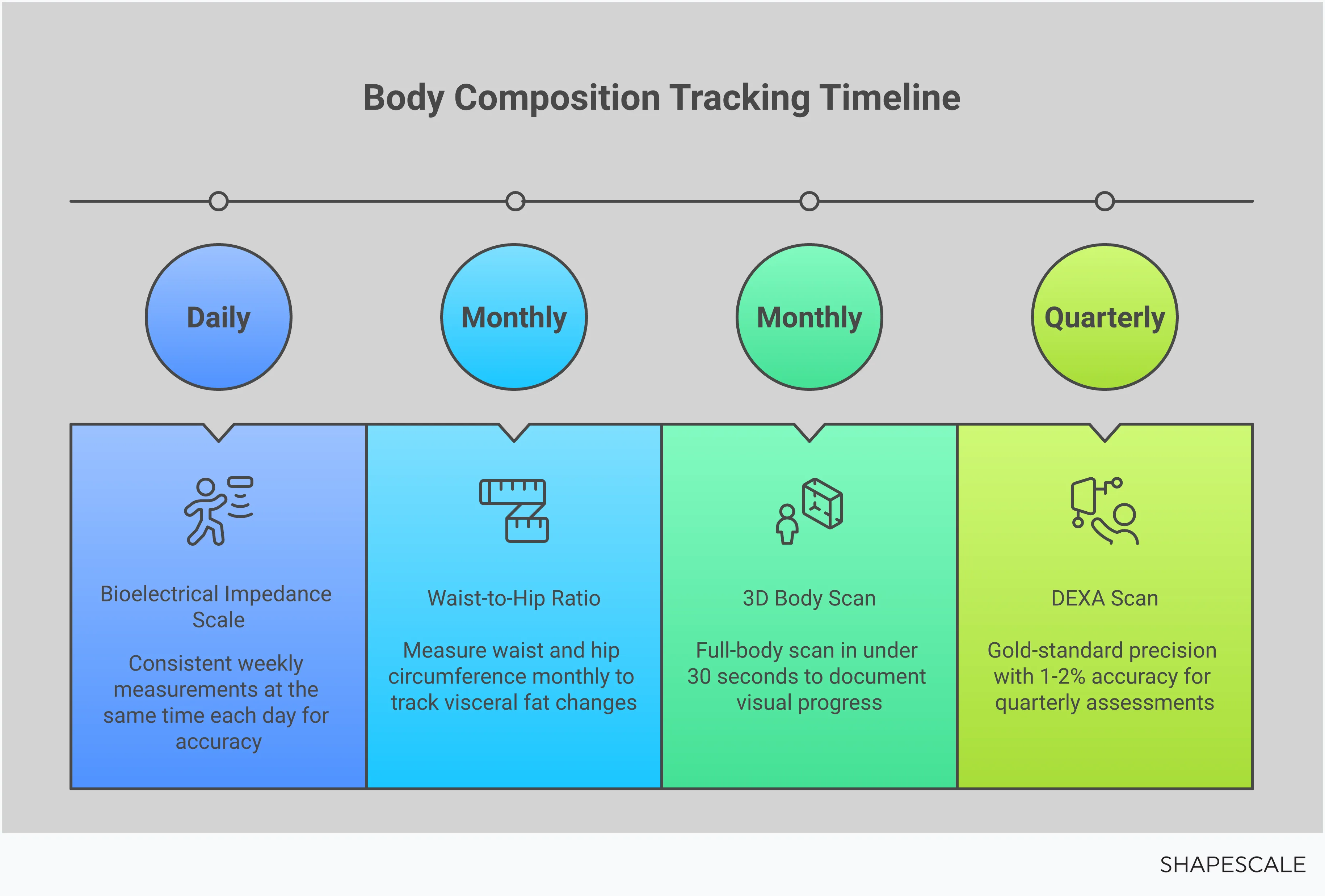
Two of the most straightforward and accessible alternatives to BMI are body fat percentage and the waist-to-hip ratio (WHR). Body fat percentage measures the total mass of fat in your body relative to your total body mass. Unlike BMI, this metric directly assesses body fat levels, providing a much clearer indicator of health risks associated with excess fat.
The waist-to-hip ratio is a simple measurement that helps assess fat distribution. A higher ratio often indicates more visceral fat stored around the abdominal organs, which is a strong predictor of health issues like type 2 diabetes and heart disease. To calculate it, you just divide the waist circumference by the hip circumference. Both metrics are easy to track and give clients valuable feedback that a simple scale cannot.
DEXA Scans and Bioelectrical Impedance
For a more detailed analysis, clinical-grade tools like DEXA scans and Bioelectrical Impedance Analysis (BIA) offer a deeper look into body composition. A DEXA scan, which stands for Dual-Energy X-ray Absorptiometry, uses low-dose X-rays to provide a precise breakdown of fat mass, lean muscle mass, and bone density. It’s widely considered a gold standard for its accuracy and detail.
Bioelectrical Impedance Analysis is a more accessible technology found in many smart scales and professional devices. BIA works by sending a safe, weak electrical current through the body. Since fat, muscle, and water conduct electricity differently, the device can estimate body composition based on the speed of the current. While not as precise as a DEXA scan, BIA is a quick and convenient way to track body composition trends over time.
3D Body Scanning for a Complete Picture
3D body scanning represents the next frontier in body composition analysis, offering a uniquely visual and comprehensive assessment. This technology creates a photorealistic 3D model of a person’s body, allowing you and your clients to see changes in their shape and measurements with incredible detail. Instead of just tracking numbers on a spreadsheet, clients can visually compare their progress over time, which is a powerful motivator.
Unlike tools that only provide data points, ShapeScale delivers a complete visual overview of progress. It captures hundreds of precise measurements, tracks changes in lean mass and fat mass, and presents it all in an intuitive, engaging way. For businesses like personal trainers and medical spas, this technology transforms the client experience by making progress tangible and easy to understand, fostering long-term engagement and better results.
How Can You Get an Accurate Health Assessment?
Getting a clear picture of a client's health requires looking beyond a single number on a scale or a BMI chart. Since BMI doesn't account for crucial factors like muscle mass or body composition, relying on it alone can give you and your clients a skewed perspective. A truly accurate health assessment comes from a more holistic approach, combining several data points with professional guidance to understand the full story. This method allows you to track meaningful changes and provide personalized, effective plans.
Combine Multiple Measurement Methods
BMI is a starting point, but it’s a limited one. It famously doesn't consider body composition, age, gender, or where fat is stored. To get a more complete view of a client's health, you need to layer in other metrics. Combining BMI with measurements like waist circumference, waist-to-hip ratio, and body fat percentage provides a much richer dataset. This multi-faceted approach helps you move past the simple height-and-weight calculation and into a more nuanced understanding of health. By tracking these different data points together, you can better assess health risks and monitor progress in a way that reflects actual changes in a client's body composition, not just their total weight.
Work with a Professional for a Full Evaluation
While gathering multiple data points is a great step, the real value comes from professional interpretation. As a wellness professional, you can guide clients through their results and create a plan that makes sense for their bodies and goals. For an even deeper analysis, you can use professional tools like DEXA scans, bioelectrical impedance analysis (BIA), or 3D body scanners. These technologies provide detailed breakdowns of body fat, muscle mass, and more. This level of detail helps you create highly personalized programs for your clients, whether you run a weight management center or a high-performance gym. Remember, these measurements are pieces of a larger health puzzle that also includes lifestyle, diet, and exercise.
What Muscular Individuals Should Know About BMI
If you work with clients dedicated to building strength and muscle, you’ve likely seen the disconnect firsthand. A client can be in peak physical condition—strong, lean, and healthy—yet their BMI chart labels them "overweight" or "obese." This happens because BMI is a blunt instrument. It can’t tell the difference between a pound of muscle and a pound of fat, which is a critical flaw when assessing the health of fit individuals. This single number, stripped of all context, can be confusing and discouraging for clients, undermining their hard work and commitment.
As a fitness or wellness professional, it's your role to help them understand the context behind the numbers. Explaining why their high muscle mass gives them a misleading result is the first step. The next is to introduce them to better, more accurate methods of tracking their progress. By shifting the focus from a simple weight-to-height ratio to a detailed look at body composition, you can provide meaningful feedback that celebrates their strength gains and fat loss, rather than penalizing them for building healthy muscle. This not only educates your clients but also reinforces the value of your expertise and the sophisticated tools you use to guide their journey.
Common Myths About BMI and Muscle
One of the most persistent myths is that BMI is an accurate indicator of a healthy weight for everyone. The reality is that BMI is a flawed metric because it only considers height and weight, completely ignoring body composition. It doesn't account for bone density, body frame, or the crucial difference between fat and muscle mass.
Since muscle is denser than fat, a very muscular person can easily have a high BMI that pushes them into the "overweight" category, even with very low body fat. This is common among athletes and dedicated gym-goers. The formula incorrectly flags their healthy, functional muscle tissue as excess weight, creating a misleading picture of their health.
Practical Advice for People with Higher Muscle Mass
For your muscular clients, it’s best to frame BMI as a simple, population-level screening tool, not a definitive measure of individual health. The CDC notes that while it can be a reasonable indicator of body fat for the average person, it should be used alongside other measurements. It’s a starting point for a conversation, not the final word.
Instead of fixating on BMI, guide your clients toward metrics that truly reflect their body composition. Simple measurements like waist circumference can be a better indicator of health risks. For a more detailed and motivating picture, advanced tools are even better. Offering body composition analysis gives clients precise data on their muscle gains and fat loss. This approach provides accurate feedback, validates their efforts, and helps you create more effective training and nutrition plans.
Which Measurement Approach Is Best for Your Business?
Choosing the right tools to track client progress is fundamental to demonstrating your value and keeping them motivated. While traditional methods like BMI have been the standard, they often fall short of providing the detailed insights your clients need. Modern technology offers a more nuanced and inspiring way to showcase their hard work, helping you build stronger relationships and achieve better results together. By adopting a more comprehensive approach, you can provide a superior service that sets your business apart and truly reflects the positive changes your clients are making.
Why You Should Move Beyond BMI in Client Evaluations
For years, BMI has been a go-to metric, but it’s a blunt instrument. It’s a simple screening tool that fails to tell the whole story of a person's health. The biggest issue is that BMI can't differentiate between muscle and fat. This means a lean, muscular athlete could be classified as "overweight" simply because muscle is dense. This can be incredibly discouraging for clients who are getting stronger and healthier.
Furthermore, BMI gives no information about fat distribution, which is a critical health indicator. Fat stored around the abdomen poses a greater health risk than fat on the hips or thighs. Relying on BMI alone can mislead both you and your clients, potentially masking real progress or failing to identify key areas for improvement.
How to Implement Body Composition Analysis with ShapeScale
Shifting to body composition analysis gives your clients a clear, accurate, and motivating picture of their progress. Tools like ShapeScale offer a powerful upgrade by creating photorealistic 3D models of your client's body. Instead of just seeing a number on a scale, they can visually track changes in muscle definition and fat loss over time. This visual feedback is a powerful motivator, especially when the scale isn’t budging because they're gaining muscle while losing fat.
Implementing this technology is straightforward and offers a significant return for weight management centers and personal trainers. It allows you to provide precise, localized feedback, showing clients exactly where they are making gains. This level of detail helps you tailor your programs more effectively and proves the value of your services, leading to better client retention and results.
Frequently Asked Questions
Why is BMI a poor metric for my fitness-focused clients? BMI is a poor metric for active clients because it can't tell the difference between muscle and fat. Since muscle is much denser than fat, a client who is getting stronger and leaner might see their weight stay the same or even increase. The BMI formula would incorrectly interpret this positive change as a negative one, potentially labeling a very fit person as "overweight." This misrepresents their progress and can be incredibly discouraging.
How should I explain a high BMI to a client who is clearly fit and muscular? You can explain that BMI is a very basic screening tool designed for large populations, not for individuals focused on their fitness. Point out that the formula only uses height and weight, so it completely misses the context of their body composition. Frame it as an opportunity to use more advanced tools that actually reflect their hard work, like body fat percentage or a 3D body scan, which can show them how they are successfully replacing fat with lean muscle.
Is there any situation where using BMI is still acceptable? BMI can serve as a very general starting point in a health conversation, especially for the general population. It's a quick, simple calculation that requires no special equipment. However, for any serious wellness or fitness business, it should only be one small piece of a much larger puzzle. It is not sufficient for tracking progress or creating personalized plans, as it lacks the detail needed to understand an individual's unique body composition.
What's the easiest first step to move away from BMI without investing in new technology? A simple and effective first step is to start using a tape measure to track waist-to-hip ratio and other key circumferences. This method helps you and your client monitor changes in body shape and fat distribution, particularly the amount of visceral fat around the abdomen, which is a much better indicator of health risks than BMI. It's an accessible, low-cost way to provide more meaningful feedback.
How does a 3D body scanner provide a better client experience? A 3D body scanner transforms the client experience by making progress visual and tangible. Instead of just looking at numbers on a chart, clients can see a photorealistic 3D model of their body and compare their progress over time. This visual evidence of reduced fat and increased muscle is a powerful motivator that a scale or BMI calculation can't offer. It provides precise data that helps you tailor programs more effectively and proves the value of your services, which helps with client retention.