Light Therapy to Lose Weight: Is It Effective?


Heading 2
Heading 1
Heading 3
Heading 4
Heading 5
Heading 6
Lorem ipsum dolor sit amet, consectetur adipiscing elit, sed do eiusmod tempor incididunt ut labore et dolore magna aliqua. Ut enim ad minim veniam, quis nostrud exercitation ullamco laboris nisi ut aliquip ex ea commodo consequat. Duis aute irure dolor in reprehenderit in voluptate velit esse cillum dolore eu fugiat nulla pariatur.
Block quote
Ordered list
- Item 1
- Item 2
- Item 3
Unordered list
- zz
- Item B
- Item C
Bold text
Emphasis
Superscript
Subscript
Offering a new service is only effective if you can demonstrate its value. While light therapy presents a compelling, non-invasive option for body contouring, clients need to see tangible results to stay motivated. This is especially true for a treatment that produces subtle changes over multiple sessions. Simply telling a client the treatment is working isn't enough. This guide explores the science behind using light therapy to lose weight and reduce inches, but more importantly, it discusses how to pair this technology with objective tracking tools like 3D body scanning. By providing visual proof of progress, you can validate the client's investment and create a powerful feedback loop that drives long-term success and retention.
Key Takeaways
- Frame light therapy as a body contouring tool: It's most effective for targeted inch loss on clients who already maintain a healthy lifestyle. Manage expectations by explaining it complements their efforts, rather than replacing diet and exercise.
- Implement strict safety protocols to protect your business: Invest in FDA-cleared equipment, conduct thorough client screenings to identify contraindications, and ensure your staff is fully trained on proper procedures to minimize risk.
- Use objective data to demonstrate value and retain clients: Pair light therapy sessions with 3D body scanning to track subtle changes in measurements and body composition. This visual proof validates the treatment's effectiveness and keeps clients motivated.
What is light therapy for weight loss?
Light therapy is a non-invasive treatment that uses specific wavelengths of light to help clients reduce body fat. Unlike surgical procedures like liposuction, it doesn’t destroy fat cells. Instead, it prompts them to release their contents, which the body then processes and eliminates naturally. This approach, often called red light therapy or Low-Level Laser Therapy (LLLT), offers a gentle alternative for body contouring.
The science is straightforward: exposing the body to red and near-infrared light can trigger a biological response in the fat cells just beneath the skin. The light penetrates without heat or discomfort, making it a comfortable experience for clients. For wellness businesses, this technology provides an effective service for clients focused on body contouring and fat reduction. The equipment varies, from full-body systems that are a great fit for health clubs to more targeted devices perfect for specialized treatments at medical spas. Understanding how light therapy works and what devices are available is the first step in deciding if it’s the right addition to your service menu.
The mechanism: How it targets fat cells
The process behind light therapy is all about how light interacts with our cells. When red and near-infrared light is applied to the skin, it passes through to the subcutaneous fat layer to target fat cells. This light energy stimulates the mitochondria—the powerhouses of the cells—and causes the cell membranes to become temporarily permeable. In simple terms, the light creates tiny, temporary holes in the fat cells. Through these openings, stored fats (triglycerides and fatty acids) are released into the space outside the cells. From there, the body’s lymphatic system collects these fatty acids to be used as energy or naturally eliminated.
Types of light therapy devices
You can find light therapy equipment in several formats, making it easy to choose a device that fits your business model. The options come in different forms, including large, full-body beds that offer a comprehensive treatment, which are popular in wellness centers and gyms. There are also smaller panels designed to focus on specific areas like the abdomen, thighs, or arms, allowing for more targeted sessions. For facial treatments or smaller spots, some businesses use masks or handheld wands. The most common professional method is Low-Level Laser Therapy (LLLT), which is a completely non-invasive treatment. A trained technician typically administers the therapy by placing the device on or near the body for 10 to 40 minutes, with most protocols recommending a series of treatments for the best results.
The benefits of light therapy
Light therapy, particularly red light therapy, offers a compelling set of benefits that can enhance a client's wellness journey. It's not a magic bullet for weight loss, but it serves as a powerful complementary treatment that supports the body's natural processes. For wellness businesses, this technology provides a new way to help clients achieve their goals, from slimming down specific areas to improving overall energy levels. The primary advantages fall into three main categories: targeted fat reduction, a positive impact on cellular metabolism, and the simple fact that it's a completely non-invasive procedure. These benefits make it an attractive service for clients who are looking for modern, gentle, and effective ways to support their health and fitness efforts. By adding light therapy to your service menu, you can appeal to clients who may be hesitant about more invasive procedures but are still serious about seeing results. It integrates seamlessly with existing programs, providing an additional revenue stream while delivering real value. The science behind it is straightforward, making it easy to explain the value proposition to your clients and staff.
Fat reduction and body contouring
One of the most sought-after benefits of light therapy is its potential for targeted fat reduction and body contouring. The technology works by using specific wavelengths of light that penetrate the skin to reach subcutaneous fat cells. This light exposure can cause temporary pores to form on the fat cells, allowing lipids to be released and naturally processed by the body. Studies have shown modest but measurable results. For instance, one clinical trial found that participants lost an average of 2.15 cm from their waist after four weeks of treatment. This makes it an excellent option for clients struggling with stubborn fat pockets that are resistant to diet and exercise alone, offering a way to refine their shape without surgery.
Impact on cellular energy and metabolism
Beyond targeting fat cells directly, light therapy has a notable effect on cellular function. The light energy is absorbed by the mitochondria, which are the powerhouses within our cells. This process stimulates the production of adenosine triphosphate (ATP), the primary molecule for storing and transferring energy in cells. An increase in ATP can lead to a higher metabolic rate and give clients more energy for physical activity. By supporting the body at a cellular level, red light therapy can help improve workout performance and endurance, making it easier for clients to burn calories and build muscle. This metabolic support is a key reason why light therapy pairs so well with active fitness and weight management programs.
The advantage of a non-invasive approach
For many clients, the greatest appeal of light therapy is that it's a completely non-invasive treatment. Unlike surgical procedures like liposuction, there are no incisions, needles, or anesthesia involved. Sessions are painless, with most clients reporting only a gentle warming sensation. This eliminates the risks associated with surgery, such as scarring, infection, and lengthy recovery periods. Clients can typically resume their daily activities immediately after a session, making it a convenient "lunchtime" procedure. Offering a safe, comfortable, and effective alternative to more aggressive fat loss methods can attract a broader client base, especially those who are hesitant to undergo surgery but still want to see tangible body contouring results.
Examining the evidence
Light therapy is gaining traction as a non-invasive option for fat reduction, but it's important to look past the marketing claims and understand what the science says. For wellness professionals considering this technology, a clear view of the evidence is necessary to set proper client expectations and integrate the service effectively. The research shows some promising results, particularly for body contouring, but it also highlights some common misunderstandings and limitations. By understanding the clinical findings, you can better position this service as a complementary tool within a comprehensive wellness program rather than a standalone solution for weight loss.
A look at the clinical studies
Clinical research into light therapy, often called low-level laser therapy (LLLT), shows it can have a measurable effect on localized fat deposits. The therapy uses specific wavelengths of light to penetrate the skin and target subcutaneous fat cells. The light energy creates temporary pores in these cells, prompting them to release stored fats (triglycerides), which causes the cells to shrink. Some studies have documented modest results; for instance, one trial observed an average waist size reduction of about 0.8 inches over six weeks. While these outcomes are encouraging, they are typically small and require multiple treatment sessions to achieve.
Common misconceptions
A primary misconception is that light therapy causes weight loss. The evidence points to its effectiveness as a body contouring tool, meaning it can help reduce the circumference of treated areas like the waist, hips, and thighs. However, it does not destroy fat cells or remove a significant amount of fat from the body. The fat released from the cells is processed by the body's lymphatic system, but without a healthy lifestyle to support this process, the fat can be re-stored. It's critical to communicate to clients that this is a treatment for spot reduction, not a method for losing pounds on the scale.
Limitations and setting realistic expectations
When evaluating light therapy, it's important to acknowledge the limitations in current research. Many studies are small, lack control groups, or don't include long-term follow-up to see if the results are sustainable. The mechanism itself is also a limitation—the therapy doesn't eliminate fat cells, it just empties them temporarily. If a client doesn't support the treatment with diet and exercise, the fat cells can easily refill. For your business, this means setting realistic expectations is key. Position light therapy as a supportive treatment that works best when combined with an active lifestyle and a healthy diet to help clients achieve their body composition goals.
Risks and safety considerations
While light therapy is a non-invasive treatment, offering it in your wellness business comes with a responsibility to prioritize client safety. Most research indicates that red light therapy is safe and produces minimal side effects when administered correctly. Like any treatment, it’s not without risks. Understanding these potential issues and establishing clear safety protocols is fundamental to protecting your clients and your business's reputation.
Proper training, thorough client screening, and investing in high-quality equipment are the pillars of a safe light therapy service. By addressing these areas proactively, you can confidently integrate this technology into your offerings, providing a valuable service that clients can trust. This approach minimizes risk and builds a foundation of professionalism and care that will set your business apart.
Key safety precautions
Your first line of defense is proper procedure. Light therapy is generally safe, but the energy from its devices can cause harm if used incorrectly. Some studies have noted rare instances of skin damage when a device made improper contact with the skin. This highlights the need for your staff to be thoroughly trained on the specific equipment you use, understanding the correct distance and duration for every session. Providing clients with appropriate, certified eye protection is non-negotiable to prevent any potential damage from the intense light. Following the manufacturer's instructions to the letter isn't just a suggestion—it's a core part of your risk management strategy.
Identifying contraindications
Not every client is a suitable candidate for light therapy. A comprehensive intake and screening process is essential to identify any contraindications that could make the treatment unsafe for an individual. Be sure to ask clients about conditions such as pregnancy, epilepsy, or active cancer. You should screen for the use of any photosensitizing medications, which can cause an adverse skin reaction when exposed to light therapy. Creating a detailed health questionnaire for clients to fill out before their first session is a simple and effective way to flag potential issues. When in doubt, always advise the client to consult their physician before proceeding with treatment.
The importance of FDA-cleared equipment
The market is filled with light therapy devices, but not all are created equal. For a professional setting, it is critical to use equipment that is cleared by the FDA. FDA clearance means the device has been determined to be substantially equivalent to another legally marketed device. This certification provides a baseline of safety and quality control that is often missing in cheaper, direct-to-consumer products. Investing in professional-grade, FDA-cleared equipment protects your clients from potential harm and shields your business from liability. It’s a significant upfront investment that pays dividends in safety, efficacy, and client confidence.
Light therapy vs. traditional methods
When clients think about losing weight, their minds usually go to two things: diet and exercise. For more targeted fat loss, invasive procedures like liposuction might come to mind. Light therapy doesn't replace these methods but instead offers a different approach that can work alongside them. It’s a modern tool that can either complement a client's existing wellness routine or provide a non-surgical option for those seeking body contouring.
For wellness businesses, understanding where light therapy fits is key to setting realistic client expectations. It’s not a standalone solution for significant weight loss, but it can be a powerful addition to a comprehensive program. By positioning it correctly, you can help clients feel more motivated and see more nuanced results from their efforts. Whether used to enhance the effects of a healthy lifestyle or as an alternative to more aggressive treatments, light therapy provides a new way to support your clients' body goals.
A tool to complement diet and exercise
Think of light therapy as a supportive measure, not a substitute for the fundamentals. It works best for clients who are already committed to a healthy diet and regular physical activity. The therapy can help enhance weight loss efforts by supporting cellular health and energy, which can make a client’s hard work in the gym and kitchen more effective.
Most studies show that light therapy can lead to a modest amount of fat loss, typically after a series of treatments. It’s crucial to frame this for clients as an enhancement—something that helps fine-tune their results. It’s the ideal service for someone who has hit a plateau or wants to target a stubborn area that isn’t responding to exercise alone.
A non-surgical alternative
For clients interested in body contouring without the risks and recovery time of surgery, light therapy is an excellent alternative. Unlike liposuction, low-level laser therapy is completely non-invasive, meaning it doesn’t require any incisions or anesthesia. Clients can typically resume their daily activities immediately after a session, making it a convenient option for busy schedules.
This approach works by encouraging fat cells to release their contents naturally, rather than physically removing them. This makes it a gentler process for the body. For your wellness business, offering a non-surgical body contouring service opens the door to a wider range of clients, including those who are hesitant to undergo a medical procedure but are still looking for noticeable results.
Integrating light therapy into your wellness business
Adding light therapy to your services can set your business apart and provide a valuable new tool for your clients. It’s a non-invasive treatment that aligns well with a holistic approach to health, making it a natural fit for many wellness-focused businesses. By offering light therapy, you can attract new clients looking for innovative health solutions and provide your existing clientele with more comprehensive support on their wellness journeys. The key is to position it as a complementary service that enhances the results of your core offerings, from fitness training to aesthetic treatments.
Applications for medical spas
For medical spas, light therapy is a perfect complementary service. You can bundle it with existing treatments to create high-value wellness packages. For instance, a session could precede a facial to help reduce inflammation and improve skin tone, or follow a body contouring procedure to support the results. Offering light therapy as an add-on or part of a curated package caters to clients seeking comprehensive, non-invasive treatments. This approach not only enhances the client experience but also provides a new revenue stream that integrates smoothly into your current service menu.
Use cases for health clubs and gyms
Light therapy can be a significant differentiator for health clubs and gyms. Many members are looking for ways to optimize their recovery, reduce muscle soreness, and improve their overall performance. You can offer light therapy sessions as a post-workout recovery tool. Its non-invasive nature makes it an easy sell for members who are curious about holistic wellness solutions but might be hesitant to try more intensive treatments. Positioning it as an innovative recovery service can help you attract and retain members who are serious about their fitness and well-being.
Enhancing weight management programs
Light therapy can be a powerful addition to weight management programs. While not a standalone solution for weight loss, it can support a client's efforts by promoting cellular mechanisms essential for a healthy metabolism. When clients hit a plateau, introducing a tool like light therapy can provide a motivational and physiological push. It works best when presented as part of a complete strategy that includes nutrition and exercise, helping clients feel supported with a multi-faceted approach to achieving their goals.
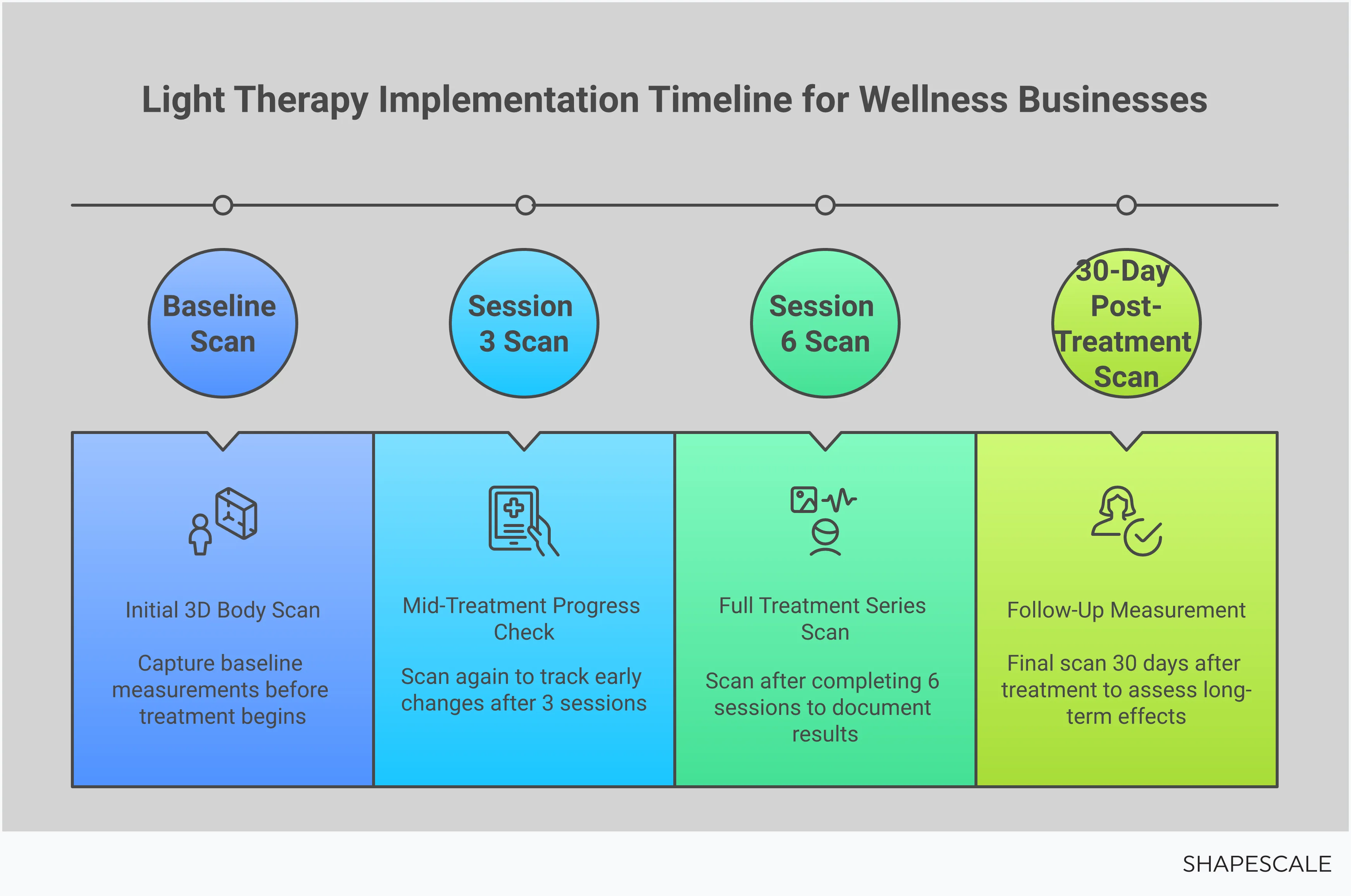
Pairing light therapy with 3D body scanning to track results
Combining light therapy with objective progress tracking is the best way to keep clients engaged. When clients can see tangible changes, their motivation soars. This is where technology like a 3D body scan comes in. After a series of light therapy sessions aimed at body contouring, a detailed scan can reveal subtle shifts in measurements and body composition that the scale might miss. This visual evidence validates the treatment's effectiveness and reinforces the client's commitment to their program, creating a powerful feedback loop that drives long-term success.
Implementing light therapy services
Adding a new service like light therapy to your wellness business requires careful planning, from choosing the right device to setting client expectations. The good news is that the process is straightforward once you understand the key components. You’ll need to think about how you’ll structure your appointments, what treatment plans you’ll offer, and the specific technology you’ll invest in.
This isn't just about buying a machine; it's about creating a complete client experience that delivers visible results. For weight management centers and personal trainers, this means integrating light therapy into a holistic plan that includes nutrition and exercise. For medical spas, it’s about offering an innovative, non-invasive body contouring option. The key is to build a service that is safe, effective, and easy for your team to administer. By focusing on a solid implementation strategy, you can create a valuable new revenue stream and provide your clients with an innovative tool to help them reach their goals.
Structuring client sessions
When you introduce light therapy, a clear structure for client sessions is essential for consistency and results. Typically, a trained professional places the device directly on the target body areas for about 10 to 40 minutes. The exact duration will depend on the equipment you use and the specific treatment area.
Most clinics recommend a series of treatments to achieve the best outcomes, so it's wise to sell packages rather than single sessions. A common starting point is a package of at least six sessions, scheduled two to three times per week. This frequency helps maintain momentum and allows clients to see progress. For businesses like health clubs, you can position these sessions as a perfect complement to a client's existing workout routine, helping them target stubborn areas.
Recommended treatment protocols
Setting realistic expectations is crucial for client satisfaction. Frame light therapy as a body contouring and inch-loss tool rather than a method for significant weight reduction. Many clients report noticeable changes in how their clothes fit after just a few sessions.
Clinical research supports this approach. One crossover trial found that while bright light therapy didn't cause a major drop in overall body weight, it did significantly reduce body fat percentage and total fat mass while also curbing appetite. This is a key selling point: you're helping clients change their body composition. Using a 3D body scanner to track these subtle but important shifts in measurements and body fat can provide powerful visual proof of progress, keeping clients motivated throughout their treatment plan.
Selecting the right equipment
The technology you choose will be the foundation of your service. Most body contouring applications use low-level laser therapy (LLLT), a non-invasive treatment that uses light at a specific wavelength—typically between 635 and 680 nm. Unlike surgical procedures, LLLT doesn't involve heat or break the skin, making it a safe and comfortable option for clients.
The mechanism behind LLLT is fascinating: the light energy creates temporary pores in fat cells, allowing stored triglycerides to leak out and be naturally processed by the body. When researching devices, look for FDA-cleared equipment from reputable manufacturers. Investing in high-quality technology ensures safety and efficacy, giving you and your clients confidence in the results. You can book a demo with tech providers to understand the equipment better before making a purchase.
Frequently Asked Questions
How quickly will my clients see results from light therapy? Results can vary from person to person, but many clients report that their clothes fit better after just a few sessions. The most noticeable changes in measurements typically appear after completing a full series of treatments, which is often six or more sessions. It's important to frame this as a tool for inch loss and body contouring, not for a significant drop on the scale.
Is the treatment painful, and is there any downtime for the client? The treatment is completely painless. Most clients describe the sensation as a gentle, pleasant warmth on the skin. One of the biggest advantages is that there is absolutely no downtime. Clients can get back to their daily activities, including work or exercise, immediately after their session is over.
Does the fat come back after the treatments are finished? Light therapy causes fat cells to release their contents, but it doesn't destroy the cells themselves. This means the results are best maintained with a healthy lifestyle. If a client doesn't support the treatments with a balanced diet and regular exercise, the fat cells can gradually store fat again. It's most effective when positioned as a complement to a client's ongoing wellness efforts.
Who is the ideal client for this type of treatment? The best candidate is someone who is already living a relatively healthy lifestyle but is struggling with stubborn pockets of fat that are resistant to diet and exercise. It's perfect for individuals looking to refine their shape and contour specific areas like the waist, hips, or thighs, rather than for someone seeking a solution for significant, overall weight loss.
What kind of training does my staff need to administer light therapy safely? While the procedure is non-invasive, proper training is essential for safety and effectiveness. Your staff should be thoroughly trained on the specific device you purchase, following all manufacturer guidelines for session duration, placement, and safety protocols. This includes conducting comprehensive client screenings to identify any contraindications and ensuring clients use certified eye protection during treatment.